
Home Blog Page 3

Journalists in Mogadishu face increased attacks and arrests ahead of a disputed ‘local election’

0
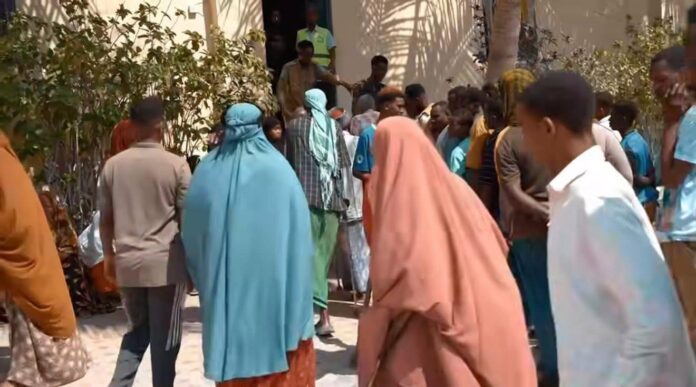
On 11 December, a bomb attack targeted a local school in the Dayniile neighborhood of Mogadishu, killing at least one person. Journalists who went to report on the attack were arrested.
On 11 December, a bomb attack targeted a local school in the Dayniile neighborhood of Mogadishu, killing at least one person. Journalists who went to report on the attack were arrested. | PHOTO/private.

MOGADISHU, Somalia 23 December 2025 – The Somali Journalists Syndicate (SJS) is alarmed by the increased attacks and arrests faced by journalists in Mogadishu ahead of a disputed “local election,” as reporters say they feel unsafe reporting on the stories they witness including attacks in the Somali capital.

On 11 December, a group of journalists from local media outlets were covering two bomb explosions in Mogadishu’s Dayniile and Daaru Salaam districts, when police briefly arrested them and confiscated their equipment, preventing the journalists from their right to access information.

The journalists—Ja’far Mohamed Jimale (reporter), Sumayo Ali Hussein (reporter), and Abdirahman Mohamed Ahmed (cameraman)—were reporting for Kalsan TV, while Iqro Abdullahi Abdirahman and her unnamed camera operator were covering the incident for the online news channel Hirasho TV. Iqro said she was held by a soldier who twisted her arm during the arrest. The journalists were taken to the Dayniile Police Station, where police officers warned them not to report on the bombings.

Journalists said one of the two explosions targeted a local school in Dayniile neighborhood where an event related to the preparations for the disputed Mogadishu elections was taking place, killing at least one person and injuring several others. The second blast targeted another school in Daaru Salaam district, injuring an unknown number of people.  Recently, Somalia’s Minister of Education, Farah Abdukadir, announced that schools would be used as polling stations for the vote scheduled for 25 December, despite objections from educational institutions citing serious security risks.

Separately, on 11 December, six reporters were briefly arrested by police and members of the National Intelligence and Security Agency (NISA) in Yaaqshiid district while reporting on a car accident that killed at least one person. Qasim Abdille Barrow and his colleague, cameraman Mohamed Adan of Somali Cable TV, said they were beaten with pistols before being arrested and having their equipment seized. Khadar Abdirahim Ibrahim of Himilo Media and his colleague, cameraman Abdirisak Haji Sidow, were also arrested and had their equipment confiscated.

Ali Yasin Ali, a cameraman with Somali Media Services (SMS), and Hussein Isse Mohamed, a reporter, told SJS that they were beaten with a gun by a soldier and briefly detained alongside Risaala TV cameraman Salman Abdirizak Shire, RTN TV cameraman Mohamed Abdukadir, Universal Somali TV reporter Abshir Abdullahi Amin, and Saab TV reporter Deeq Moalim Jinow.

Journalists in Mogadishu have reported increased pressure and threats from security agencies aimed at preventing coverage of terrorist attacks and local community complaints related to the controversial election in the capital. Residents have repeatedly described incidents in which people were abducted from the streets and forcibly registered as voters without their consent. Shooting incidents resulting in deaths have also been reported in the northern parts of the capital.

Journalists also told SJS that both bribery attempts and threats have been directed at media directors and journalists deemed critical of the government, including those working for international media outlets, in exchange for favorable coverage.

The disputed national election team has not responded to requests for comment.

“SJS condemns these acts of arbitrary arrests and detention, bribery and threats in which journalists were detained, their equipment seized, and they were prevented from reporting on matters of public interest in Mogadishu over the past weeks. We are also alarmed by the level of threats directed at critical reporters by the so-called independent electoral body, as Mogadishu faces serious security and economic challenges,” said SJS Secretary General, Abdalle Mumin. “These constitute a gross constitutional violation, depriving journalists of their right to access information and report freely—rights that, sadly, the Somali security forces, who are supposed to uphold them, have been ignoring.”

“We call on all those involved in these attacks to immediately stop. Journalists must be able to report on any incident occurring in their areas, whether or not those in power approve of the coverage,” added Mr. Mumin.
Radio MarkaFM reopens; Puntland’s Mudug prosecutor drops summons; Bantu journalist still detained in Hirshabelle

0
SJS Press Release logo
SJS Press Release logo.

MOGADISHU, Somalia 23 December 2025 – The Somali Journalists Syndicate (SJS) welcomes the decision by the Puntland Mudug prosecutor to drop the intimidation summons against the director of Radio Galkacyo, following calls by journalists—supported by SJS—to end the harassment. SJS also welcomes the lifting of the ban imposed on Radio Marka FM in the Lower Shabelle region.

On Saturday, 20 December, the Puntland Mudug Regional Prosecutor dropped the summons against the director of Radio Gaalkacyo following an advocacy campaign by local journalists, backed by SJS.

On 17 December, the Mudug Regional Prosecutor, Muxubo Faysal Axmed, issued a summons ordering Mohamed Abdul Aziz —director of the oldest community-owned radio station, Radio Gaalkacyo, based in Galkayo city— to appear before the Prosecutor’s Office. A copy of the summons received by SJS stated: “The Mudug Regional Prosecutor’s Office directs the Director of Radio Gaalkacyo, Mohamed Abdul Aziz, to appear before the Mudug Regional Prosecutor’s Office on 20/12/2025 at 10:00 a.m. to respond to a complaint filed with the Prosecutor’s Office by the Governor of Mudug Region, Faysal Sheikh Ali.”

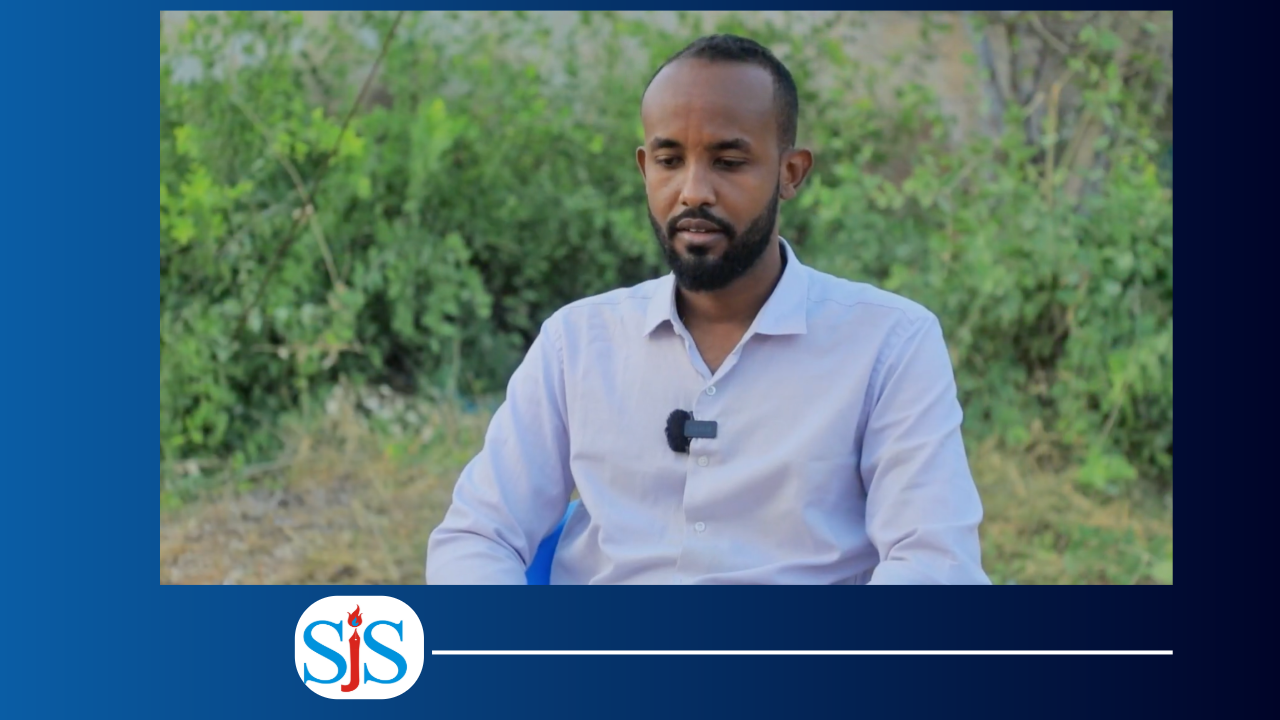
Radio Gaalkacyo Director Mohamed Abdul Aziz. | PHOTO/ SJS.

After reporting to the Prosecutor’s Office, Mohamed told SJS that he was questioned and that the prosecutor also discussed the media advocacy campaign calling for the case to be dropped. He later said the prosecutor informed him that “the case had been discontinued”.

In the Lower Shabelle region, Radio Marka FM has resumed operations on 8 December. On 29 November, authorities in Marka, the capital of Lower Shabelle, ordered the closure of Marka FM, a privately owned radio station. According to the station’s founder and manager, Ahmed Omar, the closure order was issued by the Marka District Commissioner, Osman Muse, after the station reported on a gunfight between forces loyal to the district commissioner and those aligned with the head of the National Intelligence and Security Agency (NISA) in Marka.

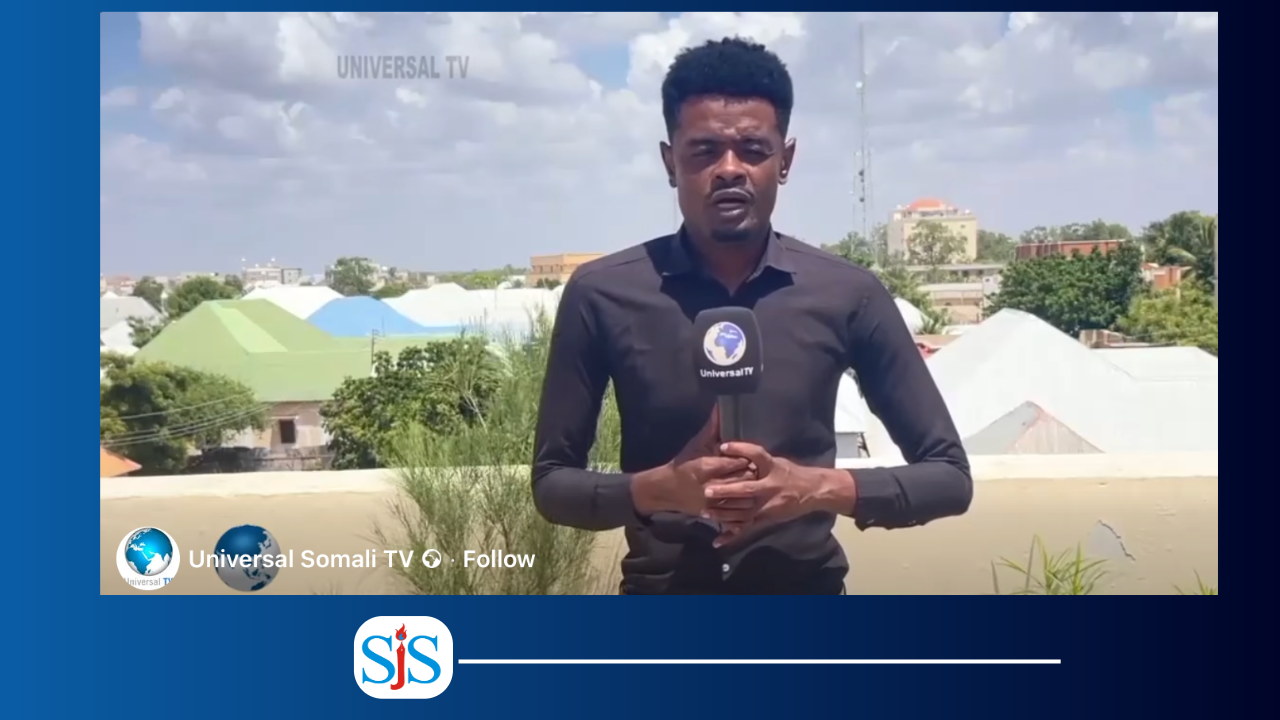
In Hirshabelle State, Somali Bantu journalist Sharif Shuriye Hashi of Universal Somali TV remains in police custody in Jowhar after being arrested at his home on 8 December. Sharif, who had been reporting critically on security issues and the livelihood situation of the local community, was arrested alongside his wife, Hamdi Muse Digow. The Hirshabelle’s Jowhar police initially accused Sharif of illegally marrying his wife, alleging that his clan, the Bantu, is regarded as “low caste.” Last Saturday, Sharif was brought before a court in Jowhar; however, no hearing took place because the prosecutors were on leave and are not expected to return until January 2026.

Ethnic Somali Bantu journalist Sharif Shuriye Hashi was arrested on 8 December 2025. | PHOTO/Screenshot Facebook/ Universal Somali TV.

“We are pleased that Radio MarkaFM is back on air and that its journalists can now continue providing information to the public. We also welcome the decision by Puntland’s Mudug prosecutor to halt the intimidating summons issued last week against the director of Radio Gaalkacyo, our colleague Mohamed Abdul Aziz,” said SJS Secretary General, Abdalle Mumin.

“We call on the Hirshabelle authorities to immediately free journalist Sharif Shuriye Hashi and his wife, and to end discrimination based on his clan and his work as a critical journalist in Jowhar. It is not the role of the authorities to decide who marries whom; instead, they should focus on addressing the worsening security situation in the region,” added Mr. Mumin.

Deepfake AI audio clip sparks false call for violence in Somalia, journalists could not detect it

0
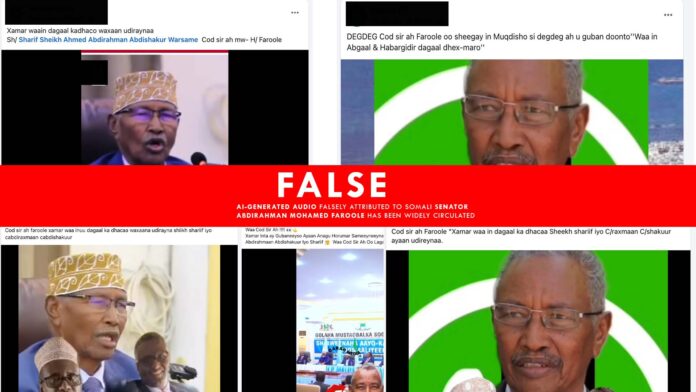
Deep Fake AI-generated audio spread fast and quick in Somalia on 18 December, 2025. | PHOTO/Screenshots.

MOGADISHU, Somalia 21 December 2025 –  The Somali Journalists Syndicate (SJS) expresses grave concern over the growing circulation of AI-generated deepfake content in Somalia, which poses serious risks of inciting violence, spreading hatred, and disseminating misinformation and disinformation at a time when the country faces a fragile security environment and ongoing uncertainty ahead of 2026 electoral process.

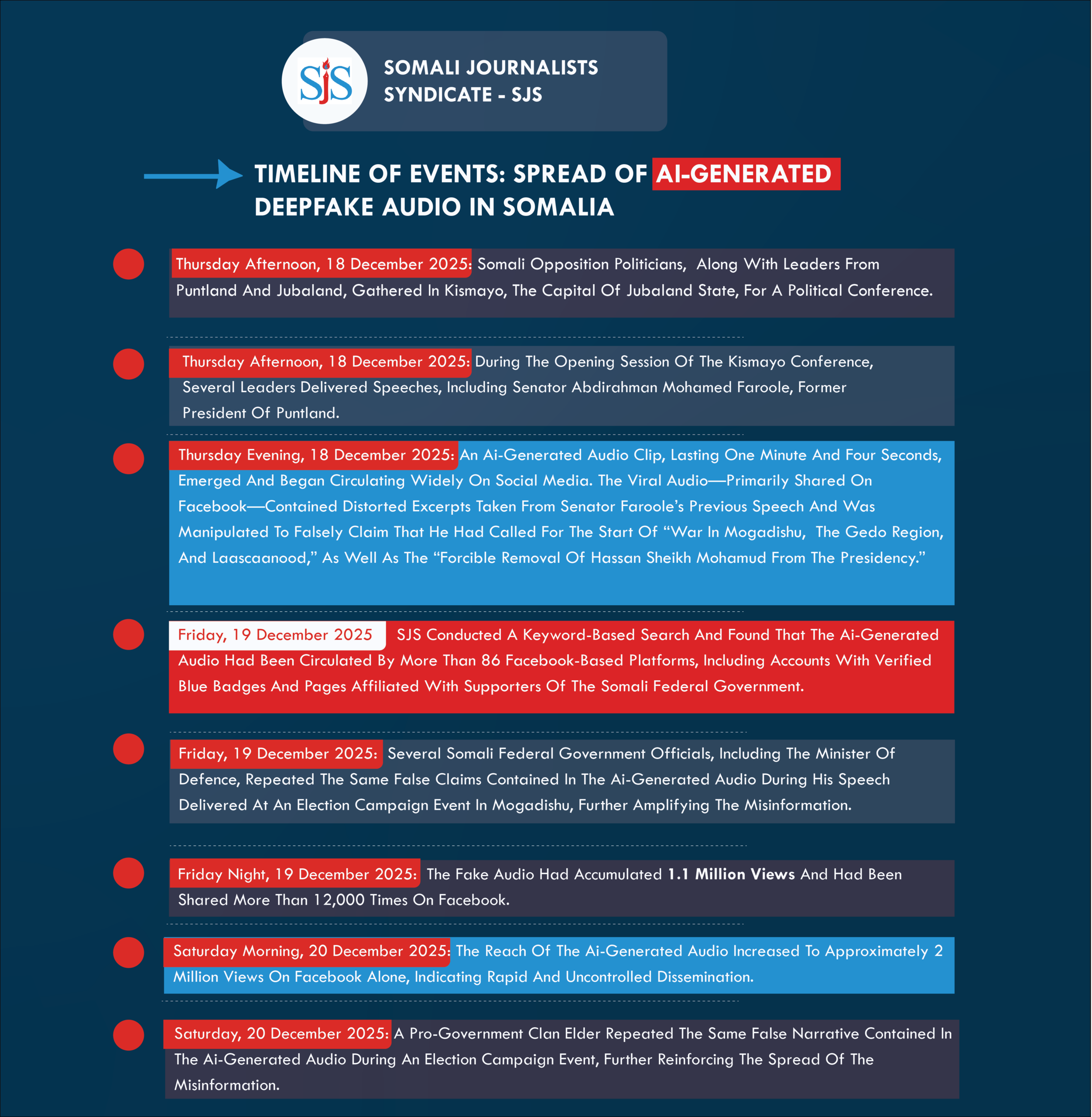
On Thursday, 18 December 2025, an audio clip falsely purporting to be the voice of Somali Senator Abdirahman Mohamed Faroole, a former President of Puntland and currently part of the opposition coalition attending Kismayo conference, began circulating widely on Facebook, a Meta-owned platform that is popular in Somalia.

The AI-generared audio claimed that Senator Faroole, lasting one minute and four seconds, calls for “violence to happen in Mogadishu”. It explicitly invokes clan hostilities with a mention of regions such as Gedo, Hargeisa [Somaliland] and Laascaanood.  Senator Faroole made no such remarks.

After cross-checking with AI voice detection tools, the audio was confirmed to be a deepfake generated using AI voice-creation technology, manipulated from phrases taken from a real speech delivered at the Kismayo political opposition conference, which began on 18 December.

“It is a common reality that words, phrases, or partial sentences taken from a person’s speech can be trained with AI tools to create fake audio that is sometimes difficult for a general audience to detect. In this case, this is exactly how AI deepfake creators manipulated Senator Faroole’s speech,” said SJS Secretary of Information and Human Rights, Mohamed Ibrahim Bulbul.

Following alerts from local journalists and digital content creators, SJS investigated the matter amid growing fears that the disinformation could damage journalists’ credibility, distort public understanding of political developments, and potentially lead to intercommunal conflict.  SJS’s review found that more than 86 Facebook pages and profiles had shared the same fake audio.

How Fast the AI-Generated Audio Spread

A keyword-based search conducted by SJS, within less than 24 hours after the fake audio emerged, showed that the content was viewed over 1.1 million times, shared more than 12,000 times, and received over 3,700 comments on Facebook alone, demonstrating how rapidly such harmful content can spread.

As of Saturday, 20 December, the reach had increased to approximately 2 million views on Facebook alone.

Alarmingly, some of the accounts amplifying the deepfake content are verified with Facebook’s blue badge and those affiliated to state media in Mogadishu which have substantial followings.

As a result, on Friday, 19 December, several Somali Federal Government officials, including the Minister of Defence, and a government-backed elder repeated the false claims from the AI-generated audio during election campaign speeches in Mogadishu, further amplifying the misinformation through local media.

This is not an isolated case. SJS has observed a troubling rise in the irresponsible use of AI, including the manipulation of women’s images to falsely depict nudity, and the creation of fake voices to attribute statements to individuals that were never made.

Facebook, owned by Meta, is highly popular in Somalia, and many people, including journalists, rely on it for news and information. According to Meta’s advertising resources, Facebook had approximately 2.6 million users in Somalia in early 2025.

Journalists, public figures, and especially women have been increasingly targeted, with serious personal and professional consequences. Some pages even impersonate known journalists, politicians, and celebrities, further eroding trust in credible information and posing a serious threat to media freedom and public safety in Somalia.

“Deepfake content, especially when spread on social media, can directly endanger communities by spreading false claims that may incite violence or unrest and can endanger journalists’ safety. It can weaken the integrity of media institutions,” said SJS Secretary General, Abdalle Mumin “What we are seeing is that untrained journalists cannot stop false narratives created with AI, leaving the public unable to distinguish facts from lies.”

“In this context, SJS suggests that media professionals must be trained to identify and respond to deepfake content, and communities must be educated on the risks posed by AI-generated misinformation and disinformation,” Mr. Mumin adds.

SJS calls on Meta to take immediate measures to identify, remove, and limit the spread of AI-generated misinformation and disinformation in Somalia, and to work with Somali journalists and media organizations to develop safeguards to protect the integrity of the Somali media.

Galmudug State should free two local journalists arrested in Dhusamareb

0
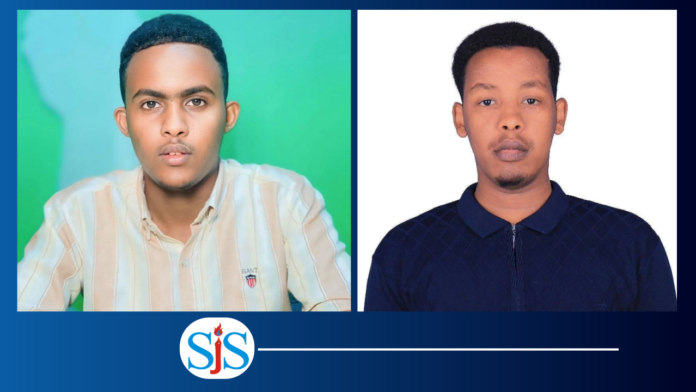
Abdullahi Abdi Hersi known as Qorsheeye (left) and Abdullahi Abdukadir Nur known as Wadani. | PHOTO/Courtesy/SJS.

MOGADISHU, Somalia 20 December 2025 – The Somali Journalists Syndicate (SJS) calls on the Galmudug State authorities to immediately release two local journalists who were arrested on Wednesday and Thursday respectively in Dhusamareb city.

On Wednesday night, 17 December, Galmudug police in Dhusamareb arrested journalist Abdullahi Abdi Hersi, known as Qorsheeye, who reports for Somali Cable TV and also publishes content on his Facebook page.  Colleagues told SJS that Qorsheeye was arrested after he used a quote from a member of the Galmudug House of Assembly (Parliament), who accused the Dhusamareb mayor of “refusing to install street lighting in the city,” allegedly contributing to crime and insecurity.

Local journalists in Dhusamareb told SJS that the mayor of Dhusamareb ordered the arrest.

Faysal Ahmed Gurey, the local MP whose quote led to the journalist’s arrest, also accused the Dhusamareb administration of using “state power to censor journalists” in the region.

On Thursday, 18 December, police arrested a second journalist, Abdullahi Abdukadir Nur known as Wadani, after he reported on the arrest of journalist Qorsheeye. Both journalists are currently being held at the Dhusamareb police station.

An official at the Galmudug Ministry of Information told SJS that efforts were underway to secure the journalists’ release. The official, who requested anonymity, further stated that local officials were directly involved in the arrests.

The office of the Dhusamareb mayor, Abdirahman Ali Mohamed, did not respond to requests for comment.

Dhusamareb is the seat of the Galmudug State administration. Last week, violent clashes erupted in the city following the killing of a local man, which media reported as a clan-related revenge attack. Protests calling for justice followed.

Local media also reported that sporadic gunfights between rival clan militias continue on the outskirts of Dhusamareb and in several other towns across Galmudug State. The ongoing violence has continued to claim civilian lives, including women and children.

President Ahmed Abdi Kariye (Qoorqoor)’s original four-year term ended in February 2024. However, a term extension approved by the Galmudug parliament extended his mandate until February 2025. Since then, there has been no clarity regarding regional leadership elections. Media reports indicate the presence of rival opposition groups, some of which are involved in armed militias, further worsening the security situation in Galmudug.

“We call on the Galmudug State authorities to release the two detained journalists, Abdullahi Abdi Hersi and Abdullahi Abdukadir Nur. The two colleagues were just doing their job to inform the public.  Officials in Galmudug must understand that journalism is not a crime, and such arrests send a dangerous message that criticism of authorities will be punished,” said SJS Secretary General Abdalle Mumin.

“At a time when Dhusamareb is facing serious security challenges, arresting journalists instead of addressing public concerns is reckless and violates Somalia’s constitution and international press freedom standards,” added Mr. Mumin.

Puntland: Mudug prosecutor summons Radio Gaalkacyo director over district council dispute reporting

0
Radio Gaalkacyo Director Mohamed Abdul Aziz. | PHOTO/ SJS.

MOGADISHU, Somalia 18 December 2025 –  The Somali Journalists Syndicate (SJS) calls on the Puntland Mudug Regional Prosecutor to immediately stop the intimidation and summons issued against Radio Gaalkacyo Director Mohamed Abdul Aziz, which appear to be part of a wider campaign of pressure linked to the station’s coverage of a dispute arising from the formation of a local district council in the Mudug region.

On Wednesday, 17 December, Radio Gaalkacyo reported that the Puntland Mudug Regional Prosecutor, Muxubo Faysal Axmed, issued a summons ordering Mohamed Abdul Aziz—director of the oldest community-owned radio station, Radio Gaalkacyo, based in Galkayo city—to appear before the Prosecutor’s Office.

A copy of the summons received by SJS states: “The Mudug Regional Prosecutor’s Office directs the Director of Radio Gaalkacyo, Mohamed Abdul Aziz, to appear before the Mudug Regional Prosecutor’s Office on 20/12/2025 at 10:00 a.m. to respond to a complaint filed with the Prosecutor’s Office by the Governor of Mudug Region, Faysal Sheikh Ali.”

Radio Gaalkacyo stated that the summons by the regional prosecutor “is an attempt to use the Office of the Prosecutor to suppress the media.”

A copy of the summons received by SJS states: “The Mudug Regional Prosecutor’s Office directs the Director of Radio Gaalkacyo, Mohamed Abdul Aziz, to appear before the Mudug Regional Prosecutor’s Office on 20/12/2025 at 10:00 a.m. to respond to a complaint filed with the Prosecutor’s Office by the Governor of Mudug Region, Faysal Sheikh Ali.”

According to Mohamed Abdul Aziz, who spoke to SJS, the summons followed Radio Gaalkacyo’s recent reporting on a dispute over the formation of a new district council for Heema town, in northern Mudug.  Local Councillors have alleged interference by Mudug Governor Faysal Sheikh Ali in the process.

On 8 December, Radio Gaalkacyo published a video on its Facebook page showing a group of Galkayo councillors attempting to visit Heema, a rural town outside Galkayo, but reportedly being blocked by armed men acting on the orders of Governor Faysal Sheikh Ali.

On the same day, the station also shared another video featuring local women from Heema who appealed directly to Puntland President Sa’id Abdullahi Deni, urging him to intervene.

The dispute in Heema town followed the removal of a former district council and the reported election of a new one. Community members have raised concerns about worsening drought conditions, lack of adequate water, and the need for a district administration that genuinely represents and understands local realities. Residents say many officials assigned to the area “do not live there and therefore cannot fully grasp” the community’s hardships.

When contacted for comment, Mudug Governor Faysal Sheikh Ali declined to respond.

In June this year, Mohamed Abdul Aziz and a colleague were arrested on the orders of Governor Faysal Sheikh Ali after Radio Gaalkacyo reported on a protest by local youth demanding accountability in Galkayo town.

Galkayo, the capital of central Somalia’s Mudug region, is divided into two administrations: the northern part is under Puntland, while the southern part is administered by Galmudug State.

“SJS calls on the Puntland State’s Mudug Regional Prosecutor to stop harassment and summonses aimed at silencing public-interest reporting. We also urge Governor of Mudug, Mr. Faysal Sheikh Ali to cease using state power to intimidate journalists covering critical issues of public concern,” said SJS Secretary General, Abdalle Mumin.

“State officials, including those in Mudug region, have many important responsibilities and should focus on those, rather than wasting resources targeting the media that report critically to them. Local communities have the right to express themselves, and when their voices are ignored, the media serves as the frontline defender of their concerns,” added Mr. Mumin.

Critical Somali Bantu journalist beaten, arrested with his wife, and falsely accused of illegitimate marriage in Hirshabelle State

0
Ethnic Somali Bantu journalist Sharif Shuriye Hashi was arrested on 8 December 2025. | PHOTO/Screenshot Facebook/ Universal Somali TV.

MOGADISHU, Somalia 14 December 2025 – The Somali Journalists Syndicate (SJS) expresses grave concern over the unlawful arrest, ethnicity-based discrimination, and alleged torture of journalist Sharif Shuriye Hashi, who has been held at a police station in Jowhar town, Hirshabelle State, since Monday, 8 December 2025.

Sharif Shuriye Hashi, a 35-year-old reporter for Universal Somali TV, was arrested from his home in Jowhar on 8 December by Hirshabelle State police officers. According to local journalists, the arrest was led by Hassan Jabshe, Deputy Commander of the Jowhar Police Station.

Sharif’s newly wedded wife, Hamdi Muse Digow, also 35, was arrested on the same day. Both remain in police custody.

During the arrest, Sharif told SJS that he was beaten, handcuffed with a rope, and that he sustained injuries during the beating, including swelling at the back of his head, and continues to suffer severe pain. He added that he has been denied access to medical care. A family member also informed SJS that they are deeply concerned about his deteriorating health due to the abuse and lack of medical attention while in detention.

On Saturday, 13 December, police brought Sharif and his wife before the Jowhar District Court, alleging that their marriage—conducted in September 2025—was “illegitimate.”, according to a report by the local media.  Authorities reportedly claimed that Sharif, who belongs to the Jareer (Bantu) community, could not lawfully marry a woman from the Hawiye/Hawadle clan. This information was reported by Himilo Media and confirmed to SJS by a journalist and a clan elder who attended the court hearing.

During the proceedings, Sharif and Hamdi maintained that they are “legally and willingly” married and presented witnesses to their nikah, which took place on 25 September 2025 in Jowhar, according to a document seen by SJS.  Jowhar police also produced a local sheikh, whom Sharif identified as the cleric who conducted the nikah, along with proof of mobile money payment used during the nikah ceremony. However, according to those present in court, the same sheikh later recanted his statement to the court and stated that he had not conducted the marriage.

Hamdi Muse Digow, who remains in detention, spoke to a local journalist stating that she and her husband were “arrested due to pressure from her clan”. She stated that she is “being detained for marrying a man with whom she had been in a relationship for ten years”.

A clan elder, who requested anonymity, told SJS that elders from both communities met following the court hearing on Saturday to resolve the matter. The discussions ended without agreement, as members of Hamdi’s family reportedly insisted that intermarriage with the Bantu community “was unacceptable”.  Other sources informed SJS that Deputy Police Commander Hassan Jabshe, who is heavily involved in the case, belongs to the same clan as Hamdi.

Both Hassan Jabshe and the Jowhar police command declined to speak to SJS.

Sharif Shuriye Hashi comes from the historically marginalized and often oppressed Jareer (Bantu) community in Southern Somalia. He migrated from Buloburte in central Somalia several years ago, where he began his career as a junior radio reporter for a local radio statiom. In Jowhar, he worked for the local radio station City FM before joining Mogadishu-based Universal Somali TV as its Jowhar correspondent.

In recent weeks, Sharif reported on two significant and sensitive stories. On 23 November 2025, he reported that “fuel prices had sharply increased” after al‑Qaeda-linked al‑Shabaab militants blocked roads to Jowhar and arrested tanker drivers transporting fuel from Mogadishu. Just days before his arrest, On 2 December 2025, he reported “a sharp rise in sesame crop prices in Jowhar markets“, attributing it to recurring droughts and floods affecting farmers in Middle Shabelle.

Local authorities in Hirshabelle have a history of targeting journalists and censoring media outlets that report on underdevelopment in the region and the impact of al-Shabaab’s presence on the livelihoods of local communities.

“SJS strongly condemns the unlawful arrest, abuse, and continued detention of journalist Sharif Shuriye Hashi and his wife Hamdi Muse Digow. Their detention represents a blatant abuse of power, driven by discrimination and intimidation rather than the rule of law. We call for their immediate and unconditional release and for an end to these unfounded court proceedings, which are being used as a tool to harass and silence a journalist for his work,” said SJS Secretary General, Abdalle Mumin.

“The police must focus on their core responsibility of ensuring public security and protecting civilians, not arresting journalists or making false and intrusive accusations about the legality of personal marriages. Such actions undermine justice, violate fundamental rights, and erode public trust in law enforcement,” Mr. Mumin adds  “We also urge international partners supporting the Somali police to closely scrutinize this case and ensure that their assistance does not contribute to human rights abuses, discrimination, or the suppression of media freedom.”

From Repression to Recognition: SJS honored with the local Human Rights Tulip Award in the Netherlands

0
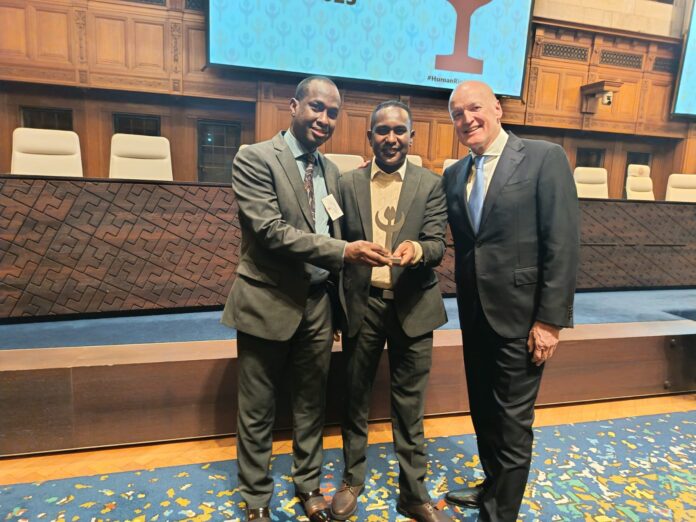
SJS President Mohamed Ibrahim and Secretary General Abdalle Mumin celebrate with Netherlands Human Rights Ambassador Wim Geerts during the Tulip Award reception at the Peace Palace in The Hague, Netherlands, on December 10, 2025.
SJS President Mohamed Ibrahim and Secretary General Abdalle Mumin celebrate with Netherlands Human Rights Ambassador Wim Geerts during the Tulip Award reception at the Peace Palace in The Hague, Netherlands, on December 10, 2025. | PHOTO/SJS.

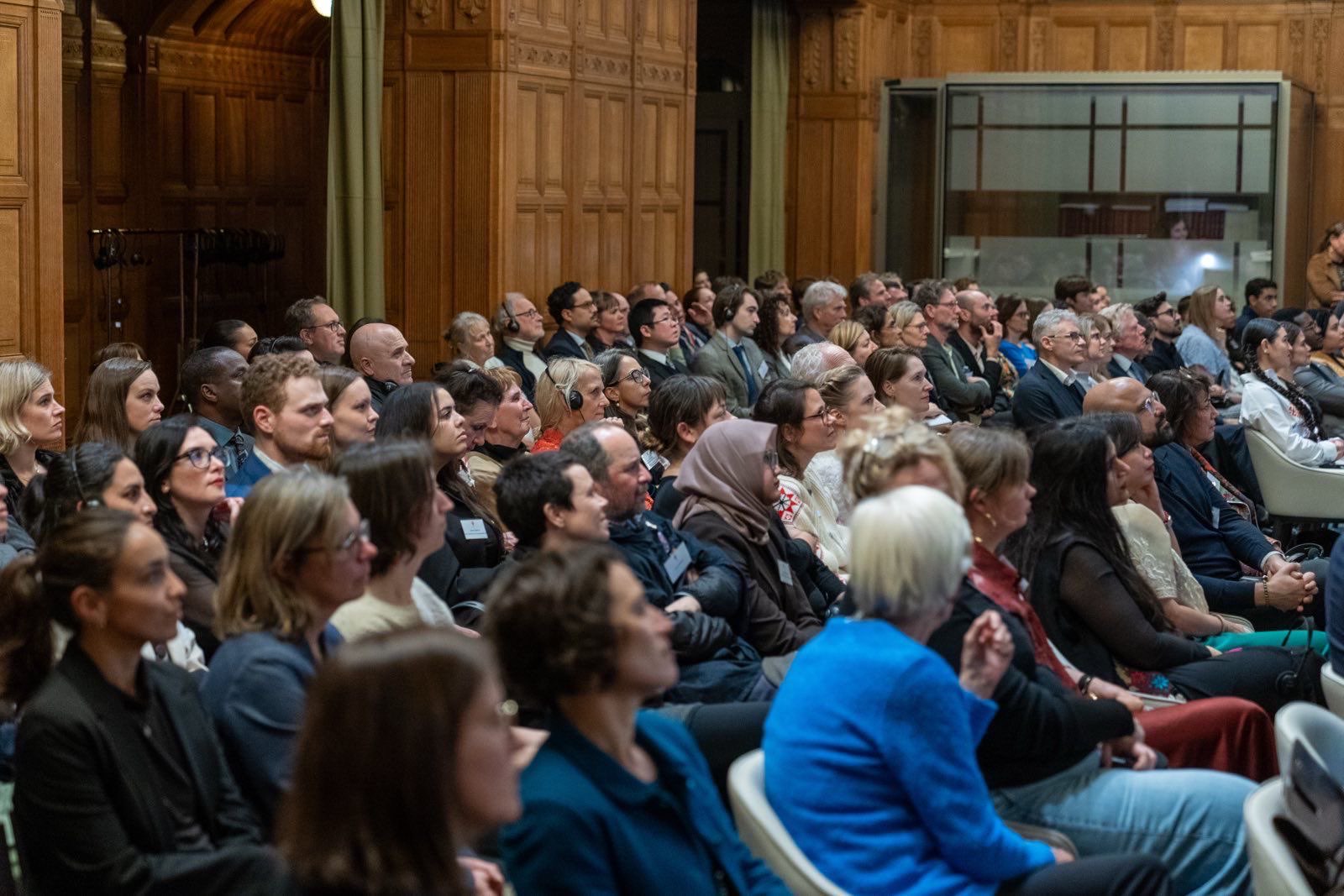
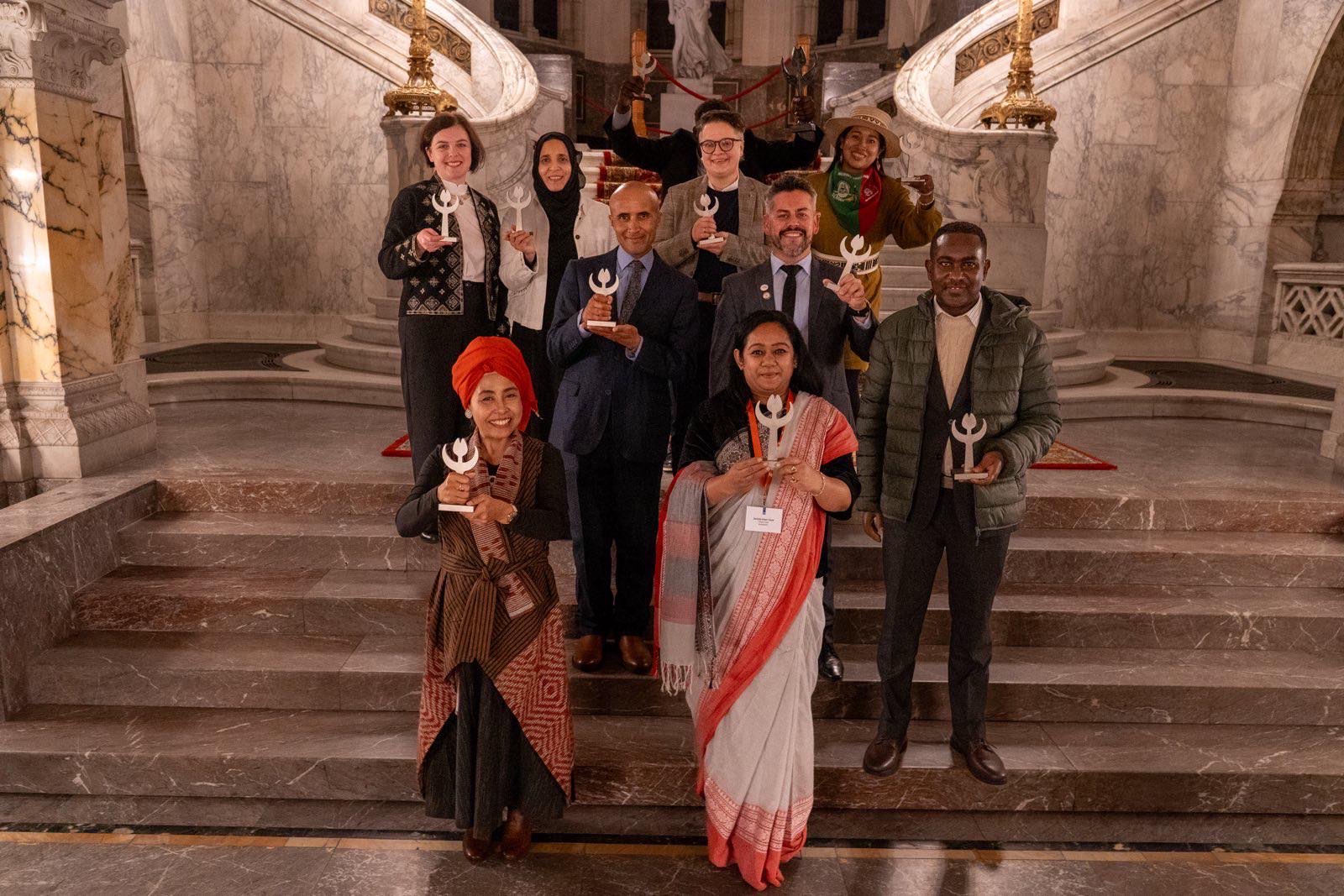
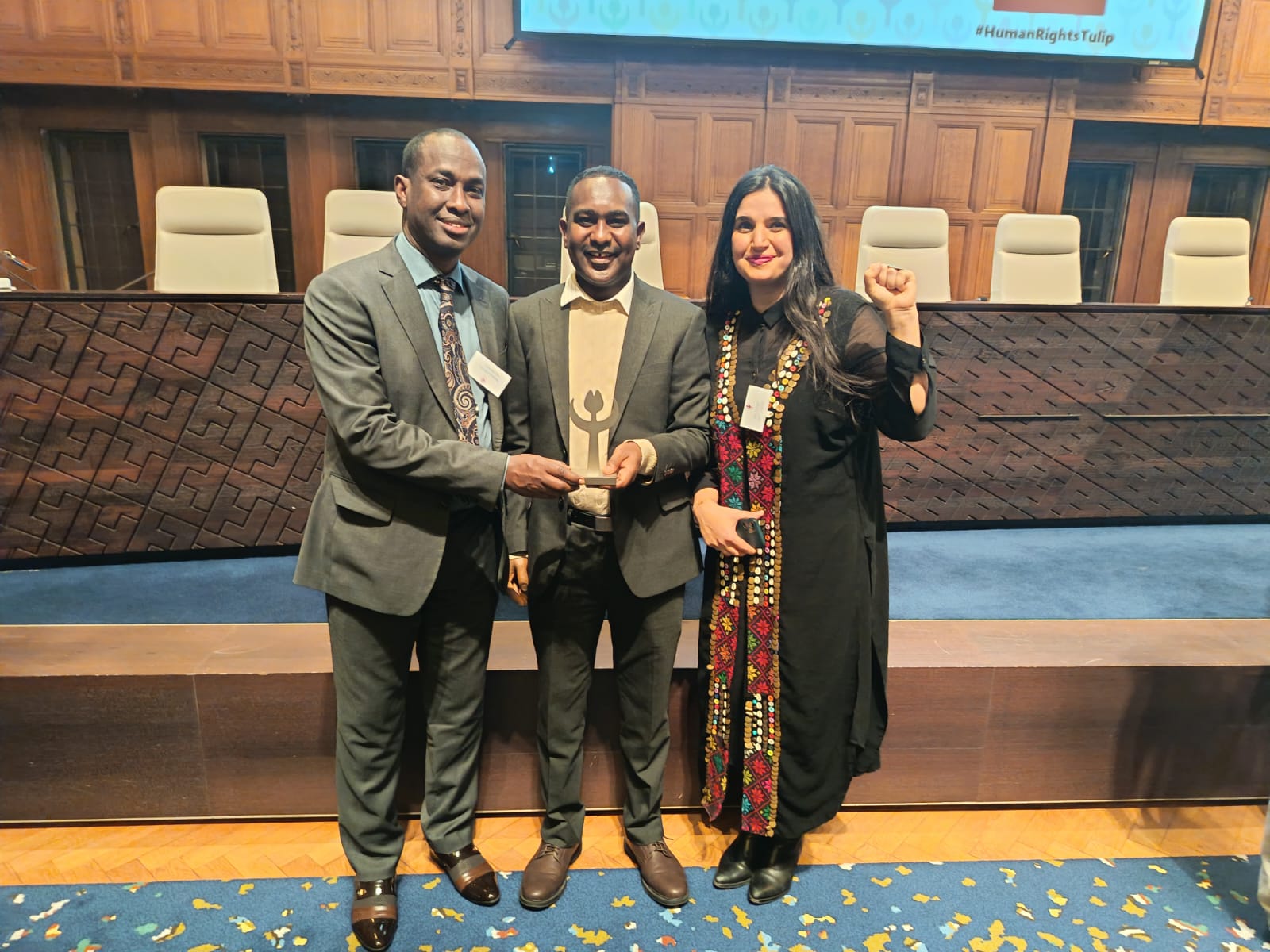
THE HAGUE, Netherlands, 12 December 2025 –  At the Peace Palace—the seat of the International Court of Justice in The Hague, Netherlands—the Somali Journalists Syndicate (SJS) was honored as one of ten global human rights defenders awarded the 2025 Human Rights Tulip by the Government of the Netherlands.

The ceremony, held on International Human Rights Day, December 10, marked a historic moment for SJS and for Somalia’s media freedom movement. On behalf of SJS, the local Tulip Award was received by SJS Secretary General, Abdalle Mumin.

This recognition comes only three years after SJS endured one of its darkest periods. In Mogadishu, the SJS office was violently raided; its Secretary General, Abdalle Mumin, was abducted, tortured, and held in an inhumane underground cell. What followed was prolonged persecution and a sham trial designed to intimidate the voices defending press freedom and human rights in Somalia.

Yet, three years later—far from the dangers of Mogadishu and in the heart of The Hague—SJS delegates were warmly welcomed and celebrated. Standing alongside ten renowned human rights defenders and organizations from around the world, representing diverse languages, contexts, and struggles, we reaffirmed a universal truth: human rights are inalienable rights for all people.

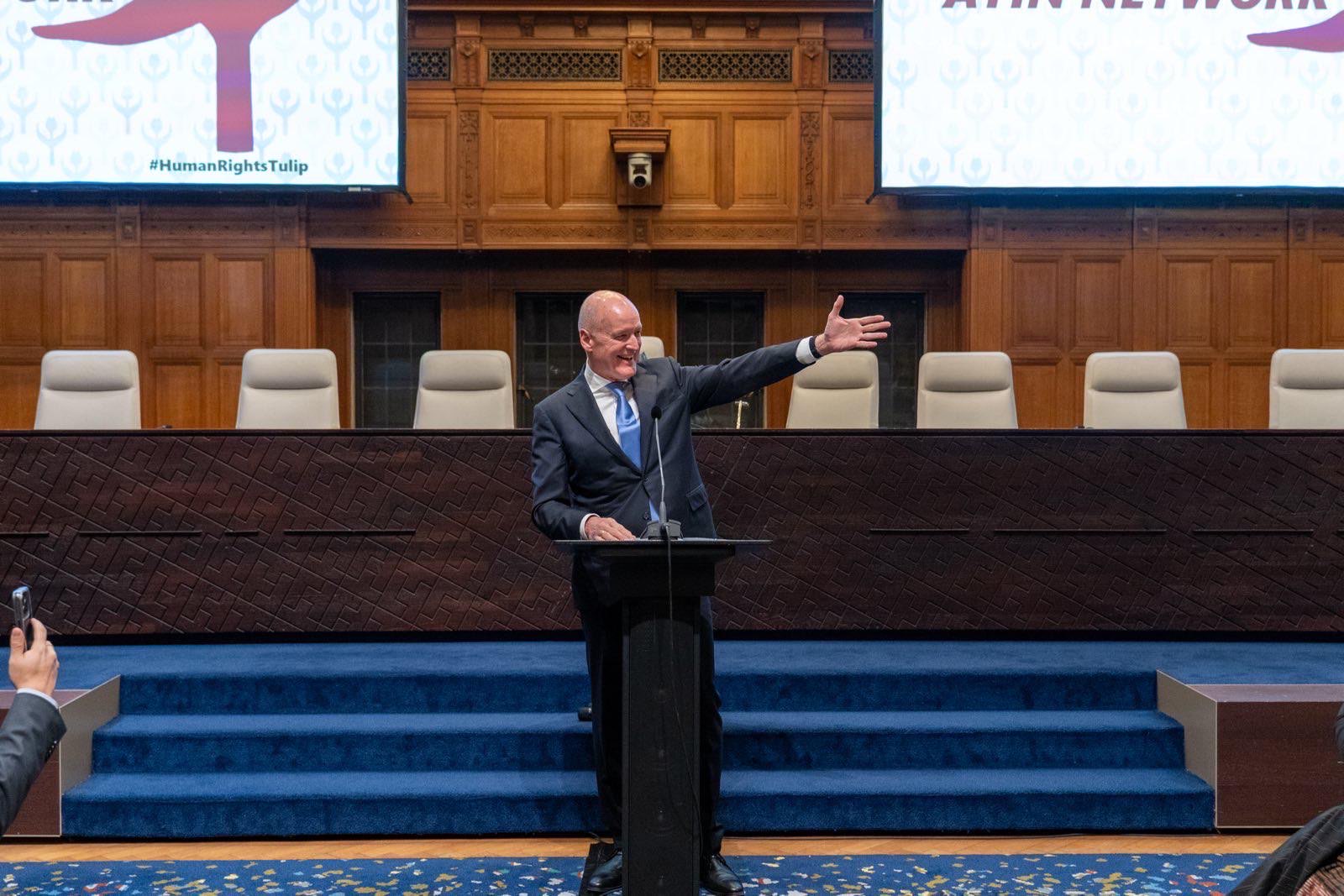
This statement was echoed by the Netherlands Human Rights Ambassador, Wim Geerts, who stated that “justice and peace can only be achieved when there is respect for human rights.”

Netherlands Human Rights Ambassador, Wim Geerts, stated that “justice and peace can only be achieved when there is respect for human rights.”

As the world marks the 77th anniversary of the Universal Declaration of Human Rights (UDHR), the position of SJS remains firm. Our resilience is rooted in an unshakeable conviction that truth, dignity, and justice are worth defending—regardless of the cost. Even when silenced, targeted, and dragged before hostile courts, SJS refused to abandon its mission.

“We are honored to receive this prestigious award. For the Somali Journalists Syndicate, this recognition represents not only our members but the entire Somali journalism community. It inspires us to double our efforts and continue our work with even greater determination,” said SJS President Mohamed Ibrahim.

“The tulip award achievement is not only ours—it is a victory for human rights defenders across the globe, especially those working under threat, in conflict zones, and in the most challenging environments,” added Mr. Ibrahim.

SJS expresses its sincere gratitude to the Human Rights Tulip organizers, the Dutch government, and the welcoming people of the Netherlands. We congratulate all fellow Tulip Award winners from Sudan, Yemen, Palestine, Indonesia, Bangladesh, Colombia, Chile, Hungry and Ukraine.

The ceremony, held on International Human Rights Day, December 10, took place at the Peace Palace—the seat of the International Court of Justice in The Hague, Netherlands.
At the Peace Palace—the seat of the International Court of Justice in The Hague, Netherlands—the Somali Journalists Syndicate (SJS) was honored as one of ten global human rights defenders awarded the Human Rights Tulip by the Government of the Netherlands.
Moment of celebration with Maral Khajeh from Shelter City in The Hague. | PHOTO/SJS.

MarkaFM radio shut down after reporting on gunfight and bomb explosion

0
Logo of the MarkaFM radio. | PAHOTO/MarkaFM Facebook page.

MOGADISHU, Somalia 4 December 2025 – The Somali Journalists Syndicate (SJS) calls on the authorities in Marka, Lower Shabelle, to allow MarkaFM Radio to resume operations and to stop the threats and pressure against its journalists.

On 29 November, authorities in Marka, the capital of the Lower Shabelle region, ordered the closure of MarkaFM, a privately owned radio station. According to the station’s founder and manager, Ahmed Omar, the closure order was issued by the Marka District Commissioner, Osman Muse, after the radio reported on a gunfight between forces loyal to the district commissioner and those aligned with the head of the National Intelligence and Security Agency (NISA) in Marka.

The fighting on 29 November reportedly stemmed from a dispute over control of fees collected from the registration of the national ID (NIRA) in the district. Residents in Marka were recently instructed to register for the national ID, and fees were reportedly collected from applicants.

Ahmed Omar, told SJS that this was not the first time the station had come under pressure from local authorities. On 9 November, officials contacted the radio’s staff and demanded the removal of a news report about a bomb explosion inside a restaurant that caused civilian injuries.

Journalists at the station further told SJS that the authorities have repeatedly threatened them. On 29 November, Ahmed Omar told SJS that he was beaten by the Marka district commissioner after being summoned into the commissioner’s office.

MarkaFM is the only privately owned radio station that had been operational in Marka since September this year. The station’s manager told SJS that the outlet has five employees. The radio has remained off-air since 29 November.

Calls by SJS to Marka District Commissioner Osman Muse seeking an explanation went unanswered.

“We strongly condemn the closure of MarkaFM and the ongoing intimidation of its journalists. Silencing the only independent radio station in Marka is a direct attack on press freedom and the public’s right to information. We urge the local authorities to immediately allow the station to resume broadcasting and to stop all forms of threats against its staff,” said SJS Secretary General Abdalle Mumin.

Somaliland police free journalist Mohamed Andar after withdrawing charges against him

0
Mohamed Abdi Abdillahi, known as Andar. | PHOTO/SJS.

MOGADISHU, Somalia 4 December 2025 – The Somali Journalists Syndicate (SJS) welcomes the release of journalist Mohamed Abdi Abdillahi, known as Andar, from the Criminal Investigation Department (CID) in Hargeisa, Somaliland, where he spent two days in detention without a warrant.

Mohamed Andar, who reports for MM Somali TV and is active on his Facebook page, was arrested on 29 November by Somaliland police in Hargeisa after he posted a report claiming that “local youth in the city had complained about foreign individuals allegedly engaging in sexual activity while being guarded by police officers”. The post was later removed from the journalist’s page.

Mohamed Andar spent two days at the Hargeisa CID. Local journalists told SJS that police had threatened to bring charges against him; however, the police eventually decided to release him without charge.

A representative of the Somaliland Journalists Association told SJS that the Somaliland Police Command has withdrawn the accusations against the journalist.

Separately, on 4 November, police in Hargeisa arrested Mohamed Andar and his camera operator Ahmed Heersare, who were briefly detained while conducting interviews with former members of the Somaliland army who are disabled and had complained about the lack of adequate welfare support from the government. The former soldiers were holding a protest in Hargeisa city, and when journalists arrived to cover the event, they were immediately arrested by the police. They were released the same day without charge, and the journalists were unable to continue reporting the story.

Somaliland has seen an increase in attacks on and arrests of journalists. SJS has documented 35 cases of arbitrary arrest and detention of journalists in Somaliland between January and November 2025. Journalists reporting on police violations, community complaints, corruption allegations, and the security situation in the Sanaag and Awdal regions are particularly targeted.

“We welcome the release of journalist Mohamed Andar and the decision by police in Hargeisa to withdraw their accusations,” said SJS Secretary General, Abdalle Mumin. “Detaining a journalist without a warrant and threatening charges simply for reporting public concerns is unacceptable. We urge the Somaliland authorities to respect press freedom and protect journalists, not target them.”

Journalist covering forced evictions protest in Mogadishu arrested and taken to court as crackdown on independent media continues

0
Himilo Media camera-journalist Abdullahi Mohamed Ali, known as Saawey. | PHOTO/SJS.

MOGADISHU, Somalia 24 November 2025 – The Somali Journalists Syndicate (SJS) strongly condemns the unlawful arrest, police harassment and confiscation of equipment of Himilo Somali TV (Himilo Media) camerajournalist Abdullahi Mohamed Ali, known as Saawey, who was arrested on Friday, 21 November in Mogadishu.

On Friday afternoon, Abdullahi Mohamed Ali was reporting on an ongoing protest in the Yaaqshiid district of Mogadishu. Local community members had gathered to oppose a planned forced eviction and land grabbing taking place in a slum-like neighborhood in the Yaaqshiid district.

Armed police attempted to disperse the protesters by shooting at them, which sadly resulted in the death of two civilians including a 20-year-old man among the peaceful demonstrators, according to media reports. The order to disperse and shoot the protesters was reportedly given by the Banadir Regional Police Commander, Mahdi Omar Muumin, known as Moalim Mahdi.

Eyewitnesses told SJS that the police beat and arrested Abdullahi Mohamed Ali while he was covering the protest. A colleague, Omar Yusuf Mohamed, who was with Abdullahi, managed to flee.

Abdullahi was initially held at a police post before he was transferred to the Yaaqshiid District Police Station where he was held until Monday afternoon. His family was blocked from seeing him. Abdullahi also told SJS that on Saturday, 22 November, a police prosecutor forcibly interrogated him while he was held without legal representation.

Abdullahi was arraigned at the Banadir Regional Court on Monday, 24 November. He told SJS that he was charged with “mobilising the protestors” and “inciting the public.” The judge subsequently released him due to a lack of evidence to support the police’s allegation.

During the court hearing, it was revealed that Abdullahi was specifically targeted because of his affiliation with Himilo Media.

Abdullahi further stated that police prosecutor Nuradin Mohamed Hussein (Jimale) had confiscated his phone and forced him to surrender his passwords. The prosecutor was reportedly angry and mentioned several times that Banadir Police Commander Moalim Mahdi “hates journalists working for Himilo Media.”

Despite Abdullahi’s release, the Himilo Media management informed SJS that their equipment, including a digital video camera, microphones, tripod, and lighting equipment, was not returned. When they sought to retrieve the equipment on Monday afternoon, they were told that the police commander, Moalim Mahdi, had ordered the equipment to be held.

Forced evictions against vulnerable communities have recently skyrocketed. Various sources report that Somali President Hassan Sheikh Mohamud and his close political and business allies are linked to being the main perpetrators, benefiting from the unaudited sale of public lands, government properties, and even sometimes private lands forcibly grabbed from their rightful owners. Journalists covering these evictions are repeatedly targeted, while many of the local media outlets prefer to remain silent to avoid being targeted.

The Friday 21 November incident occurred at a former government land in the Yaaqshiid, north of Mogadishu, which turned residential area that was settled in the 1960s. Many of the residents possess ownership documents provided by the former Somali central government. Local media, including Himilo TV, reported that corrupt businessmen and government officials had been attempting to illegally grab the land and evict the local community.

“This unlawful arrest, detention, and baseless prosecution of our colleague Abdullahi Mohamed Ali (Saawey) of Himilo Media is a brazen and unacceptable attack on press freedom. Reporting on forced evictions—a clear matter of public interest and human rights—is not a crime; it is the fundamental duty of a journalist,” said SJS Secretary General, Abdalle Mumin.

“We demand that the Mogadishu police and their commander immediately cease this campaign of harassment and intimidation against journalists. The use of state power to silence media outlets like Himilo TV for exposing corruption must stop now. Furthermore, we call for the immediate and unconditional return of all confiscated equipment, which is being illegally held by the Police Commander, Moalim Mahdi, in an obvious act of punishment,” says Mr. Mumin “The truth will not be silenced by arbitrary arrests or the confiscation of cameras.”

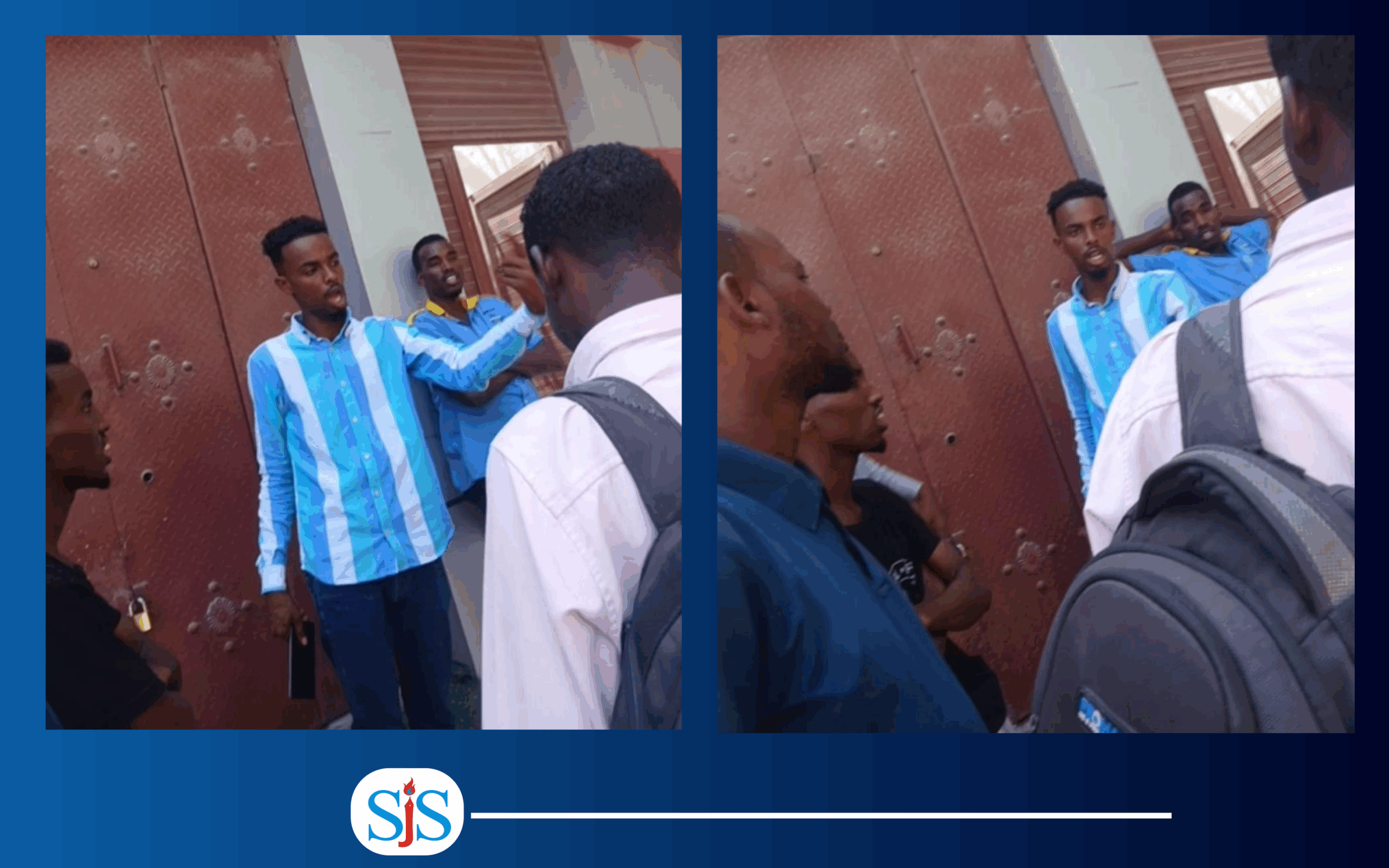
These photos, obtained by SJS, show the moment a plainclothes NISA officer stopped the journalists at Maka al-Mukarama Street in Mogadishu before taking them toward a police station and forcing them to pay the taxi fare.

Separately, on 16 November, a group of journalists was stopped by officers from the National Intelligence and Security Agency (NISA) while collecting vox-pop interviews about the disputed elections in Somalia. The group included Abdullahi Mohamed Ali and Abdullahi Abdulkadir Ahmed (both working for Himilo Media), Abdirahman Mohamed Waaberi (freelancer), and Ali Hassan Guure (cameraman from Risaala Media) along with his colleague Hamda Hassan Ahmed.

The journalists were initially taken toward a nearby police station but were released before reaching it. The journalists told SJS that they were told to pay the taxi fare incurred for their transportation to and from the police station, and they were released only after they paid the fare.