
Somali Journalists Syndicate (SJS) is an independent journalists’ trade union established in May 2019 by professional journalists to defend rights of working journalists, advocate for press freedom and provide legal aid. SJS is a member of Congress of African Journalists (CAJ) and CIVICUS,the global coalition of civil society organisations. Tel: +252 1 857551
SJS calls on NISA to remove officers and cease threats that forced Himilo Somali TV editor into hiding

MOGADISHU, Somalia, 08 November, 2024 – The Somali Journalists Syndicate (SJS) expresses grave concern over recent threats targeting journalists from Himilo Somali TV in Mogadishu by agents of the National Intelligence and Security Agency (NISA) due to their reporting on the security situation in Mogadishu. This intimidation has forced the station’s editor to go into hiding.
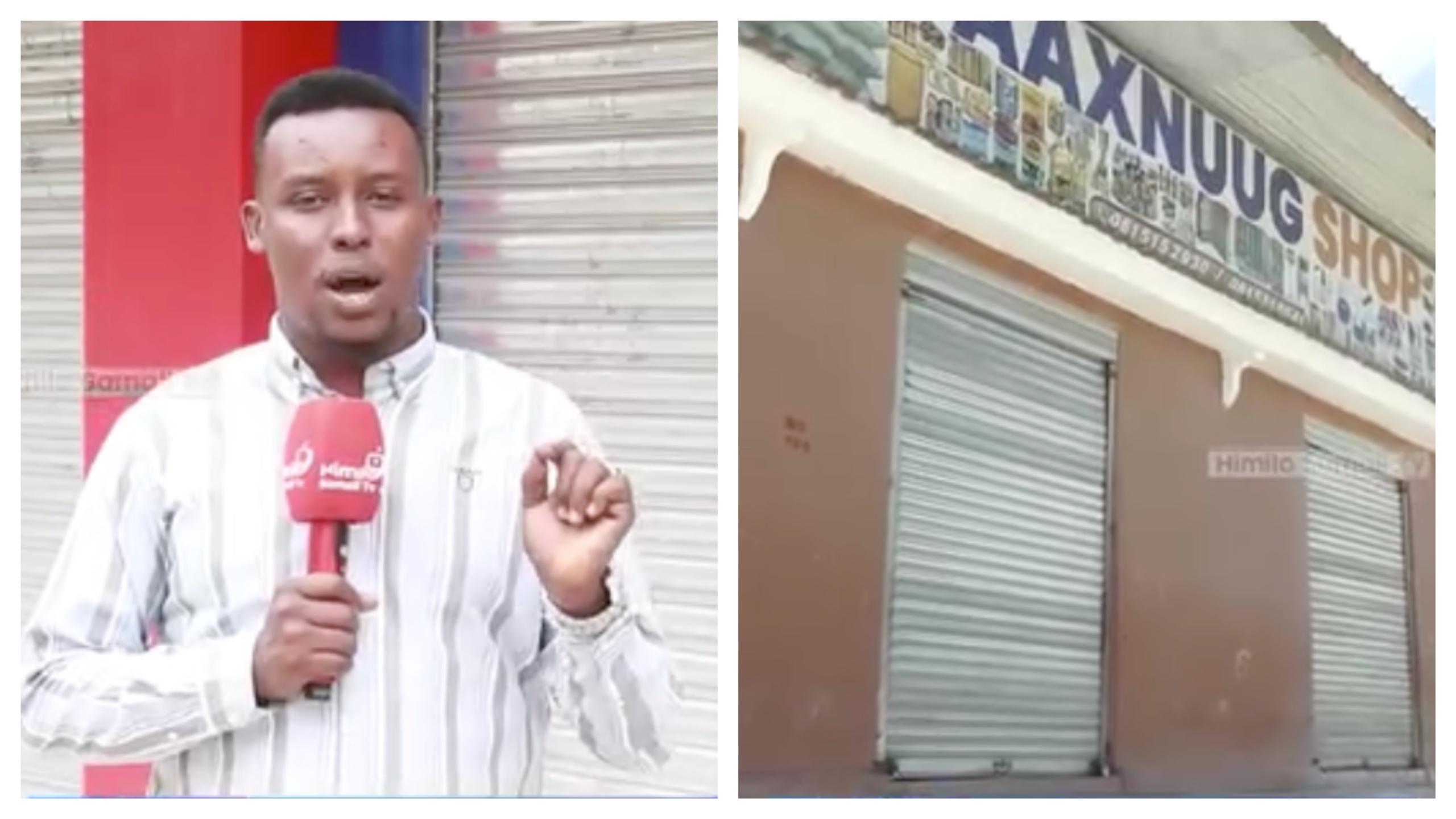
On Thursday, 31 October, Himilo Somali TV editor Nur Abdirahman Nur reported on the closure of business premises in the Somali capital,Mogadishu, documenting a wave of assassinations targeting members of the local business community. These attacks, attributed to al-Shabaab, are allegedly in response to business owners complying with a government order to install CCTV cameras on their premises. In the report reviewed by SJS, the journalist noted that many business owners “feared opening their shops due to potential targeting by al-Shabaab’s amniyat unit”.
Following the report, NISA agents raided Himilo Somali TV’s Mogadishu office in search of the journalist, who was not present at the time, according to the station’s founder and staff. Two staff members told SJS that NISA officials phoned them that day, demanding the report’s deletion under threat of severe consequences. Under these threats, Himilo Somali TV editors complied by removing the news report.
“Since that day, NISA agents have been stationed outside our studio every day, watching us. They also call us on the phone to inquire about our editor Nur Abdirahman Nur’s whereabouts,” said one journalist at the station who requested anonymity for safety reasons.
As a result, Nur Abdirahman Nur has gone into hiding, unable to return to work. He communicated to SJS that he fears for his safety, which prompted his decision to remain in hiding.
SJS has learned that a group of NISA officers responsible for four Mogadishu districts—Hodan, Hawlwadaag, Hamar Jajab, and Waaberi—has circulated Nur’s photo and name on WhatsApp group, urging people to report any information on his location. Earlier this week, plain-clothed NISA agents, carrying Nur’s photo, reportedly raided the home of one of his relatives, inquiring about his whereabouts.
Separately, on Monday, 28 October, two Himilo Somali TV journalists, Ibrahim Abdiweli Guled (reporter) and Yahye Mohamud Hersi (cameraman), were detained five hours and beaten by NISA agents while covering the assassination of Mogadishu businessmen by al-Shabaab in Daaru Salam district in Mogadishu.
SJS is deeply concerned about the threats and harassment directed at Himilo Somali TV’s journalists and their editor. We urge NISA to cease its search for journalist Nur Abdirahman Nur and withdraw the agents stationed outside Himilo Somali TV’s premises. SJS stands in solidarity with colleagues at Himilo Somali TV, who have faced unjustified threats in recent days
“It is shocking and disgraceful that, rather than securing the citizens and business community of Mogadishu, Somalia’s national intelligence agency is conducting raids and threatening journalists for simply reporting on security failures,” said SJS Secretary General Abdalle Mumin. “We call on NISA to halt these threats and withdraw all agents stationed outside Himilo Somali TV’s offices. Security agencies in Somalia should protect the civilian population, not target journalists.”
“Journalists should feel safe when reporting on matters of public interest, including security shortcomings. They represent the community, including the business community, which is agonized by this wave of assassinations in Mogadishu, and journalists remain the only voice these communities have,” Mr. Mumin added.
End Impunity Day: SJS joins journalists in Galkayo to honor fallen colleagues and demand justice
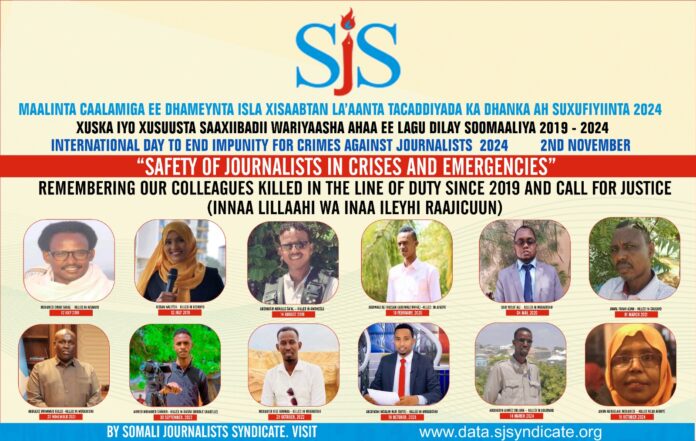
MOGADISHU, Somalia, 2 November 2024 – On this International Day to End Impunity for Crimes Against Journalists, the Somali Journalists Syndicate (SJS) renews its call for justice and accountability for journalists murdered in Somalia, and demands an independent and honest investigation to end the impunity for crimes against the media professionals in the country.
SJS emphasizes that ending impunity for crimes against journalists—whether the perpetrators are government officials, powerful clan militia groups, or al-Shabaab—remains essential to ensuring journalists’ safety and improving Somalia’s global reputation, currently among the worst for unsolved journalist murders.
Since SJS began tracking crimes against journalists in 2019, 12 journalists (two females and ten males) have been killed for their profession as journalists. Today, we honor their memories:
-
Mohamed Omar Sahal – Killed in Kismayo, 12 July 2019
-
Hodan Naleyeh – Killed in Kismayo, 12 July 2019
-
Abdinasir Abdulle Ga’al – Killed in Awdhegle, 14 August 2019
-
Said Yusuf Ali – Killed in Mogadishu, 4 May 2020
-
Abdiwali Ali Hassan (Abdiwali Online) – Killed in Afgoye, 16 February 2020
-
Abdiaziz Mohamud Guled – Killed in Mogadishu, 20 November 2021
-
Jamal Farah Adan – Killed in Galkayo, 1 March 2021
-
Mohamed Isse Koonaa – Killed in Mogadishu, 29 October 2022
-
Ahmed Mohamed Shakur – Killed in Basra (Middle Shabelle), 30 September 2022
-
Abdifatah Moalim Nur (Qeys) – Killed in Mogadishu, 16 October 2023
-
Abdikarin Ahmed Bulhan – Killed in Abudwaq, 14 March 2024
-
Amun Abdullahi Mohamed – Killed near Afgoye, 18 October 2024
Tragically, over 85 journalists– both local and international journalists – were murdered in Somalia since 1992, with most cases unsolved, leaving their families in prolonged grief. Mogadishu, Somalia’s capital and the federal government seat, leads with 85% of these murders, followed by Galkayo, a city divided between Puntland and Galmudug administrations in the Mudug region.
Today, in solidarity with the local media community, SJS joins journalists and the families of fallen colleagues in Galkayo to honor those lost and reinforce the call to end impunity. In conjunction, SJS has released a documentary highlighting Galkayo’s ongoing pain, as journalists and families continue to grapple with these losses.
Hussein Abdi Jim’ale Madar, a journalist with Radio Daljir, narrates the trauma and agony he carries following the killing of three colleagues.
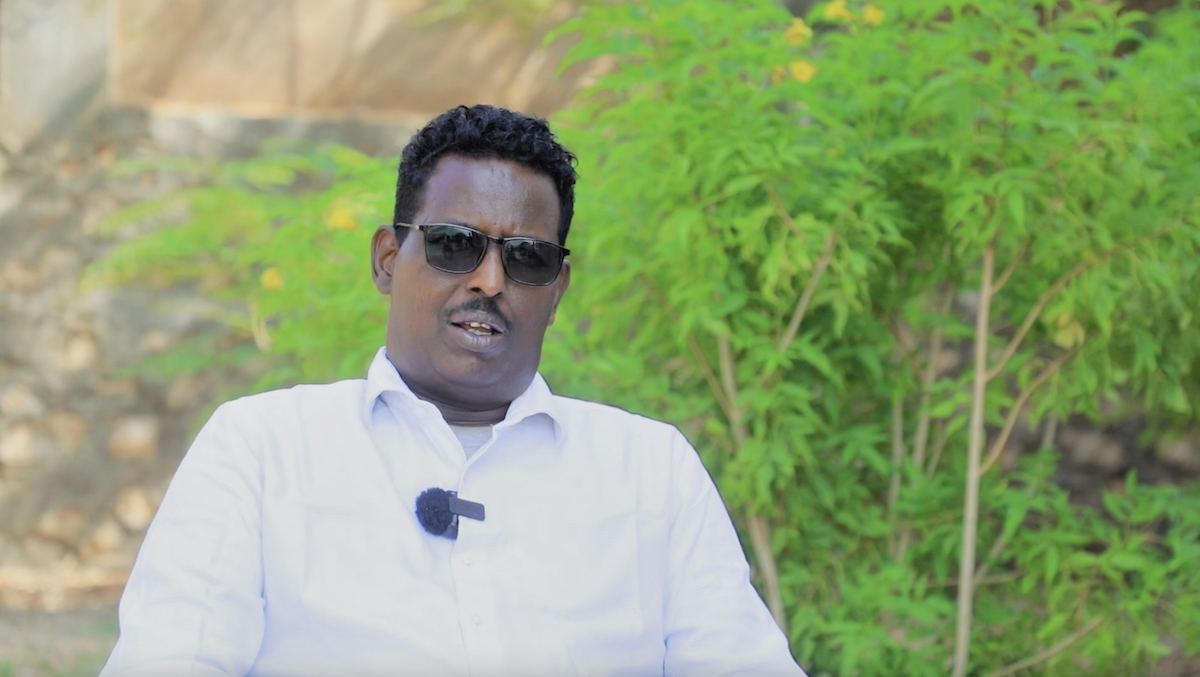
“I still feel the pain and feel traumatized. The three colleagues who were killed are still in my memory. There was a time when I nearly wanted to quit this job, but I later decided to carry on. I want to call on the government to document all journalists killed and provide care for their families,” Hussein Madar said.
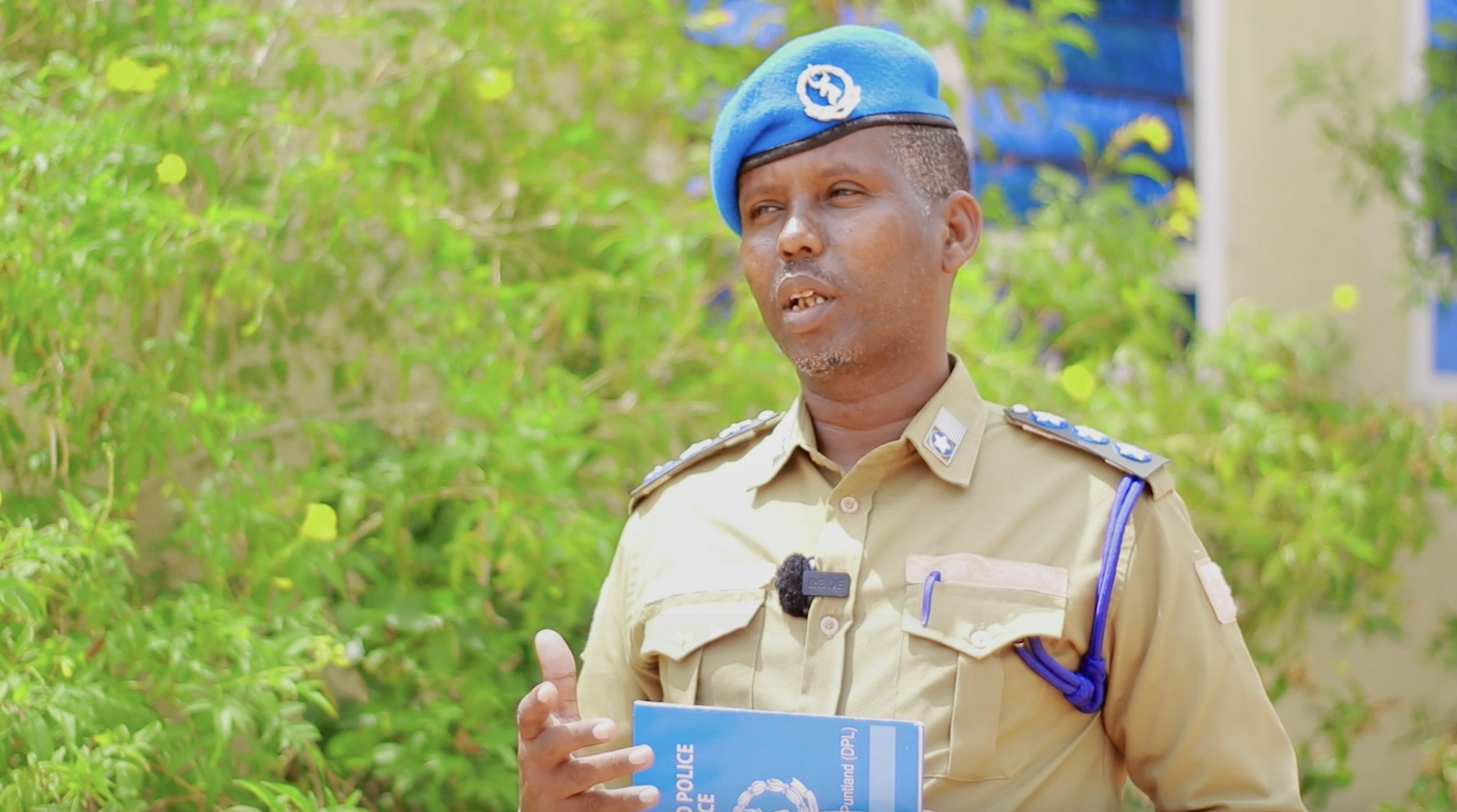
Galkayo police operations commander, Capt. Arab Abdirisaq Ahmed, told SJS that despite the impunity, Galkayo journalists feel safer than they were a decade ago.
“Journalists were killed, as were government officials. Some of the killers, who were members of Al-Shabaab, were arrested, sentenced, and executed. However, despite the impunity, I can say it is better than it was ten years ago,” Capt. Arab said, noting a close collaboration between the Puntland police in Galkayo and the local media houses and their journalists.
He said the police now respond to any reports of threats against journalists, despite the limitations of the capacity of the police.
Since 2021, SJS has provided ongoing professional training to improve the safety and security of local journalists, both men and women, in both sides of Galkayo. SJS is gratified that these trainings have contributed to enhancing the safety of media workers.
“Six years after we began documenting attacks on journalists in Somalia, we return to Galkayo—a city notorious as the second deadliest for journalists after Mogadishu. Through interviews and visits to the media outlets where these journalists once worked, we witnessed the lingering pain and grief of their colleagues and families,” said SJS Secretary General Abdalle Mumin.
“On this day, we underscore our call to end impunity for all journalists murdered in Somalia and to allow the victims’ families the justice they deserve. Each fallen journalist deserves a thorough and impartial investigation, regardless of who is implicated, including government officials, al-Shabaab, or other criminals,” added Mr. Mumin.
Note: After six years of manual documentation, SJS is grateful for the support it has received from the National Endowment for Democracy, which has enabled SJS to launch an online database for documenting violations of media freedom in Somalia and Somaliland. Visit data.sjsyndicate.org.
Local journalists in Hirshabelle trained by SJS to enhance climate change reporting and advocacy
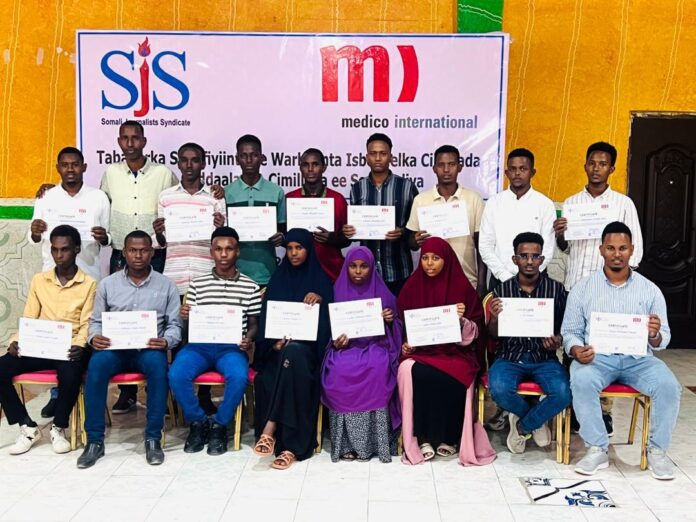
MOGADISHU, Somalia, 26 October 2024 – The Somali Journalists Syndicate (SJS) has completed another round of training to enhance climate change reporting and promote climate justice for journalists in Somalia’s Hirshabelle State.
The three-day program held in Beledweyne, Hiiraan region of Hirshabelle State from 20th – 22nd October, 2024, involved 15 local journalists. The training focused on climate-focused journalism, aiming to raise awareness among local communities in the region.
Beledweyne and Jowhar, the two main cities of Hirshabelle State, along with nearby towns, are among the areas hardest hit by recent floods, which have displaced thousands of families and severely disrupted lives. In December last year, NGOs reported that 90% of Beledweyne’s residents were displaced by flooding. In Jowhar, 77,000 people were displaced, with the city being one of the areas most affected by El Niño-related flooding. Although Hirshabelle is rich in agricultural land due to its riverine geography, recurrent droughts and flooding have forced communities into constant displacement.
Rowda Hussein Ali, a journalist with HiranWeyn Radio in Beledweyne, shared her perspective: “This is my first-ever training on climate change. Although I was born here and have lived through various humanitarian crises and flooding events, I didn’t have much understanding about climate justice or the critical role of journalists in raising awareness about these issues,” Rowda said.
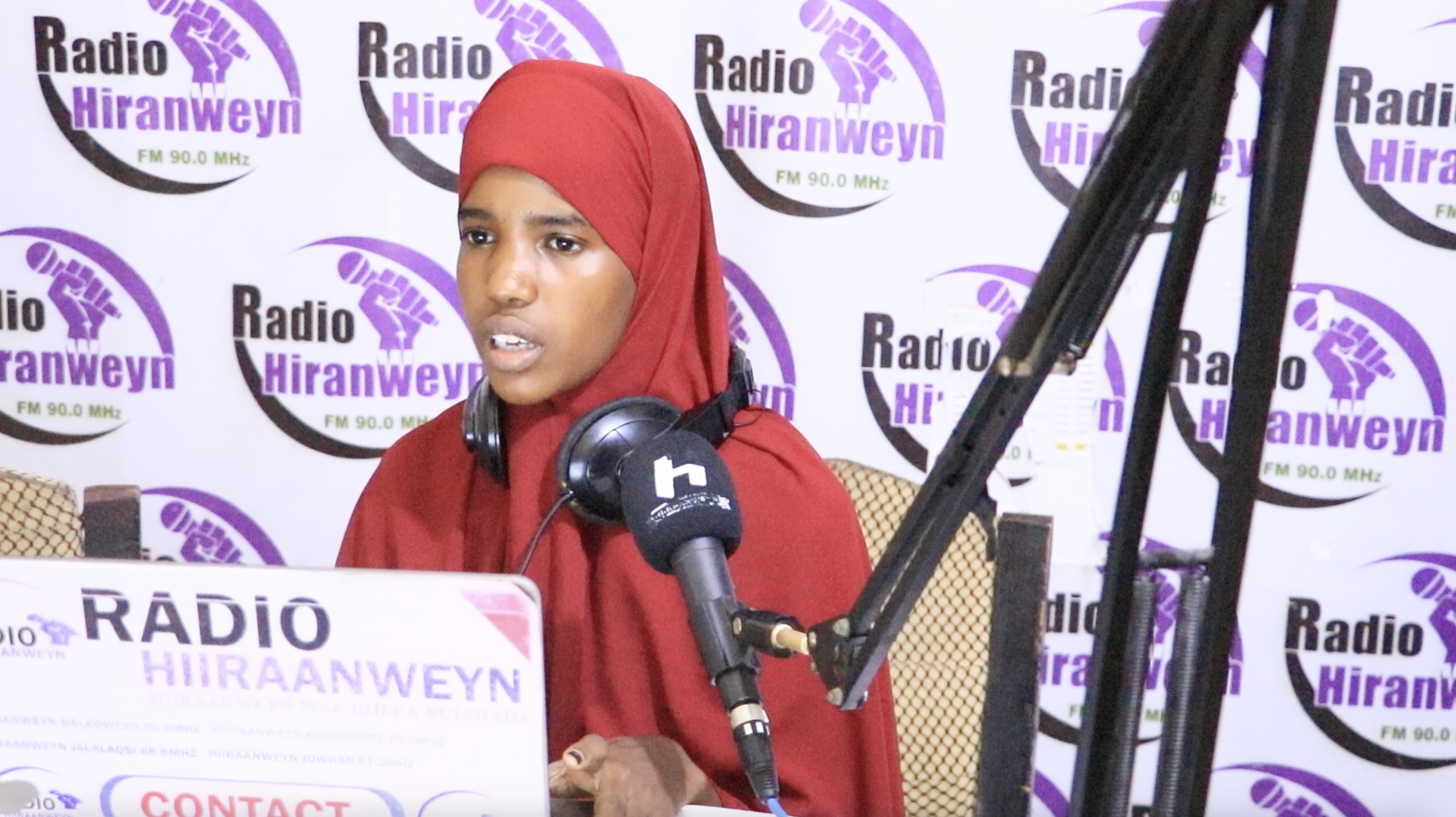
Another participant, Sadia Osman Abdi from Wadani FM, noted, “This training was particularly important for me as I am now equipped to engage in discussions seeking solutions for my community. Last year, my family and I fled our home after our neighborhood, Bundo Weyn, was severely flooded with water from the Shabelle river. All our neighbors were displaced, and the area we fled to became overcrowded, leading to disease outbreaks and surges in food prices due to disrupted supply chains. This made me to think about how best we can address this problem. I think my role is to raise the awareness over and over.”
Women journalists like Rowda and Sadia face additional challenges in a patriarchal society whenever they report on climate issues. They are often told that “women should stay home and serve the family, not speak on the radio.” They now want that culture to end.
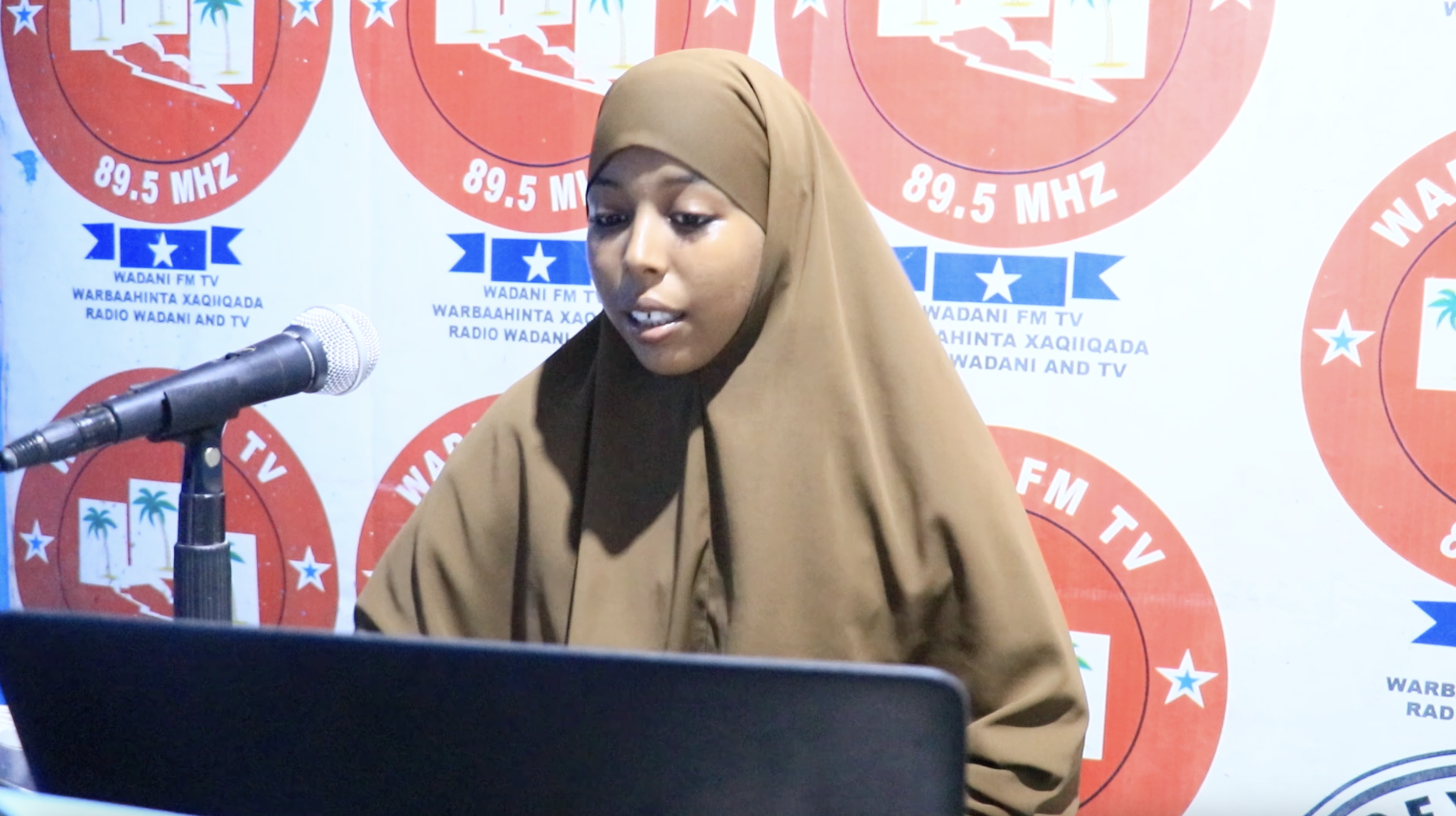
“We all face the same problems of climate change, and we must remember that there are women-headed households who want to be part of the discussion. I want to tell my community that we must work together as one, without the stereotypes surrounding our genders,” added Rowda.
During the training, however, SJS mentors encouraged both male and female journalists to contribute equally to discussions, fostering a supportive environment for women’s voices.
“While the climate crisis significantly impacts communities in this region, armed conflict and terror-related violence also persist, affecting locals,” said SJS Secretary General Abdalle Mumin. “This training not only equipped local journalists with new skills but also provided an opportunity for them to discuss and strategize on how to better report on climate impacts and advocate for climate justice.”
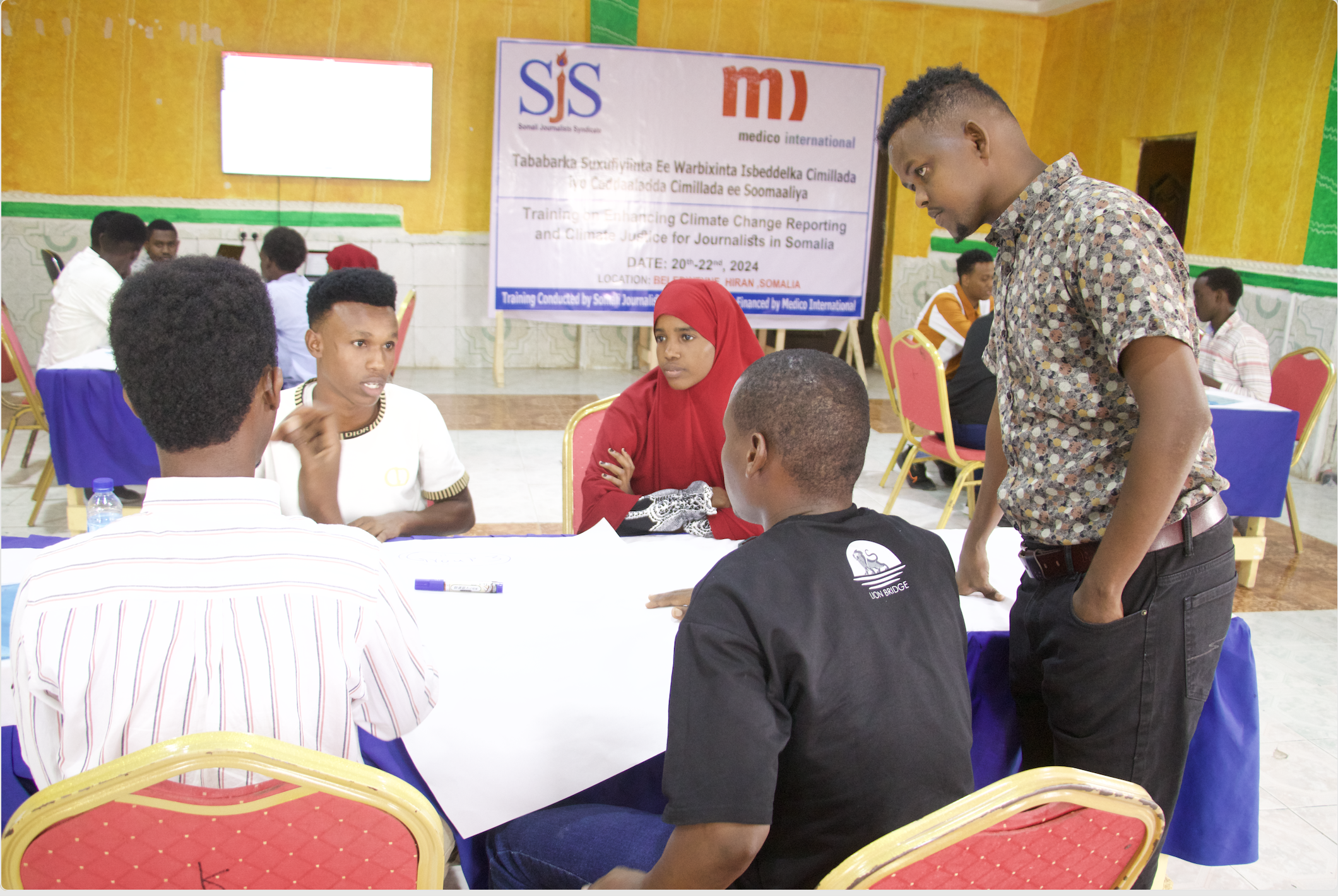
Mr. Mumin added, “Effective media reporting can save lives and is part of the solution. We are grateful to Medico International for supporting this initiative, enabling us to train 30 local journalists—both men and women—on this critical topic affecting communities here.”
The injustice of climate change disproportionately affects vulnerable groups in Somalia, including women, children, and rural communities. These impacts extend beyond daily life, affecting security, the economy, and social cohesion.
“Half of the communal conflicts in Somalia are linked to resource disputes over grazing land, water, and food. This underscores that climate change is impacting peace and stability, which is why it is essential for local media to be part of the solution,” Mr. Mumin concluded.
Somali-Swedish journalist Amun Abdullahi who investigated al-Shabaab recruitment shot dead in Somalia
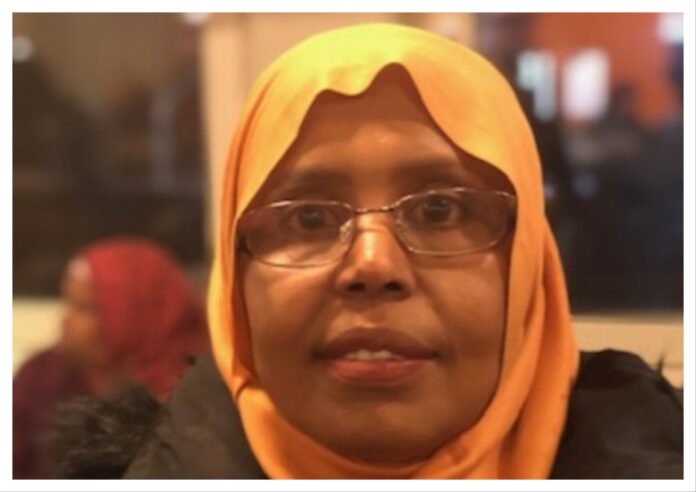
MOGADISHU, Somalia, 26 October 2024 – The Somali Journalists Syndicate (SJS) strongly condemns the killing of an award-winning Somali-Swedish woman journalist Amun Abdullahi Mohamed in a small village in Somalia’s Lower Shabelle region on Friday, 18 October, and demands a full investigation into the incident.
According to local journalists and a security source, Amun Abdullahi Mohamed was shot multiple times in the head by two gunmen suspected to be al-Shabaab militants as she walked to her sorghum and watermelon farm in Abdula Biroole village on Friday. Abdula Biroole, a village under the jurisdiction of the Afgoye district, Lower Shabelle region, is approximately 40 km (24 miles) southwest of the Somali capital, Mogadishu.
Local journalists, who spoke to SJS on condition of anonymity for fear of safety, said that Amun was approached by two men with AK-47s who had covered their faces, confirmed her name, and then fired multiple shots at her head, killing her instantly.
A security official in Afgoye district told SJS that the assailants were al-Shabaab militants and that authorities are aware the area is under the control of the militants.
“No police were sent to the area as it was not safe for them,” the officer said.
Amun, 49 years old, relocated from Sweden and resettled in the small rural village, where she lived with her extended family members. She also started a farming project producing sorghum and watermelon, which provided employment for locals. A local journalist told SJS that she also cared for extended family members who live in the village.
Amun’s journalism gained prominence in the early 1990s after she fled Somalia and sought asylum in Sweden, where she worked for the Swedish Somali language radio (Sveriges Radio). In 2010, she received the Swedish Publicist Club’s Freedom of Speech Award in memory of Anna Politkovskaya. This recognition followed her groundbreaking investigative journalism exposing al-Shabaab’s recruitment of young people from the Stockholm suburb of Rinkeby to fight in Somalia. Amun’s investigative reporting led to her receiving death threats, according to colleagues who worked with her and news reports.
Despite these threats, Amun chose to resettle in Somalia a few years ago, ultimately settling in Lower Shabelle. Local officials in Afgoye confirmed that no investigation has begun yet.
Amun is the second journalist killed in Somalia in 2024 after the killing of journalist Abdikarin Ahmed Bulhan in March, and the fifth journalist killed in recent years in Lower Shabelle, one of the most dangerous places for journalists, according to documentation by SJS and the Committee to Protect Journalists (CPJ).
Previous cases include:
- On 16 February 2020, freelance TV and radio journalist Abdiwali Ali Hassan (known as Abdiwali Online) was shot dead in Afgoye town by gunmen.
- On 14 August 2019, Abdinasir Abdulle Ga’al, a camera journalist with Somali National Army Radio, was killed in a car bomb attack by al-Shabaab at an army base in Awdheegle.
- On 27 October 2018, Abdullah Mire Hashi, a journalist with Radio Darul Sunnah, was gunned down by armed assailants in Elasha Biyaha, a suburb of Afgoye.
- On 1 January 2009, local radio journalist Hassan Mayow Hassan was killed in Afgoye town by gunmen.
SJS calls for a full investigation into the killing of Amun Abdullahi Mohamed to bring the perpetrators to justice. We urge Somali authorities to initiate an investigation into those responsible for Amun’s death. We also call on the Swedish government to support efforts to investigate and apprehend the killers so they can be held accountable. We mourn with Amun’s family and community as they go through this difficult time, and we pray for strength and comfort for them. Inna Lillahi wa inna ilayhi raji’un. (Indeed, we belong to Allah, and indeed, to Him we will return.)
“Inna Lillahi wa inna ilayhi raji’un. We are indeed shocked by the assassination of yet another journalist in Somalia. We condemn in the strongest terms the brutal killing of Amun Abdullahi Mohamed. Amun, who lived in Sweden decided to return to her home country despite the reported death threats she faced. After he return she contributed to her community through a farming project that helped not only those around her but the community as well,” said SJS Secretary General Abdalle Mumin.
“We urge Somali authorities to conduct a swift and thorough investigation to bring those responsible to justice. This tragedy underscores the urgent need for greater protections for journalists across Somalia, as only by ending the impunity for crimes against journalists can we ensure their safety. Therefore, we call upon all stakeholders, including Somali authorities and the international community, to stand with us in demanding accountability and safeguarding journalists in Somalia,” Mr. Mumin adds.
Risaala Media’s senior journalist abducted from his home in Mogadishu
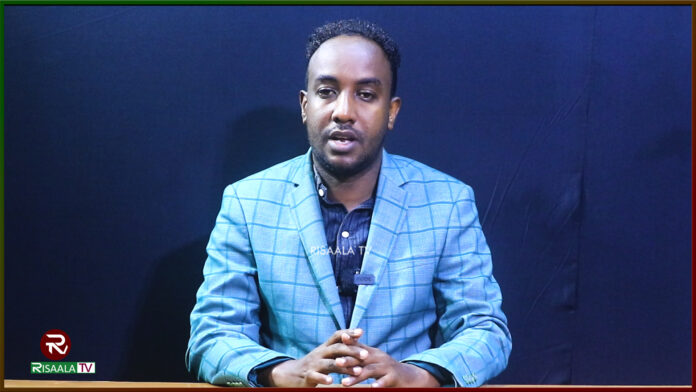
MOGADISHU, Somalia 18 October 2024 – The Somali Journalists Syndicate (SJS) condemns the unlawful raid and abduction of SJS member journalist Abduqadir Mohamed Nur (Jakarta), who was forcibly taken from his home in Boondheere district by armed personnel from the National Intelligence and Security Agency (NISA) in the early morning of Friday 18 October, according ti family members and the management of Risaala Media Corporation.
According to the director of Risaala Media Corporation, Mohamed Abduwahab Abdullahi, armed men from NISA arrived at the journalist’s house at around 3:00 AM on Friday, 18 October, and kidnapped the journalist. A family member saw two NISA officers enter the house and handcuffed the journalist, while several others were stationed outside in a Toyota 4WD vehicle equipped with machine guns.
The men who entered the journalist’s house confiscated the journalist’s phone and his personal laptop, Risaala Media Corporation’s director told SJS.
“The management of Risaala Media condemns the abduction and unlawful actions taken against journalist Abduqadir Mohamed Nur (known as Jakarta) and demands his immediate release,” said Risaala Media’s general director, Mohamed Abduwahab.
On Friday morning, SJS was informed by a security source that the journalist was held in the notorious Godka Jila’ow, a torture and detention facility run by NISA in Mogadishu.
NISA officials did not, however, respond to SJS calls seeking response on the abduction of the journalist and the raid on his house.
Risaala Media Corporation, which operates Radio Risaala and its affiliated Risaala TV, has been a critical voice regarding Somali security services in Mogadishu and President Hassan Sheikh Mohamud’s administration. In the past several of Risaala journalists and staff were detained, as per SJS documentations.
This brazen attack against the Risaala Media Corporation journalist in the safety of his home, in the middle of the night, in the presence of his family, is a clear violation of press freedom and his human rights. The use of force by state security agents to silence members of the press not only threatens the safety of individual journalists but undermines the right of the public to access free and independent information.
“We call on the Somali authorities, specifically NISA, to immediately release our colleague Abduqadir Jakarta and guarantee his safety. Furthermore, we demand an independent investigation into the circumstances of this illegal act, holding those responsible accountable for violating the rights of journalists and the principles of justice,” said SJS Secretary General, Abdalle Mumin.
Local journalist Luqman freed after spending a night in detention in Gedo region over Facebook post
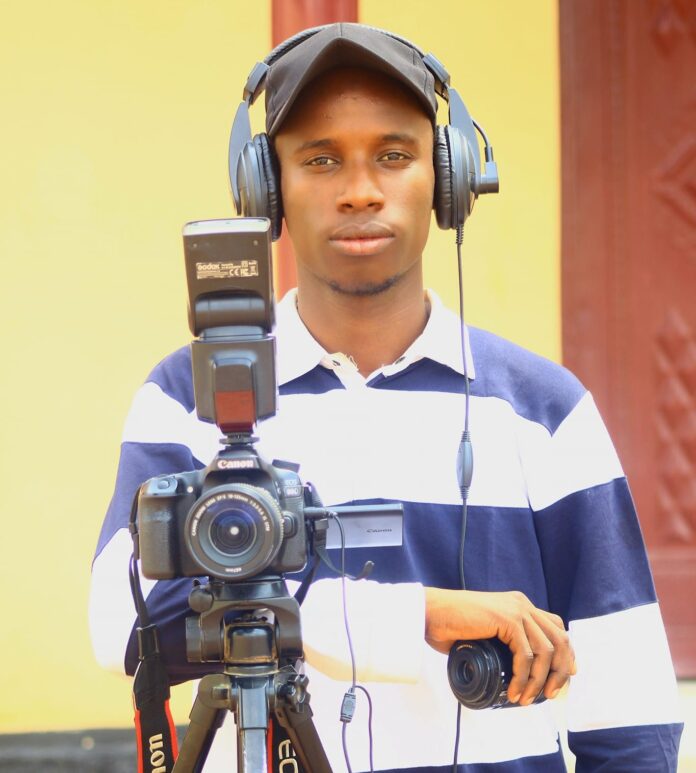
MOGADISHU, Somalia, 4 October, 2024 – The Somali Journalists Syndicate (SJS) welcomes the release of journalist Luqman Sheikh Abdullahi Kerow, on Friday evening 4 October. He had spent more than 24 hours in NISA detention in Luuq town, Gedo region, Somalia.
At around 4:00 pm local time, on Thursday, 3 October, 2024, the Arlaadi Media Network reporter Luqman Sheikh Abdullahi Kerow was detained at a NISA detention center in Luuq town. The journalist’s arrest followed a post on his Facebook page announcing the “upcoming appointment of a new security commander for Luuq town”, a director of Arlaadi Media Network Abdirahman Jeylani, told SJS.
According to the journalist and other sources in the region, Luqman was called by the NISA commander in Luuq town, Abdirahman Sahane, and was ordered to come to the NISA office on Thursday. Upon his arrival, he was questioned about the source of his post regarding the new security commander’s appointment. He was then detained at the NISA detention center in Luuq town, where he spent the night.
He was freed this evening on Friday at 8:00 pm after being forced to delete the Facebook post and publish an apology, which is still online on his Facebook page.
“There were no charges, but my phone was confiscated. When my parents came to see me, they were denied access,” Luqman told SJS shortly after his release.
Luuq town has recently witnessed widespread violence, resulting in the displacement of the local community after clan militia groups, backed by local security forces, fought over the control of the town. Journalists told SJS that despite efforts to reconcile the warring sides, tension still remains, making it difficult for local journalists to operate.
Journalists are not only affected by the conflict but also by the humanitarian crisis impacting their communities. In recent SJS training activities, Luqman and other reporters in the region were trained in reporting on the impacts of climate change on their communities, as Gedo region continues to be severely affected by worsening climate conditions. In April this year, nearly 100,000 people were affected by heavy rains and flash floods that hit the previously drought-stricken Bardhere district in the Gedo region alone.
“We strongly condemn the unjust detention of journalist Luqman Sheikh Abdullahi Kerow and the continued harassment of journalists in Gedo region. While we welcome Luqman’s release,” said SJS Secretary-General, Abdalle Mumin.
“We call on the local authorities in Gedo region to cease the intimidation and unlawful treatment of journalists who are simply doing their job by reporting on matters of public interest. Journalists must be allowed to operate freely and without fear of retribution,” Mr. Mumin added.
Maay-Language journalists and those advocating for women’s justice face discrimination and threats in Mogadishu
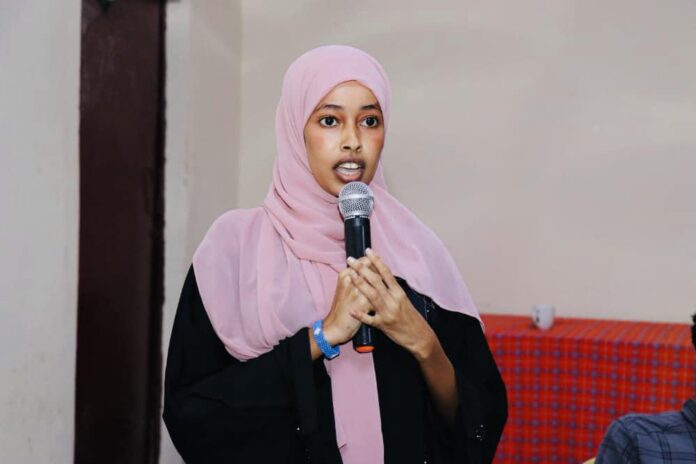
MOGADISHU, Somalia, 19 September 2024 – The Somali Journalists Syndicate (SJS) is concerned about recent incidents of hate speech and discrimination targeting media houses broadcasting in the Maay language and journalists covering the court case of a femicide victim in Mogadishu.
On 16 September 2024, a female journalist working for the Maay-language private broadcaster Arlaadi Media was subjected to what has been described as “discriminatory” harassment during a press conference jointly held by Somali Minister of Foreign Affairs Ahmed Moalim Fiqi and the Executive Secretary of the Intergovernmental Authority on Development (IGAD), Dr. Workneh Gebeyehu, in Mogadishu. During the press briefing held at the Ministry of Foreign Affairs building, journalist Amina Ibrahim Abdirahman grilled Minister Fiqi on recent derogatory statements he made regarding Somalia-Ethiopia relations, following tensions between the two countries.
However, before the journalist could finish her question, she was interrupted by Mohamed Abdi Waare, the current Deputy Executive Secretary of IGAD and former president of Somalia’s Hirshabelle regional state who in an audible voice, interrupted and told her “to stop” asking her question.

According to journalists who were present at the event, Mr. Waare not only intimidated the female journalist, but his actions were also a clear attempt to demean her language on an important subject, amid growing hate speech toward certain communities. Amina told SJS that she “felt frightened, belittled, and demeaned” because of her language and the context in which she asked such an important question to the officials.
Despite Minister Fiqi allowing the female reporter to continue her question, he proceeded in his response to cast doubt on his understanding of the Maay language.
Separately, journalists and editors who speak the Maay language told SJS that they feel discriminated against. Sometimes their requests for interviews are turned down by government officials and supporters of the federal government in Mogadishu.
This comes just a few weeks after a comment made by the Director-General of the Ministry of Transport and Civil Aviation of Somalia’s federal government referred to the people of Baay and Bakool, predominantly Maay-language speakers, as “children of Ethiopian men,” in reference to recent protests in those regions against the reported deployment of Egyptian forces as part of the new AU mission for 2025.
SJS is also concerned about the recurrent hate-filled rhetoric directed at journalists covering the court case involving the killing of Luul Abdiasis, a 29-year-old pregnant woman from a marginalized community who was brutally murdered by her husband on 26 January 2024 in Mogadishu. The suspected perpetrator, who had previously evaded justice, was arrested and has been in court since February. However, media houses and journalists advocating for justice for Luul and her family have repeatedly been labeled as “causing fitnah” or discord, as some have even pointed fingers to the community these journalists come from.

On Wednesday, 18 September, a group of people gathered outside the Banadir Regional Court, where a statement was made once again targeting journalists with intimidation.
SJS denounces these statements and all hate-filled remarks directed at the brave journalists reporting on human rights. These journalists deserve protection and praise, not intimidation, hate, and threats.
“We strongly condemn the recent hateful remarks made against journalists and media houses covering the court case of victim Luul Abdiaziz. We call for those making these statements to stop. We also denounce the discrimination and hate targeted at Maay-language journalists in Mogadishu,” said the Secretary-General of SJS, Abdalle Mumin.
“We call on federal government authorities to investigate their officials and other individuals for making hateful statements against media and community members and to hold them accountable. Journalists who risk their lives to cover human rights issues deserve protection, and their work should be recognized as crucial for holding perpetrators of human rights violations accountable,” added Mr. Mumin.