
Home Blog Page 7

No More Whitewashing: Somalia must uphold Constitution and International norms in forming human rights commission

0
SJS Press Release logo
SJS Press Release logo.

MOGADISHU, Somalia 2 June 2025 – The Somali Journalists Syndicate (SJS) expresses deep concern over the Somali president’s office attempting to establish a puppet National Human Rights Commission (NHRC) through a non-transparent, unconstitutional, and politically manipulated process that blatantly contravenes both Somalia’s Provisional Constitution and international human rights standards.

If left unchallenged, this move risks enabling the whitewashing of grave human rights violations across the country.

On Saturday, 31 May 2025, SJS observed media reports indicating that the Minister of Women and Human Rights had began the selection of the members of the yet-to-be-formed NHRC. This body, according to the Provisional Constitution, is to be established by the Federal Parliament, not by the President’s Office or a cabinet minister.

It is deeply concerning that Minister Khadija Mohamed Al-Makhzoumi, acting under instructions from President Hassan Sheikh Mohamud, proceeded this process without transparency and legal clarity thereby violating both national laws and international norms.

SJS reiterates the urgent need for a genuinely independent National Human Rights Commission, as articulated in Article 41 of the Provisional Constitution, which states:
“The Federal Parliament shall establish a Human Rights Commission that is independent of State control, and has adequate resources to carry out its functions effectively.”

The Constitution also states what functions this commission is going to undertake and it states “The functions of the Human Rights Commission (NHRC) shall include the promotion of knowledge of human rights, setting implementation standards, monitoring rights violations, and investigating alleged abuses.”

In addition, Law No. 18 of 2016, enacted on 14 August 2016, provides the legal framework for the Somalia National Human Right Commission, emphasizing its “independence from government control, transparency, and autonomy in decision-making.”

Contradictions in the Current Process

Despite these clear legal provisions, the current process was initiated by President Hassan Sheikh Mohamud, through Minister of Women and Human Rights, Khadija Al-Makhzoumi, without any legal basis or public participation. Individuals—many with ties to government ministries or personal connections to top officials—were invited for a so-called examination, without a publicly announced or merit-based selection procedure.

This is not the first irregularity.  In December 2023, the same ministry sent emails calling for NHRC applications via email (seen by SJS) and has been reported by the media. However, many qualified applicants reported receiving no response. Later, they discovered through the media that certain individuals had already been selected without public vetting or due process.

Why is the government pushing this now?

Somalia has never had an independent national human rights commission. For years, federal authorities in Mogadishu have delayed or resisted the establishment of a credible NHRC. The process has been plagued by political interference, lack of transparency, and non-compliance with constitutional and international obligations.

This move comes at a time of intense political instability and fragmentation in Somalia. The federal government’s relations with Puntland and Jubaland have deteriorated. Meanwhile, unilateral constitutional amendments and electoral reforms are being pushed forward by President Hassan Sheikh’s administration. Simultaneously, attacks on journalists, human rights defenders, and civilians by both the government and Al-Shabaab have increased.

Establishing a government-controlled NHRC in this volatile context would not serve justice—it would only legitimize repression, whitewash abuses, and shield violators from accountability.

SJS reminds the Somali government—particularly the Ministry of Women and Human Rights and President Hassan Sheikh Mohamud—that the NHRC must be formed in line with international norms, notably the Paris Principles, adopted by the UN General Assembly in 1993, and reinforced by the Kigali Declaration (2003) of the African Union.

The Paris Principles emphasize:

  • Transparent and participatory selection processes involving civil society, academia, and human rights organizations.
  • Merit-based selection of the commission members grounded in integrity and commitment to human rights.
  • Public calls for applications, background checks, and open vetting.
  • Independent, pluralistic selection committees free from political influence.
  • Parliamentary oversight and legal grounding to ensure independence and legitimacy.

Similarly, the African Commission on Human and Peoples’ Rights (ACHPR) Resolution 31 requires that NHRIs: (a) Be established by constitutional or legislative mandate; (b) Be independent of government control; (c) Have a broad, actionable mandate, including powers to investigate, report, and recommend action; (d) Be financially autonomous.

What we witnessed on Saturday in Mogadishu stands in direct violation of all these standards.  SJS calls on the Federal Government of Somalia to immediately halt the ongoing process and restart the formation of the NHRC in full compliance with Article 41 of the Provisional Constitution and international standards.

SJS makes the following recommendations:

  • The Somali government must reform the election process and ensure it is legally grounded, publicly communicated, and free from political interference in any form.
  • As requires by the Constitution, the Parliament must establish an Independent Selection Committee and include credible and trustworthy representatives from civil society, minority groups, academia, and legal experts with clean background.
  • The Parliament must ensure transparent vetting and appointment procedures, and base appointments on objective, merit-based criteria with public oversight.
  • The federal government must guarantee NHRC independence and the commission must operate free from government control or political manipulation.
  • The Parliament must ensure oversight to ensure that all appointments must be reviewed and confirmed by the Federal Parliament following broad consultations with civil society.
  • The selection committee must prevent rights abusers from involvement in the committee and individuals implicated in human rights violations must be barred from participating in the selection process or serving on the commission.

SJS Call to Somali Civil Society

SJS urges independent Somali civil society organizations to take a proactive role in advocating for a credible, inclusive, and transparent NHRC formation process. Somalia deserves a national human rights institution that defends victims and holds all actors accountable, including the state.

SJS Call to the International Community

SJS also call on international partners, and development organizations to closely monitor this process and ensure that any support provided aligns with international human rights standards and promotes a genuinely independent NHRC.

“This flawed process of the selection of the National Human Rights Commission can and must be corrected. SJS affirms that a credible, independent National Human Rights Commission is far better than a politicized, government-controlled one. Somalia needs an National Human Rights Commission that protects the rights of its people—not one that enables impunity,” said SJS Secretary General, Abdalle Mumin.
EU-trained police raid local radio, arrest journalist in Lower Shabelle; Turkish-trained Haramcad forces attack three journalists in Mogadishu

0
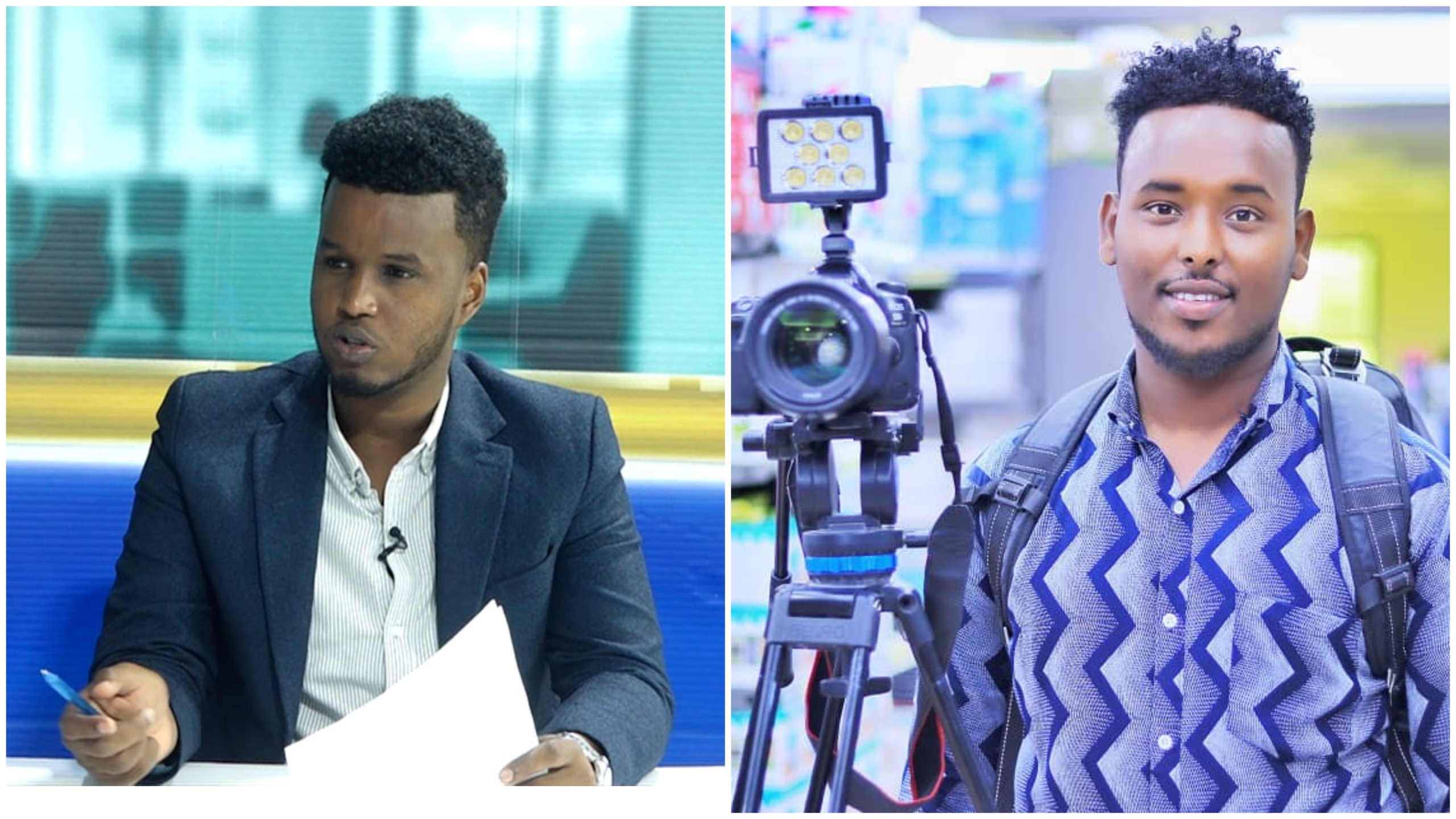
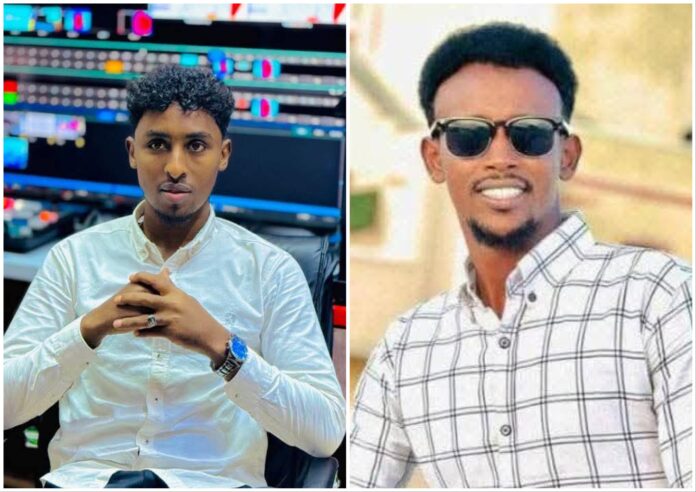
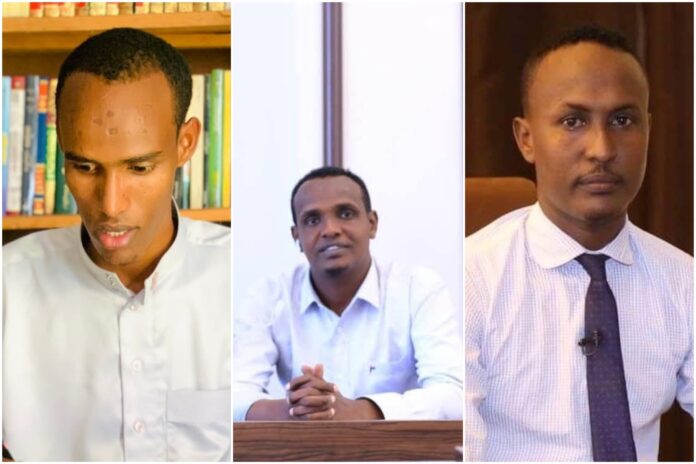
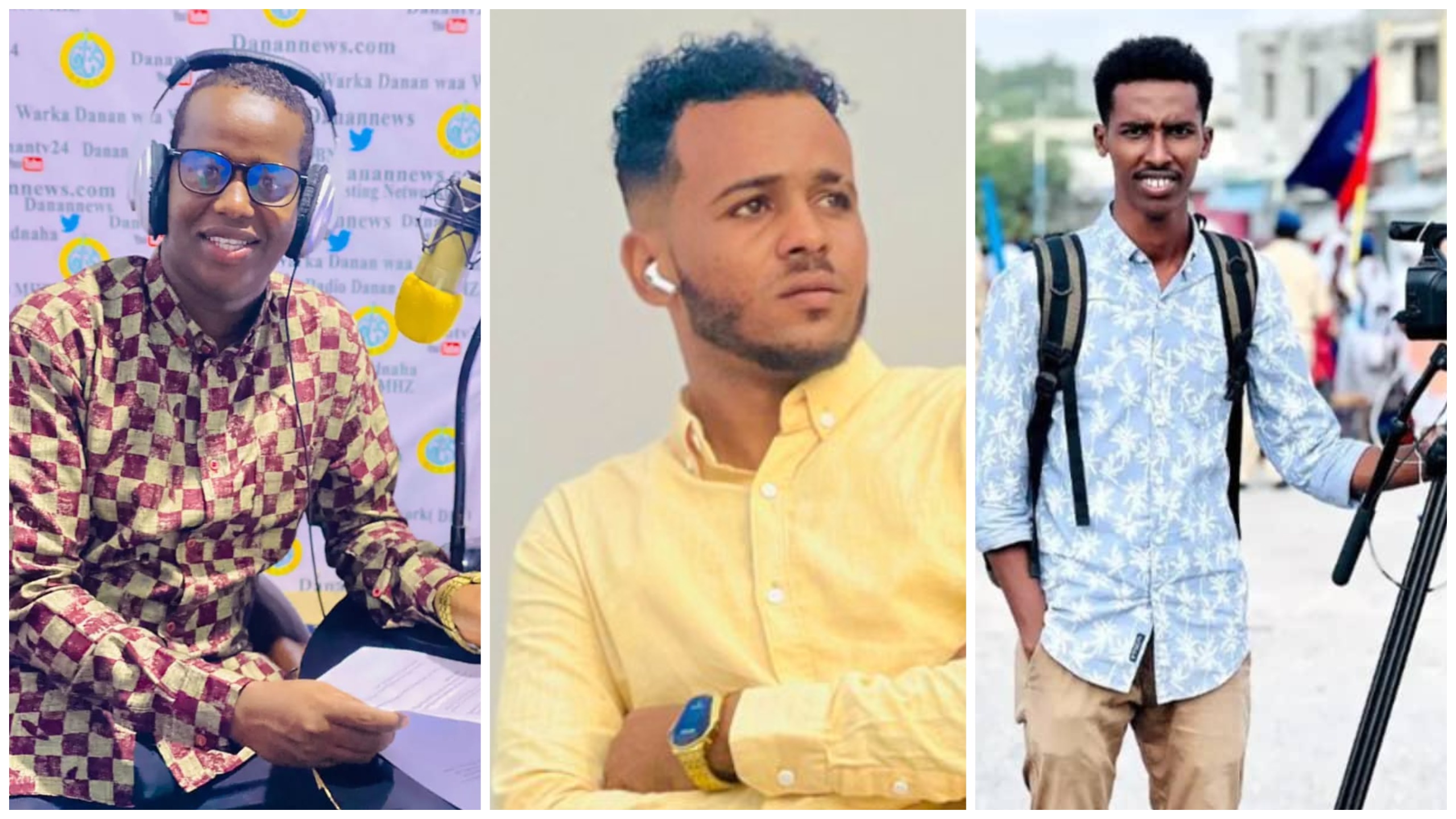
(From left to right) Nuh Farah Mahad (reporter, RTN TV), Mohamed Abdukadir (cameraman, RTN TV), and Mohamed Abdi Hassan (reporter, Five Somali TV). || PHOTO/Combined/SJS.

MOGADISHU, Somalia – 01 June 2025 – The Somali Journalists Syndicate (SJS) strongly condemns the arrest of Ismail Khalif Ahmed, the director and founder of Radio Wanlaweyn FM, in Wanla-Weyn town, Lower Shabelle region on Friday 30 May, as well as the attack on three journalists from RTN TV and Five Somali TV in Mogadishu on Saturday 31 May.

On the night of Friday 30 May, armed officers from Wanla-Weyn Police Station raided the privately owned Radio Wanlaweyn FM and arrested its director, Ismail Khalif Ahmed. The arrest followed the station’s publication of a report that exposed alleged forced “payments demanded” by the Wanla-Weyn district administration from the local community under the pretext of funding the construction of Wanla-Weyn Hospital. According to the now-deleted report on Radio Wanlaweyn FM’s Facebook page, local residents resisted paying because they lacked trust in the district authorities.

Speaking to SJS, Ismail confirmed that he was arrested under the orders of Wanla-Weyn District Police Commissioner Isak Abdulle and District Commissioner Abdukadir Mohamed. He was held overnight in a police cell, where he was subjected to threats and interrogation.

Ismail said he was warned that he “would remain in jail unless the report was taken down and a public apology issued”. As a result, Radio Wanlaweyn FM removed the report about the forced payments as well as the news item about Ismail’s own arrest.

When SJS inquired why the report on Ismail’s arrest had also been deleted, Ismail confirmed that police had specifically demanded its removal.

On 31 May, Radio Wanlaweyn FM published an apology on its Facebook page stating: “Regarding the post we shared on Facebook last night, we offer our sincere apologies to anyone who felt offended. Our intention was to correct things and bring progress, not to cause harm to anyone in particular. We are genuinely sorry if some people interpreted it differently.”

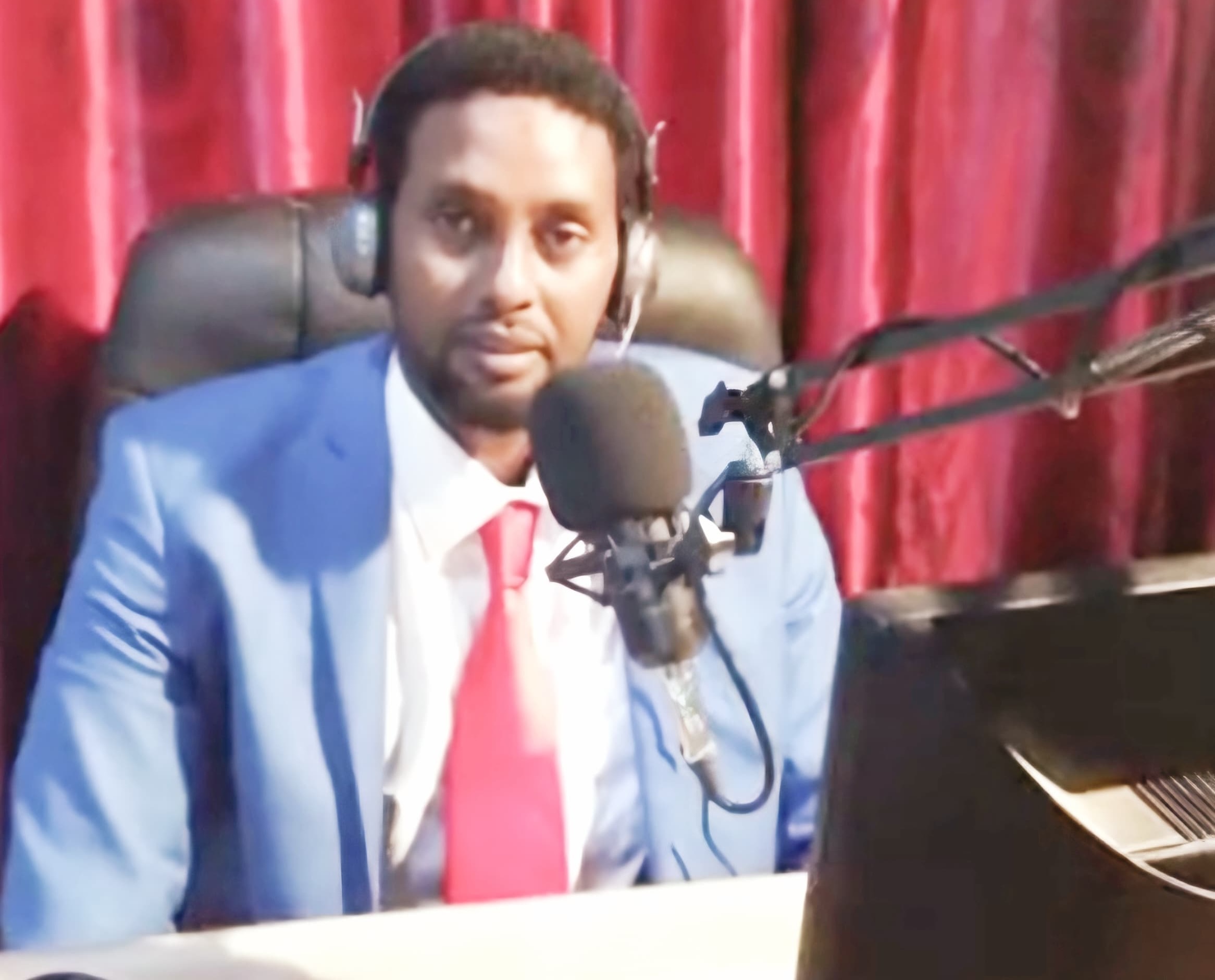
Ismail Khalif Ahmed, the director and founder of Radio Wanlaweyn FM, in Wanla-Weyn town. | PHOTO/ Courtesy/SJS.

Both Police Commissioner Isak Abdulle and District Commissioner Abdukadir Mohamed failed to respond to SJS’s inquiries.

Abdulle is reportedly part of the EU-trained Darwish police unit deployed by the South West State. Wanla-Weyn, one of the eight districts of Lower Shabelle, remains a conflict-prone town located on the road between Afgoye and Baidoa. The area has witnessed recurrent clashes between rival clan militias with increased gunmen setting up illegal roadblocks, and continued activity by the militant group Al-Shabaab.

Separately, on Wednesday 28 May, Turkish-trained Haramcad forces in Mogadishu’s Kaxda district targeted three journalists: Nuh Farah Mahad (reporter, RTN TV), Mohamed Abdukadir (cameraman, RTN TV), and Mohamed Abdi Hassan (reporter, Five Somali TV).

The journalists were covering a protest by local elders who had been excluded from the controversial voter registration process recently launched by the federal government in Mogadishu. According to interviews conducted by SJS, the journalists were attacked shortly after leaving the elders’ press conference.

Armed Haramcad officers detained the journalists for nearly an hour, threatened them, and demanded they hand over their equipment. A group of clan elders intervened, allowing the journalists to escape.

In another incident on 26 May, journalists from multiple outlets were attacked in the same district while reporting on the alleged abduction of local laborers by the National Intelligence and Security Agency (NISA.

The laborers, mostly porters and construction workers, were initially told they would be offered jobs, only to be locked up and forcibly registered as voters.

Journalists said they were forced to flee when gunmen from the National Intelligence and Security Agency (NISA) attacked them with pistols. On the same day, RTN TV reported heightened tensions as police conducted door-to-door raids in Kaxda, forcing residents to register as voters.

A similar incident occurred in Mogadishu’s Bakara Market, where journalists were threatened and had their equipment confiscated while gathering evidence of forced voter registration in the city’s main market. Journalists said street vendors and shop owners had been abducted by NISA officers and compelled to register as voters against their will.

“The increasing pattern of unlawful arrests, threats, and censorship targeting journalists reporting on electoral processes and corruption is deeply alarming. We strongly condemn these recent attacks including the raid on Radio Wanlaweyn FM and the arrest of Ismail Khalif Ahmed on Friday,” said Abdalle Mumin, the Secretary General of the Somali Journalists Syndicate (SJS).

“The use of security forces to silence critical reporting and intimidate journalists in Mogadishu and Lower Shabelle not only undermines media freedom but also exposes the government’s lack of tolerance for transparency and accountability,” Mr. Mumin added “We call for an immediate end to such violations and for all officials and security personnel involved to be held accountable.”

Media worker killed in Mogadishu, SJS calls for full investigation

0
Abdifatah Abdi Osman, widely known as Arab was shot dead in Mogadishu on Sunday, 25 May 2025. | PHOTO/Astaan TV.

MOGADISHU, Somalia, 26 May 2025 – The Somali Journalists Syndicate (SJS) strongly condemns the killing of Abdifatah Abdi Osman, widely known as Arab, a media worker for Astaan TV, a privately-owned cable network in Mogadishu.

Arab who was a television technician was shot dead by a gunman on the morning of Sunday, 25 May 2025.

According to colleagues, Arab was on his way to work at Astaan TV’s headquarters in Mogadishu’s Hodan district when he was shot by a security guard at a nearby private hotel apartment.

Arab was riding his motorbike when the incident occurred. Despite being rushed to the hospital, he was pronounced dead shortly after arrival, a director at the station told SJS.

SJS has learned that the police have arrested a middle-aged suspect believed to be the gunman. An investigation is ongoing, according to the police.

SJS strongly condemns the killing of Abdifatah Abdi Osman (Arab), a dedicated media worker. Astaan TV staff have previously faced threats from various actors. The station, known for its entertainment and sports programming, reaches millions of households in Mogadishu and across other regions.

“We send our heartfelt condolences to the family and friends of Abdifatah Abdi Osman (Arab), who was shot dead in Mogadishu on Sunday while heading to his workplace. We strongly condemn this killing. Violence has no justification in any form,” said Abdalle Mumin, the SJS Secretary-General.

“We are aware that police in Hodan district have announced the arrest of a suspect. We call for an urgent, transparent, and thorough investigation. Arab’s family deserves full justice,” Mr. Mumin added.

Arab, who was approximately 38 years old, is survived by his wife and young son. In addition to his work in media, he was also a respected footballer in Mogadishu.

15 journalists arrested in two days amid crackdown on media covering public opinion and political tensions in Mogadishu

0
Armed officers from the Mogadishu police and NISA were seen dispersing women protesting against sexual violence in Mogadishu, while also arresting journalists covering the event on 29 March 2025. | PHOTO / Courtesy SJS.

MOGADISHU, Somalia 24 May, 2025 – The Somali Journalists Syndicate (SJS) strongly condemns the recent wave of arrests, threats, and intimidation targeting journalists in Mogadishu. Over the past 48 hours, SJS has recorded a disturbing spike of 15 arbitrary detentions, equipment confiscation, and obstruction of media workers by security forces—particularly officers from the National Intelligence and Security Agency (NISA) and the police—as journalists sought to cover public opinion and political developments in the capital.

These actions constitute a blatant assault on press freedom and the public’s right to access and disseminate information. SJS calls on Somali authorities to immediately end these repressive measures and uphold the constitutional rights of journalists.

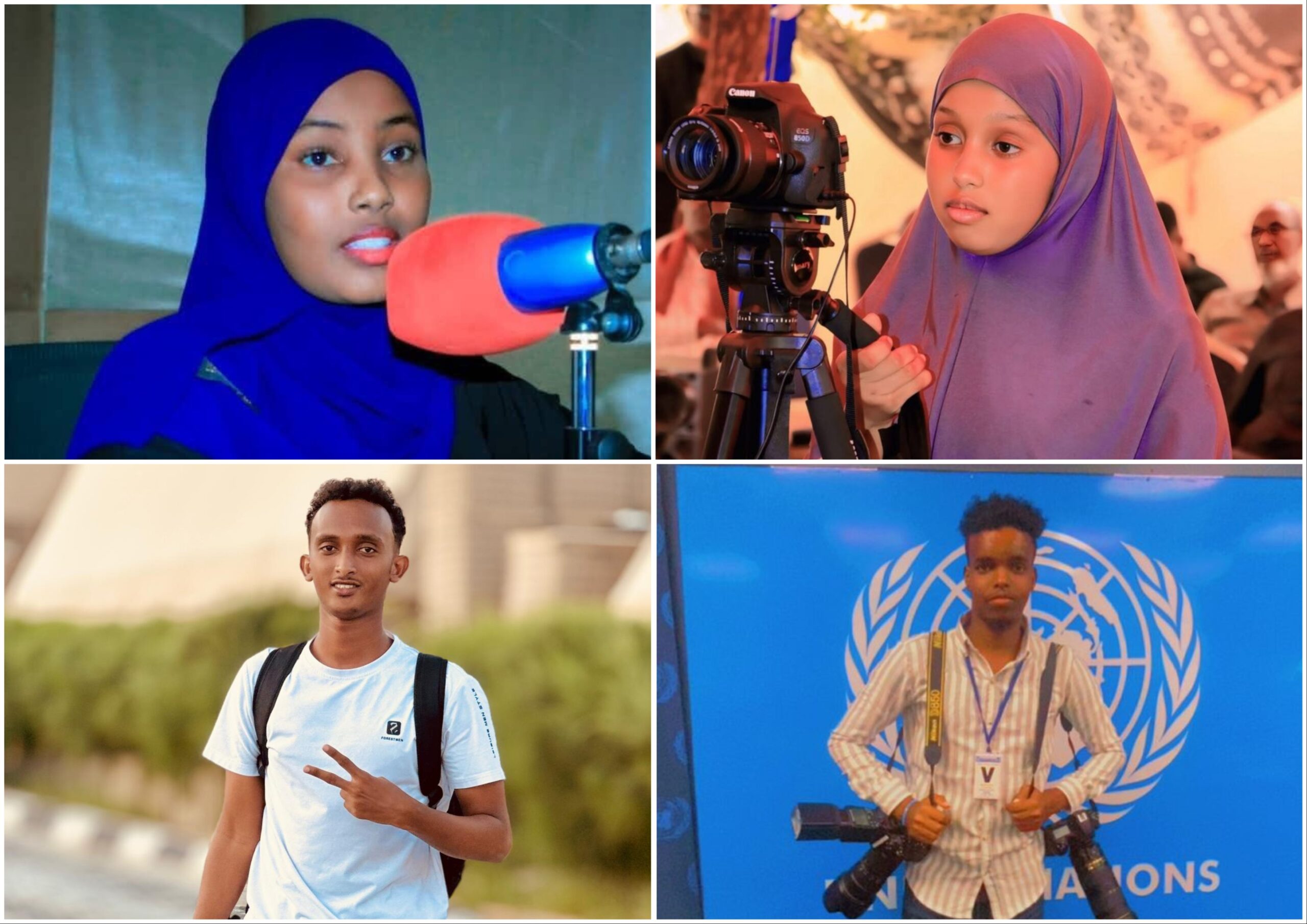
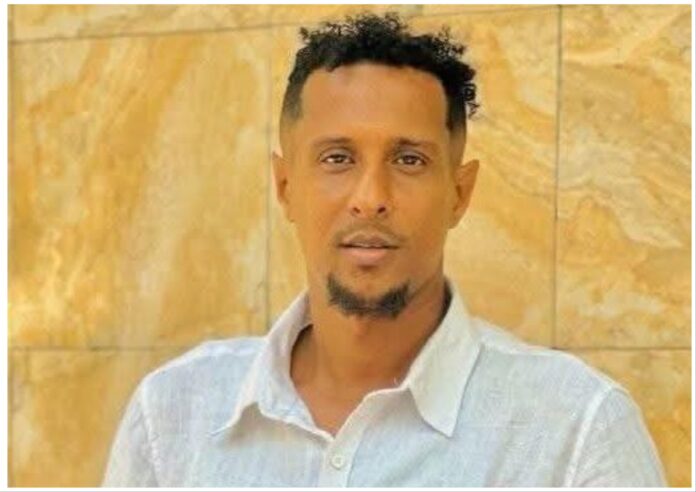
On Thursday, 22 May, Somali police in Mogadishu briefly arrested three journalists: Abdullahi Yusuf Hassan (reporter for RNN TV), Mohamed Hassan Geedi (cameraman for RNN TV), and Yahye Mohamud Hersi (cameraman for Himilo Somali TV). Two of the journalists told SJS that after their arrest, they were handed over to officers from the National Intelligence and Security Agency (NISA), who then transferred them to the Hodan District Administration office, where they were detained.

On Thursday, 22 May, Somali police in Mogadishu arrested three journalists: Abdullahi Yusuf Hassan (reporter for RNN TV), Mohamed Hassan Geedi (cameraman for RNN TV), and Yahye Mohamud Hersi (cameraman for Himilo Somali TV). | PHOTO/Combined/SJS.
On Thursday, 22 May, Somali police in Mogadishu arrested three journalists (picture above): Abdullahi Yusuf Hassan (reporter for RNN TV), Mohamed Hassan Geedi (cameraman for RNN TV), and Yahye Mohamud Hersi (cameraman for Himilo Somali TV). | PHOTO/Combined/SJS.

Anisa Abdiaziz Hussein, a reporter for Himilo Somali TV who was with the arrested journalists, told SJS she fled on foot after witnessing armed men attacking the journalists. The journalists had been covering a protest by local women meat sellers at the Zoobe Junction in Mogadishu, who were demonstrating against the demolition of their makeshift stalls.

According to the journalists, NISA officers confiscated their equipment and deleted the footage they had recorded. An editor at Himilo Somali TV told SJS they later received a threatening phone call from a NISA officer warning them not to broadcast anything related to the women’s protest or the demolitions. All three journalists said they were released later that afternoon under the condition that they do not publish any content about the protest or the demolitions—an agreement they were forced to accept in order to secure their release.

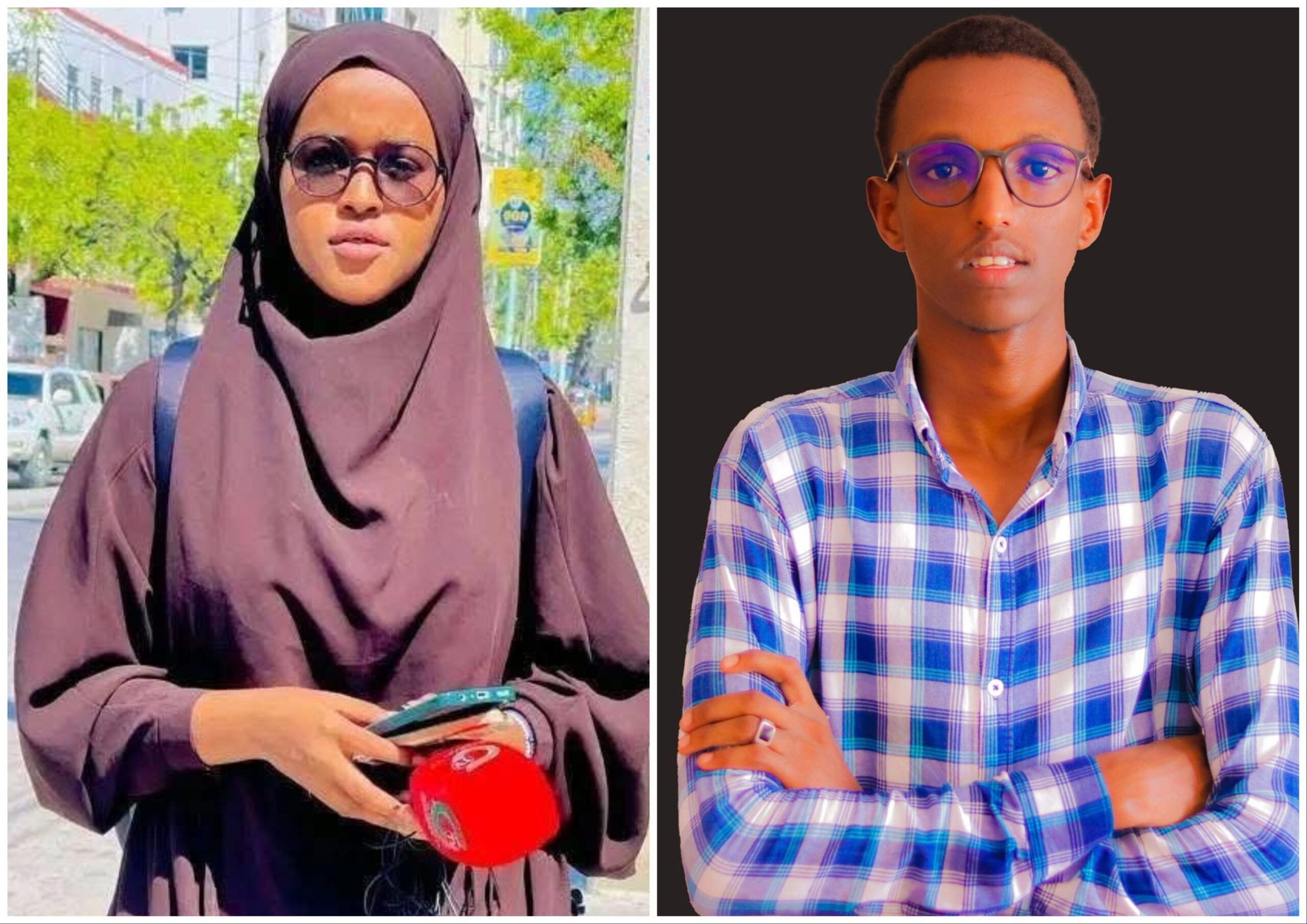
Anisa Hussein of Himilo Somali TV and Abdirahman Ahmed Hassan of Five Somali TV. | PHOTO/ Combined/SJS.

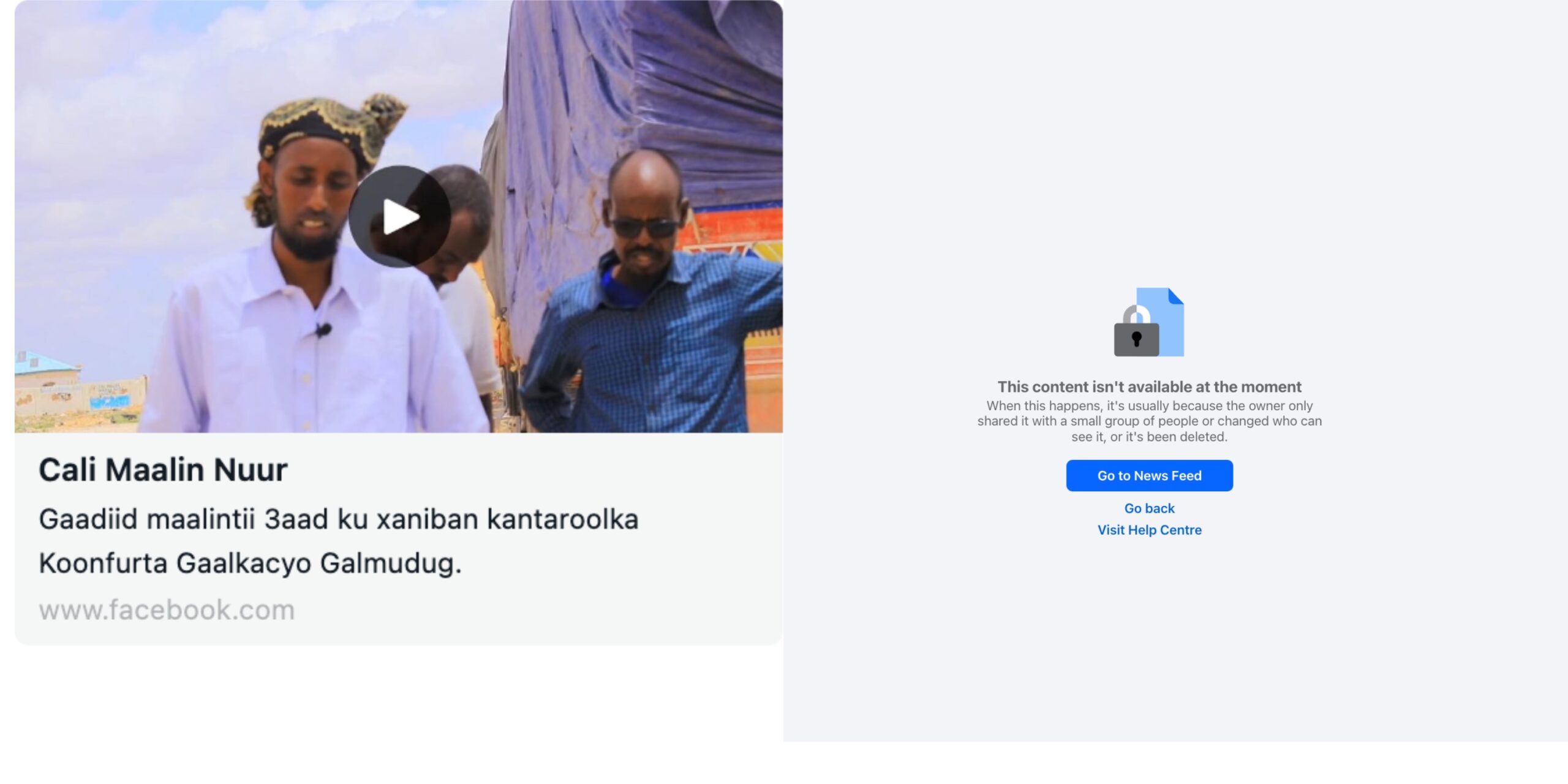
On Friday night, 23 May, police officers from Galmudug State in South Galkayo arrested online reporter Ali Maalin Nuur after he published a news report on his Facebook page about truck drivers and their vehicles being held at a roadblock outside Galkayo city, Mudug region. In the now-deleted video clip, the journalist reported that armed men at the roadblock—identified as members of the Galmudug security forces—had been demanding additional payments from the truck drivers, causing the trucks to be stranded for several days. Armed police officers raided the journalist’s house on Friday night and arrested him.

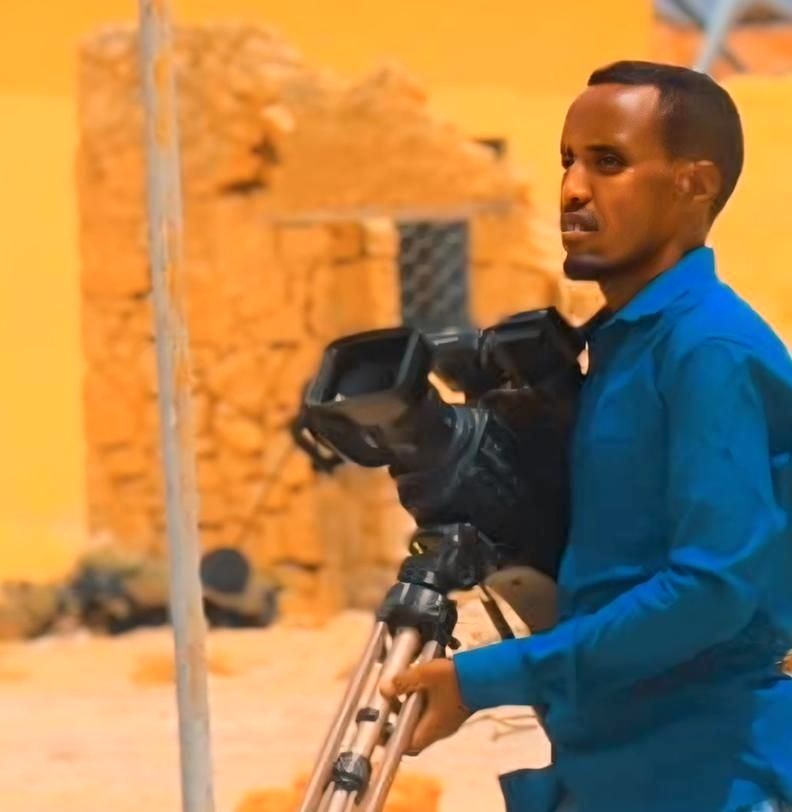
Online reporter Ali Maalin Nuur. PHOTO/ Courtesy/ Ali Maalin Nuur.

Ali Maalin Nuur told SJS that his arrest was ordered by the Governor of Mudug in Galmudug, Abdinasir Abdukadir Abdulle. He told SJS that he was detained overnight at the South Galkayo police station, and his name was not recorded in the occurrence book (OB). He was released on Saturday afternoon after being forced by the officers to delete the video from his Facebook page, which he did. Ali told SJS that he was not taken to court and believed he would not have received justice, as the police had threatened to keep him in custody if he refused to delete the report.  A senior official from the Galmudug State Ministry of Information told SJS that although the journalist had been released, they were following up with the governor who ordered the arrest, which the official described as illegal.

Screenshot from Ali Maalin Nuur Facebook page shows content not available following his arrest on Friday 23 May, 2025 in Galkayo. | PHOTO/Screenshot/ SJS.

On Saturday, 24 May, agents of Somalia’s National Intelligence and Security Agency (NISA) briefly detained four journalists in Mogadishu: Abdinasir Abduqadir Salah and Abdinasir Sayid Ali from Shabelle TV, and Abdirahman Abdulle Rooble and Hassan Ahmed Takow from SYL TV.  The journalists were collecting vox-pop interviews from the public on Maka Al-Mukarama Street, asking for opinions on the coalition of opposition politicians who had held an event in Mogadishu the previous day, Friday. They were taken to an open area near the Waberi Police Station, where they were interrogated, threatened, and ordered to delete their footage. Two of the journalists told SJS they were threatened with violence if they continued reporting critically on President Hassan Sheikh Mohamud. All four journalists were released without being officially booked or charged at the police station.

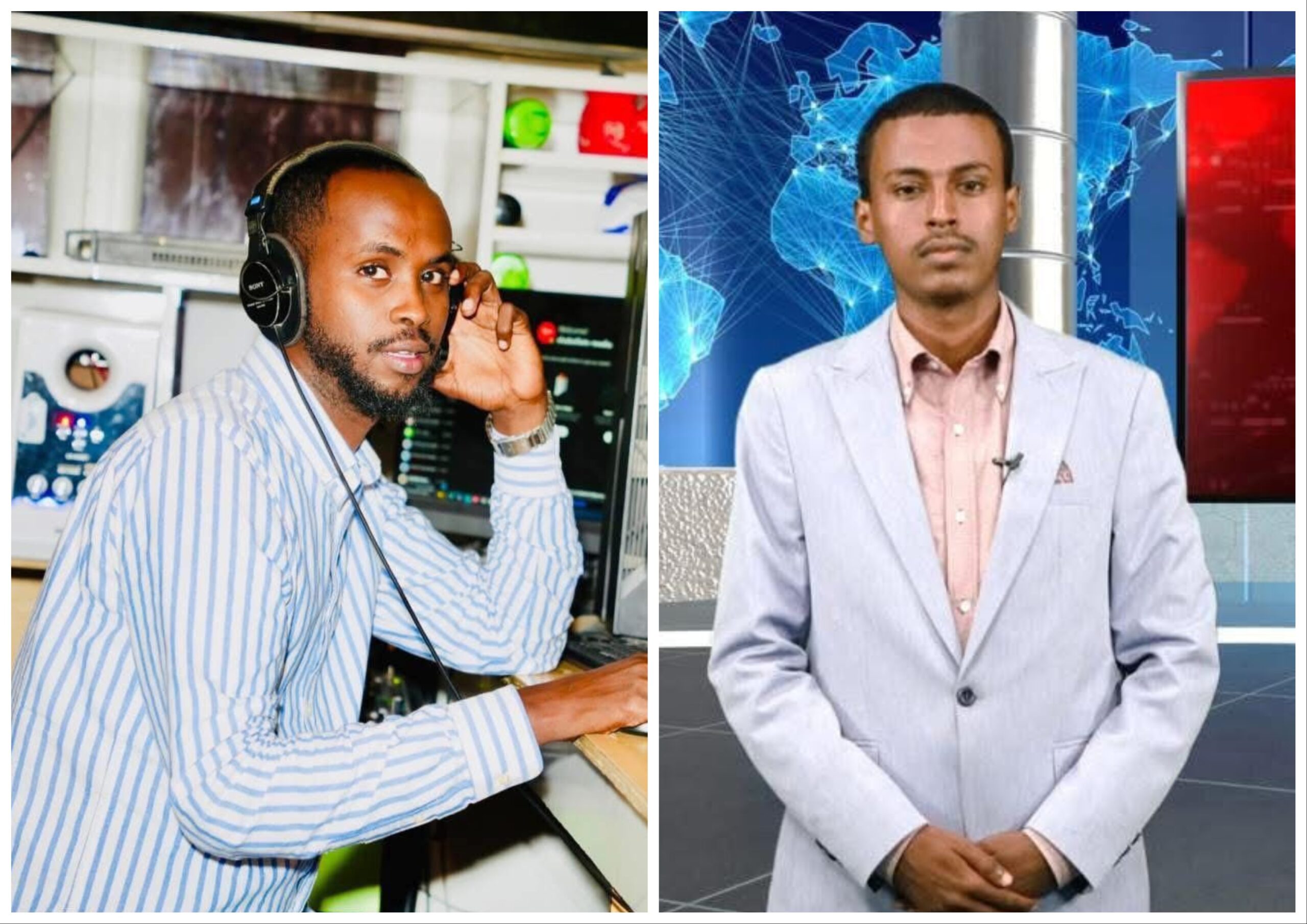
Abdinasir Abduqadir Salah and Abdinasir Sayid Ali from Shabelle TV. | PHOTO/ Combined/SJS.

On Friday, 23 May, political opposition groups led by former President Sharif Sheikh Ahmed, former Prime Ministers Hassan Ali Khaire and Omar Abdirashid Ali Sharmarke, MP Abdirahman Abdishakur Warsame, and other members of parliament gathered at a mosque and religious site in Mogadishu. During the gathering, they delivered a public speech—widely broadcast by the media—condemning President Hassan Sheikh Mohamud’s autocratic actions in relation to the 2026 election. They called on the president to return to constitutional order.

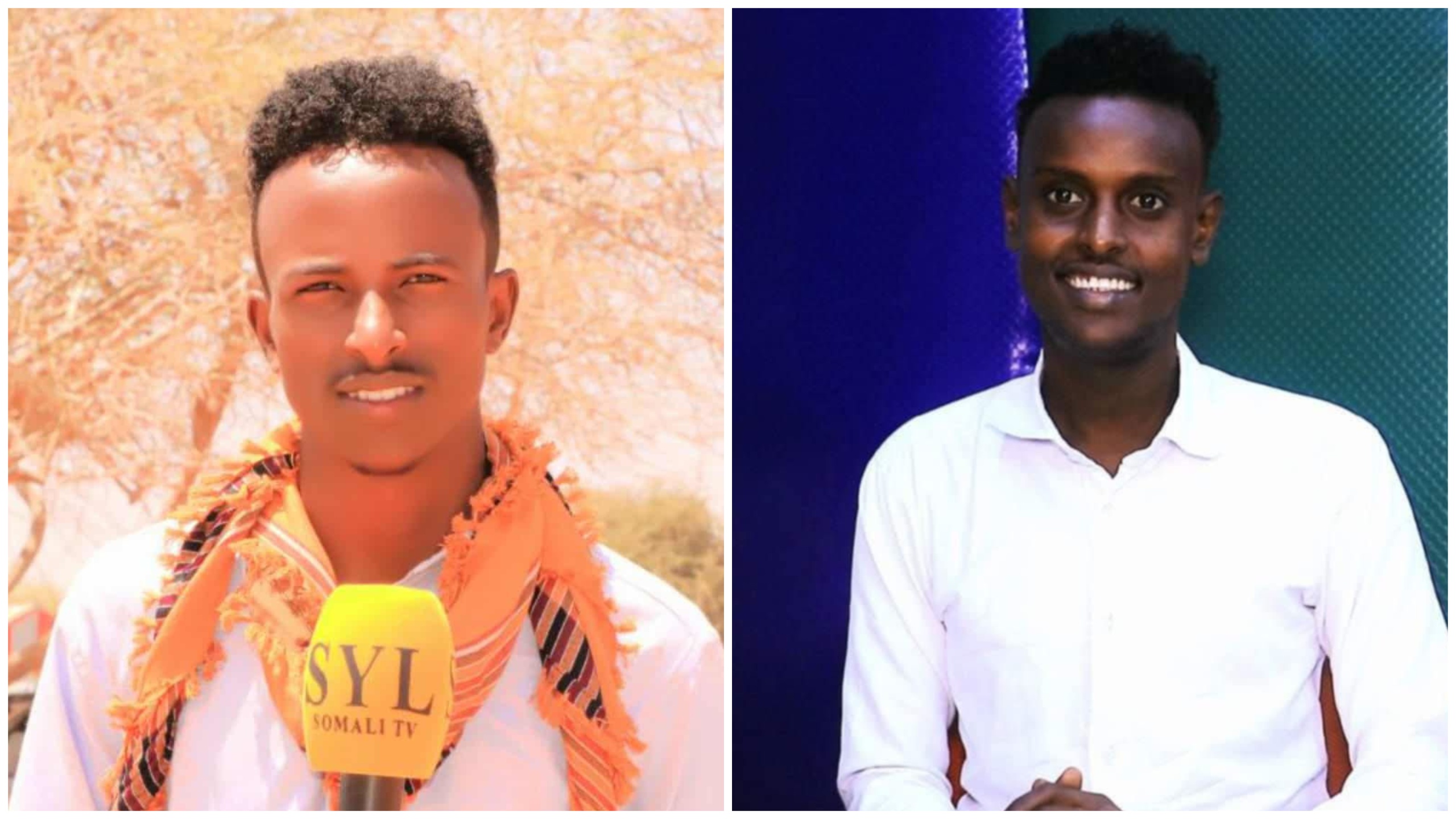
Hassan Takow and Abdirahman Abdulle of SYL TV. | PHOTO/ Combined/ SJS.

On Saturday, 24 May, NISA agents in Mogadishu briefly arrested seven journalists while they were collecting public opinion on the country’s political situation. Two of the journalists, Ismail Yabarow Hassan and Mohamed Adan Hassan, were working for Somali Cable TV.  Four others—Ja’far Abdirisak Mohamed, Shukri Hashi, Ayanle Abdinur, and Sundus Ali Botan—were working for Goobjoog Media, while the seventh journalist, Abdirahman Ahmed Hassan, is a cameraman for Five Somali TV.

Two of the journalists arrested Saturday, Ismail Yabarow Hassan and Mohamed Adan Hassan, were working for Somali Cable TV. | PHOTO/ Courtesy/ Somali Cable TV.

The journalists had been gathering public views on the political developments in Mogadishu and the recent statement by opposition politicians concerning the 2026 election. Somali Cable TV reported that their journalists were stopped by NISA officers and told they were “not allowed to conduct public opinion on the streets.”  All seven journalists had their equipment confiscated and their recorded material deleted. They were also warned not to conduct further interviews with the public. As a result, the journalists returned to their respective media outlets without completing their assignments.

Among the journalists briefly arrested on Saturday are four reporters —Ja’far Abdirisak Mohamed, Shukri Hashi, Ayanle Abdinur, and Sundus Ali Botan—were working for Goobjoog Media. | PHOTO/Combined/SJS.

On Saturday, 24 May, Anisa Ahmed Mohamed and Masud Abdirahman Yusuf, both working for Dalbile online TV, were conducting interviews when plain-clothed, armed NISA officers interrupted and chased them away from Maka Al-Mukarama Street. After the journalists left the area, the officers followed them to another location and again disrupted an interview they were conducting with members of the public. The journalists had been asking people for their views on the current political tension, following a recent statement by opposition groups condemning President Hassan Sheikh Mohamud’s actions in relation to the 2026 election.

Anisa Ahmed and Masud Abdirahman of Dalbile TV. | PHOTO/ Combined/SJS.

Local media reported an increased presence of plain-clothed NISA agents armed with pistols along Maka Al-Mukarama Road, a popular area where journalists often gather public opinion. Journalists have reported their independent reporting has been effectively banned in areas surrounding Maka Al-Mukarama, including KM4. Media also reported the arrest of a prominent tuk-tuk driver and activist, Sayid Ali—commonly known as Saan Miyaa—who had spoken out against the growing suppression of the public by NISA agents.

“In the past 48 hours, we have witnessed a new wave of attacks against journalists in Mogadishu, carried out by members of NISA and the police. The arrest of 14 journalists—13 in Mogadishu and one in Galkayo—along with equipment seizure, deletion of content by the threat of violence and intimidation, marks an alarming escalation of repression that undermines press freedom and the very foundation of democracy in Somalia,” said SJS Secretary General, Abdalle Mumin.
“These attacks on media workers are unacceptable and must be condemned in the strongest terms. As we have said, these violations will not end until the perpetrators are held accountable,” added Mr. Mumin. “All journalists and media organizations need to stand united in defense of our rights and freedoms. We need action now. Let us also remind those behind these attacks that they will not get away with it; if not today, then certainly not tomorrow.”

Somalia’s press freedom groups call for accountability and protection during meeting with diplomatic community

0
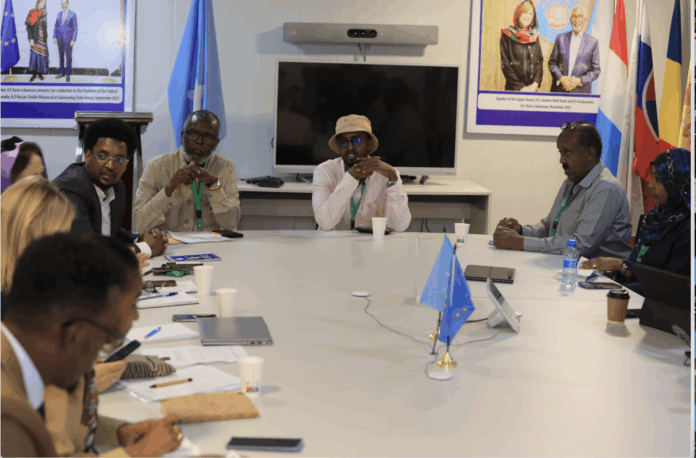
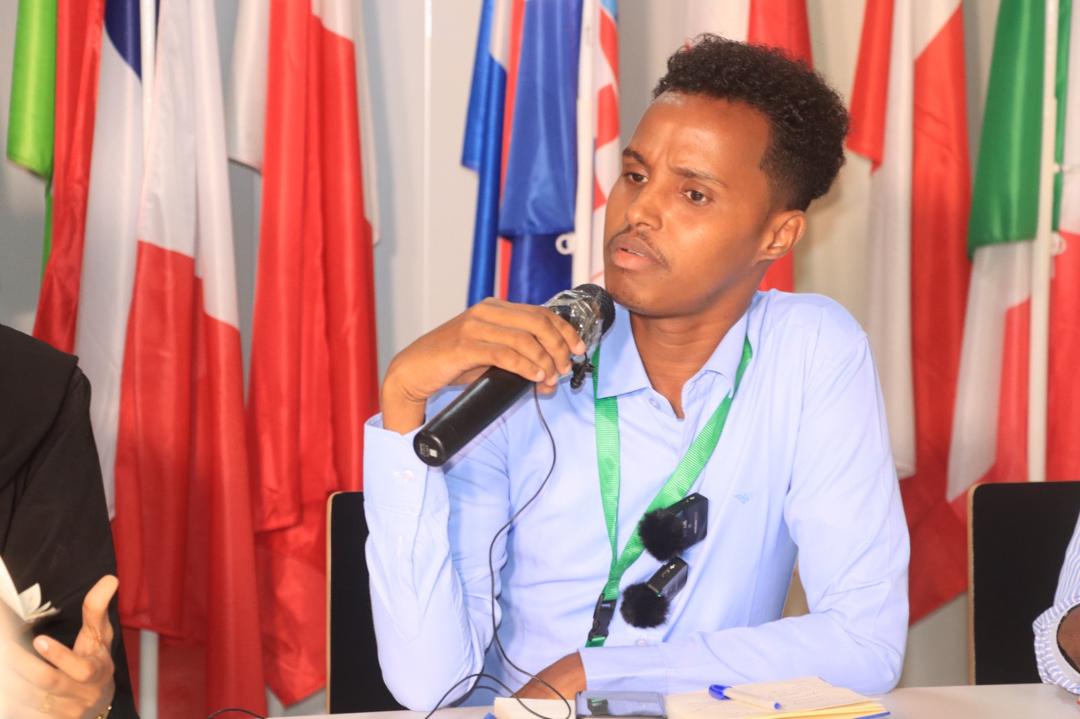
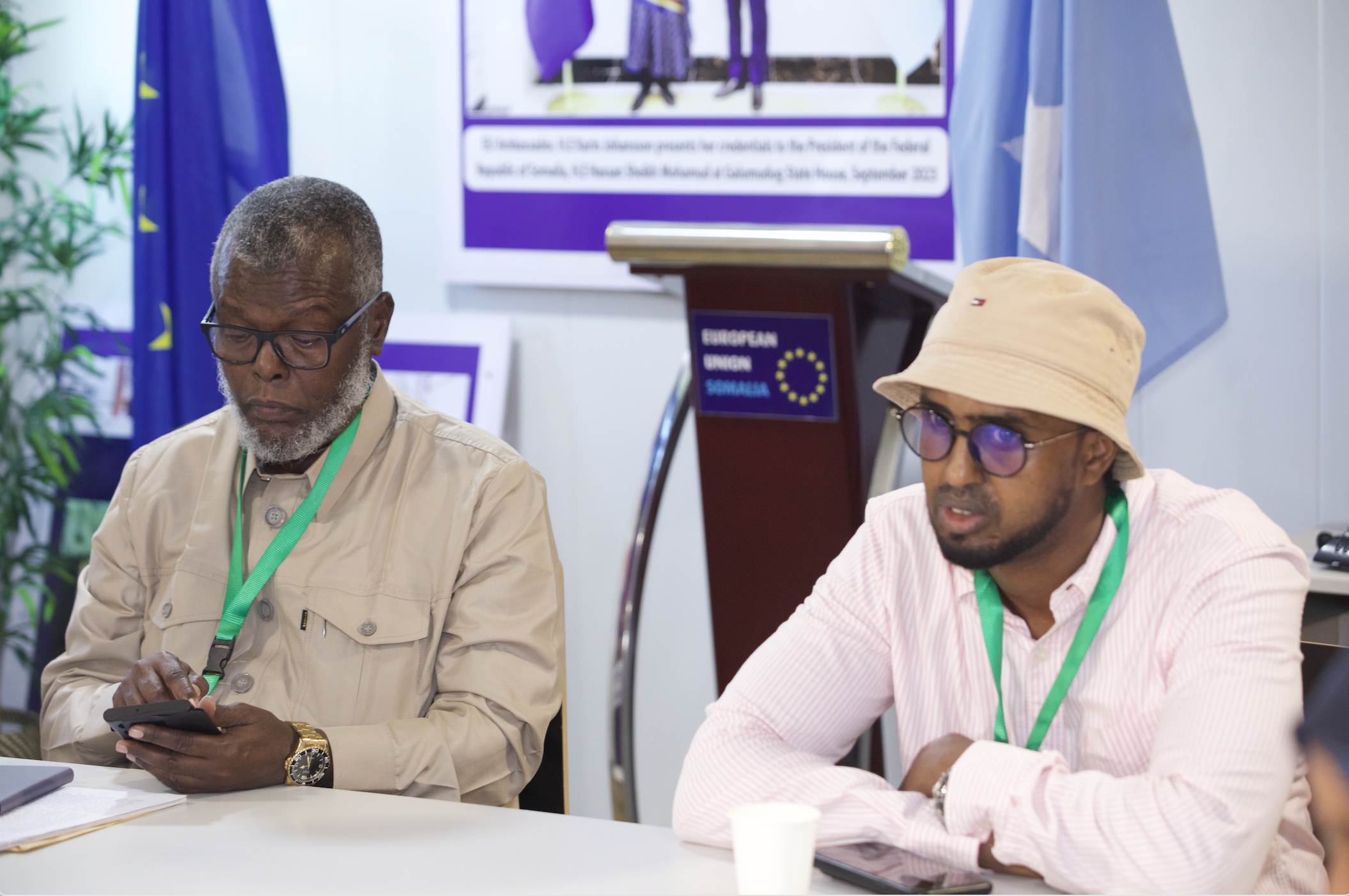
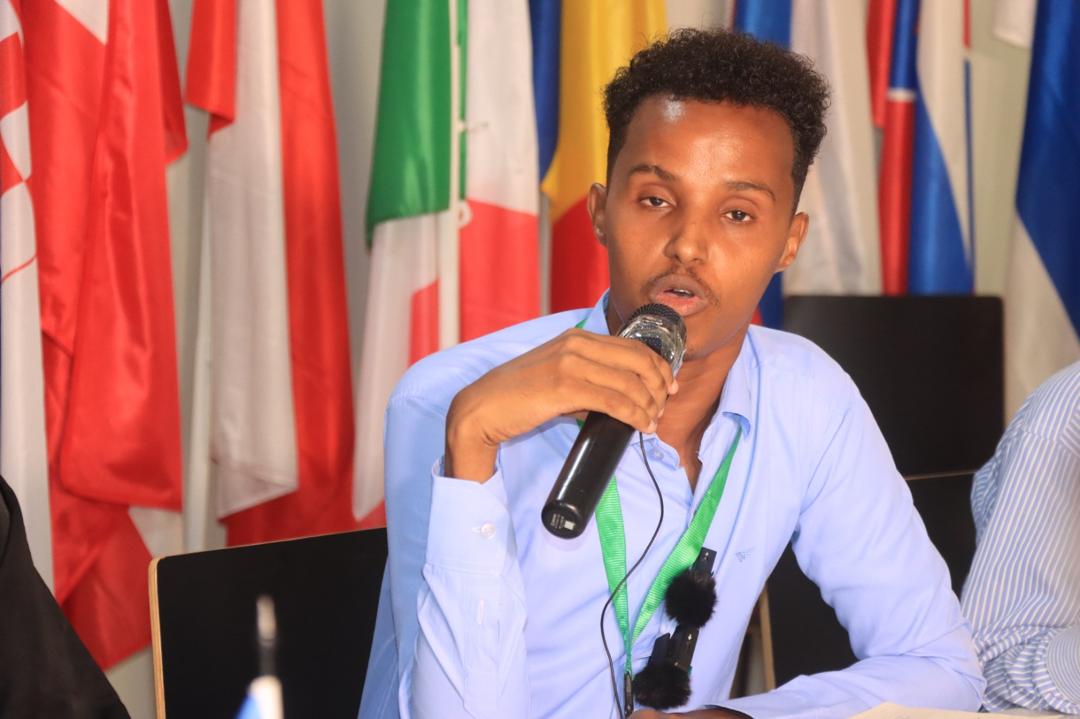
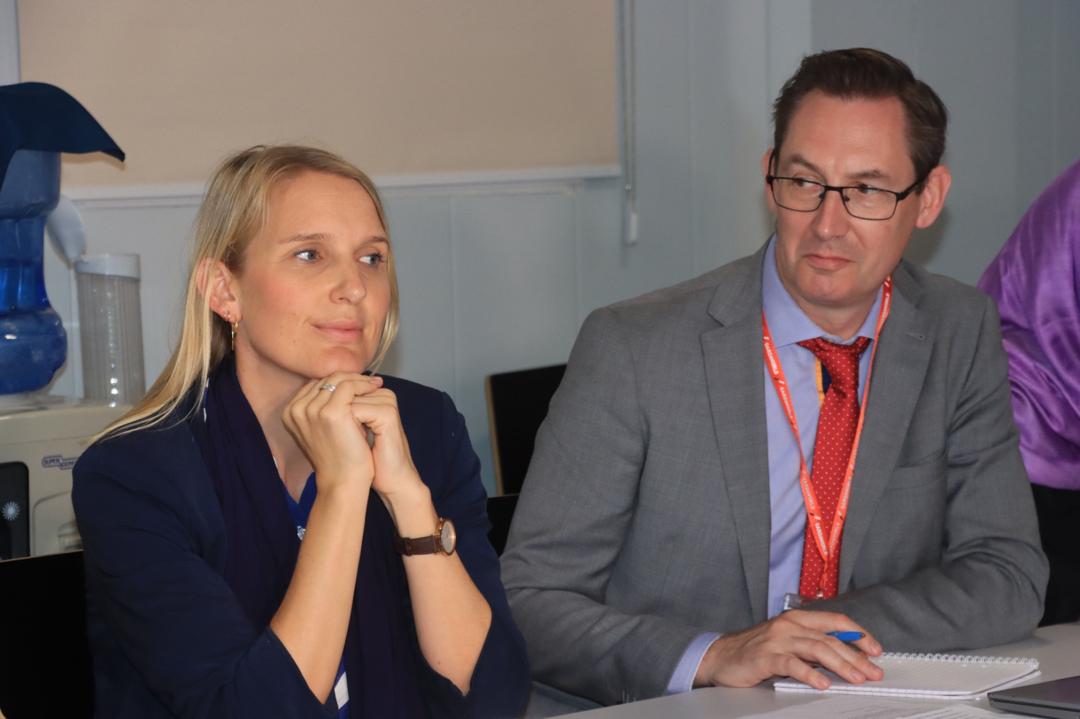
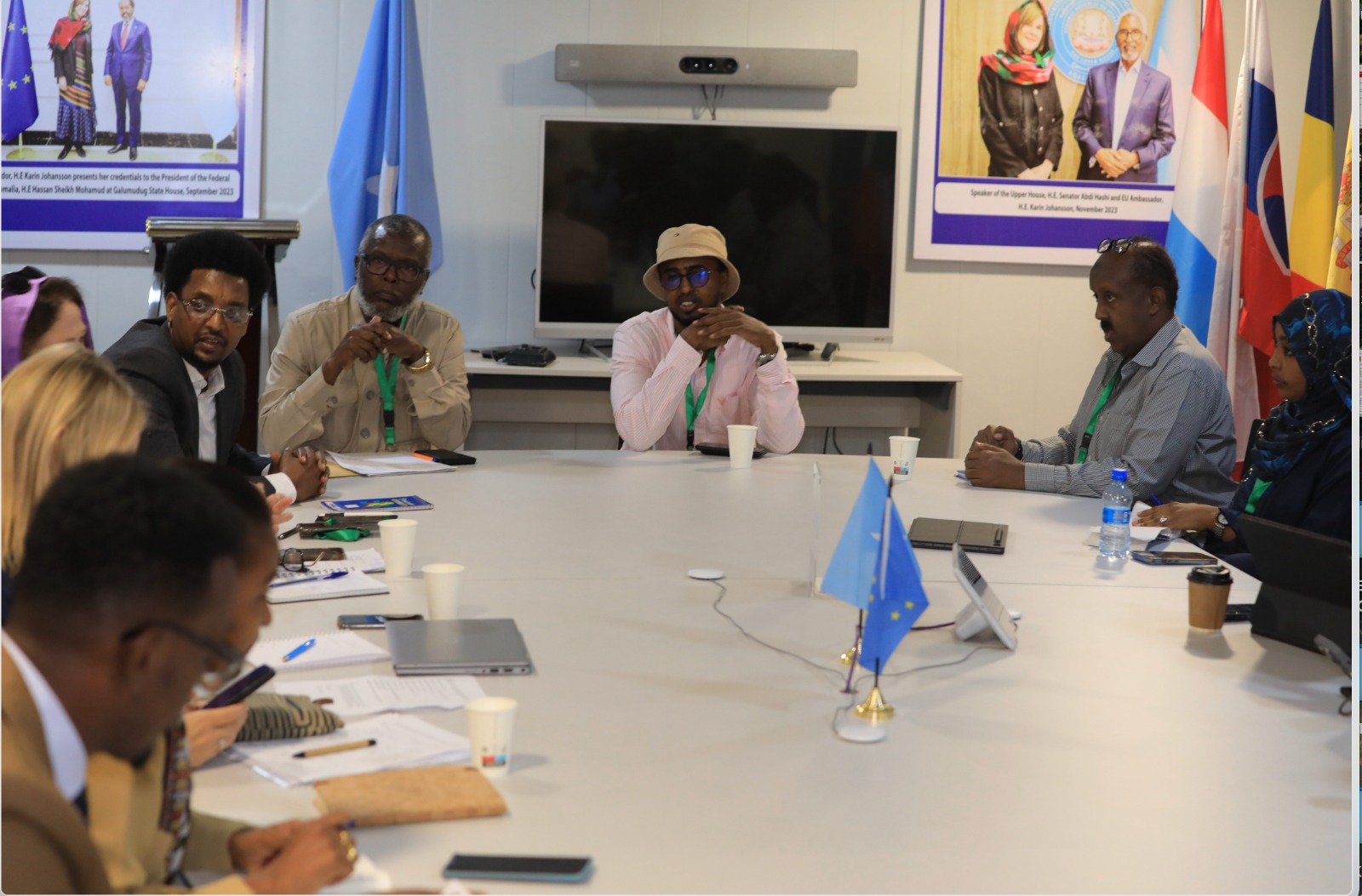
Press freedom organizations convened today in Mogadishu with members of the international diplomatic community to raise urgent concerns about the worsening state of freedom of expression in Somalia. | PHOTO/Courtesy/SJS.
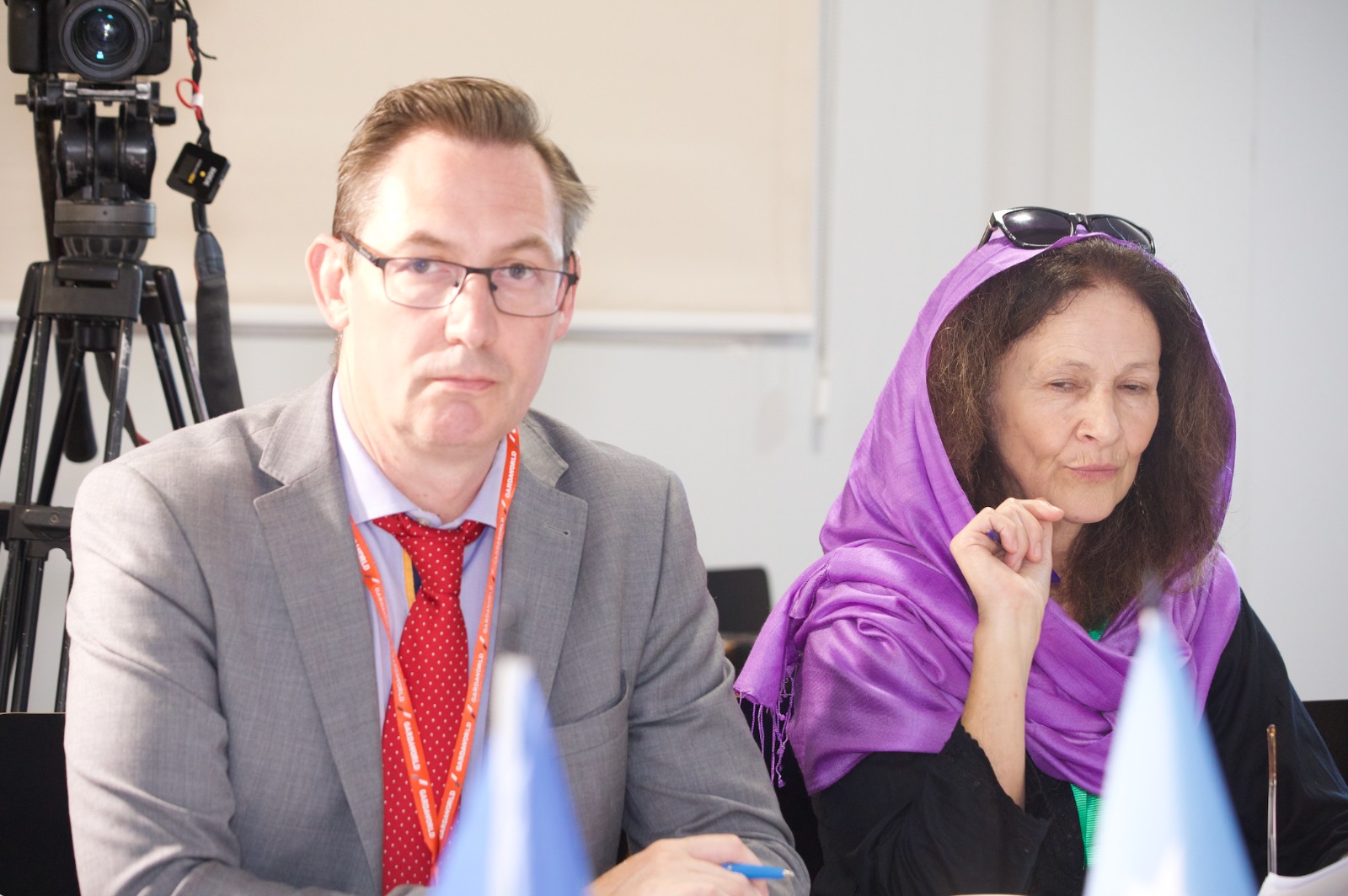
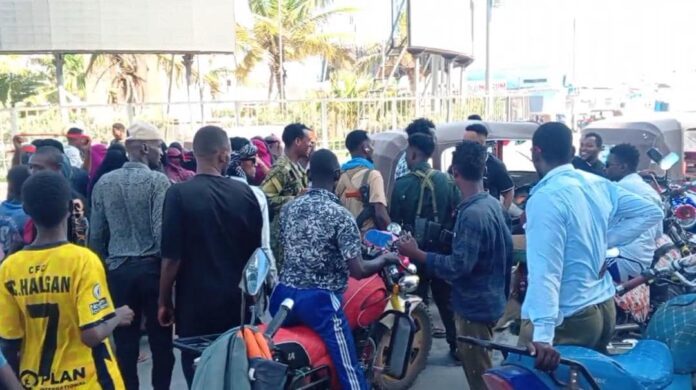
Press freedom organizations convened today in Mogadishu with members of the international diplomatic community to raise urgent concerns about the worsening state of freedom of expression in Somalia. | PHOTO/ SJS.

MOGADISHU, Somalia, 20 May 2025 – Press freedom organizations convened today in Mogadishu with members of the international diplomatic community to raise urgent concerns about the worsening state of freedom of expression in Somalia.

The meeting brought together press freedom advocates, representatives from International Media Support (IMS), officials from the Ministry of Information who have been targeting journalists including SJS, and members of the diplomatic community.

Participants voiced alarm over the increasing repression targeting Somali journalists, particularly those based in Mogadishu, and the broader erosion of press freedom across the country.

The Somali Journalists Syndicate (SJS) expressed grave concern over the escalating attacks on journalists, SJS members, and independent media houses. These attacks have intensified following public threats issued by government officials from the police and the the Ministry of Information.

“Since the statement by the Minister of Information Daud Aweis Jama and the Mogadishu Police Commissioner, Moalim Mahdi on 6 March 2025, attacks on journalists have significantly increased. Press freedom is dying in Somalia. We are deeply concerned that the Somali government—specifically the Ministry of Information, police forces, and the National Intelligence and Security Agency (NISA)—is deliberately targeting journalists for their independent reporting,” said Mohamed Ibrahim Bulbul, SJS Secretary of Information and Human Rights, during the meeting.

Reporting on security issues including threats posed by Al-Shabaab terror group, government corruption and human rights abuses remain a red line for journalists in Somalia, particularly in Mogadishu.

The 6 March statement by Minister Daud Aweis and Mogadishu Police Commissioner Mahdi Omar Muumin (known as Moalim Mahdi who is also an ex-defector of Al-Shabaab), which openly threatened “severe punishment” media outlets against publishing any reporting related to security has triggered a new wave of suppression.

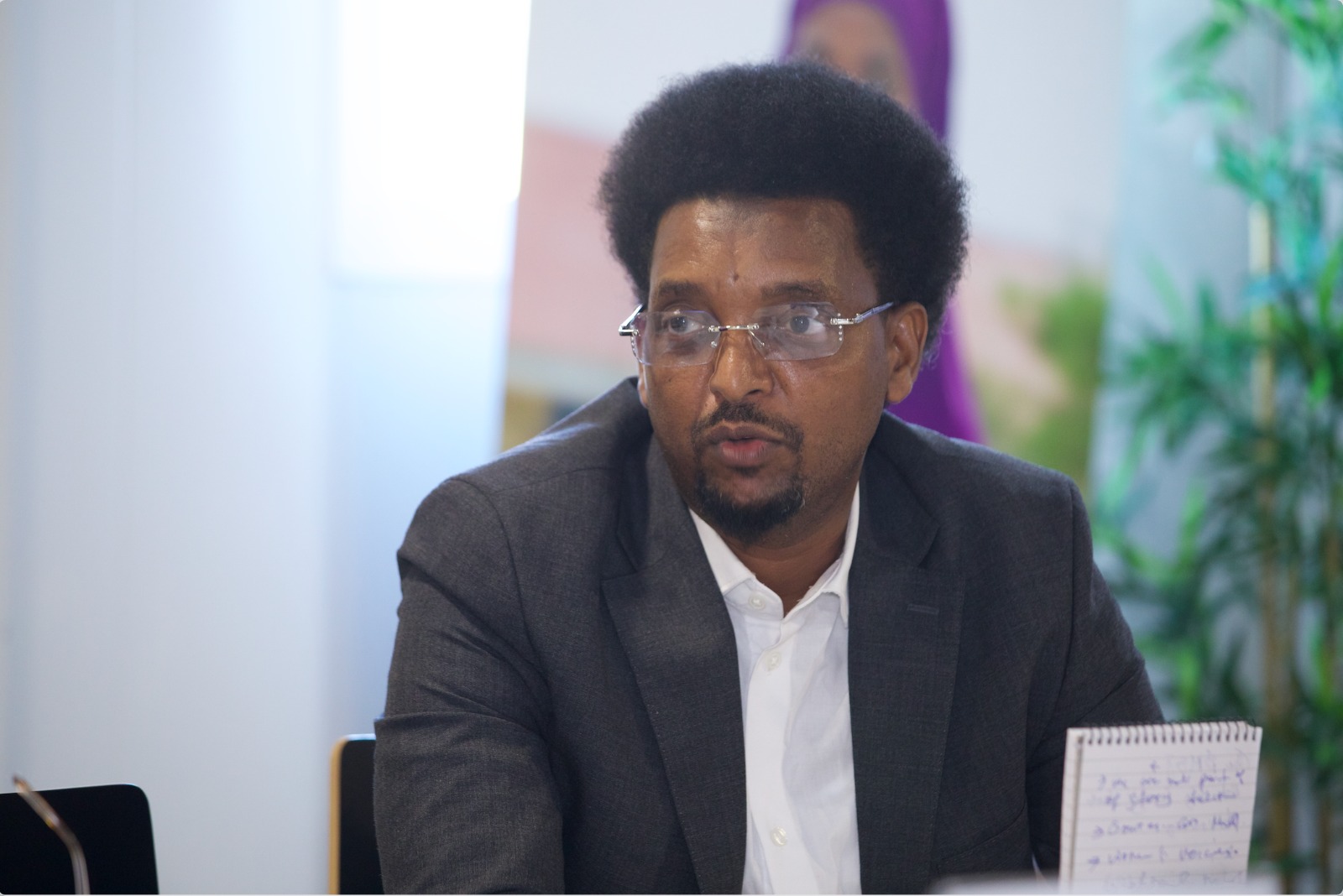
Mohamed Ibrahim Bulbul, SJS Secretary of Information and Human Rights, raised concerns about the attacks on journalists during the meeting. | PHOTO/ SJS.

Participants also highlighted the growing intimidation of journalists working for state media in Mogadishu, many of whom have faced threats, suspensions, and dismissals for critical reporting or expressing independent views.

Serious concern was raised regarding threats against women journalists, including threats of sexual violence and other security risks, which have become increasingly common.

The diplomatic community was urged to stand in support of press freedom advocacy and to take meaningful steps to ensure the safety and protection of Somali journalists.

Between 1 January and 30 April 2025, a total of 46 journalists were arrested or detained across Somalia, according to SJS documentation. Journalist Mohamed Abukar Dabaashe was killed in Al-Shabaab bombing in Mogadishu on 18 March. Additionally, two journalists were kidnapped and have since disappeared in Lower Shabelle, Southwest State. Both government forces and Al-Shabaab have contributed to an increasingly hostile environment for the press, marked by physical attacks, arbitrary arrests, killings, and online censorship.

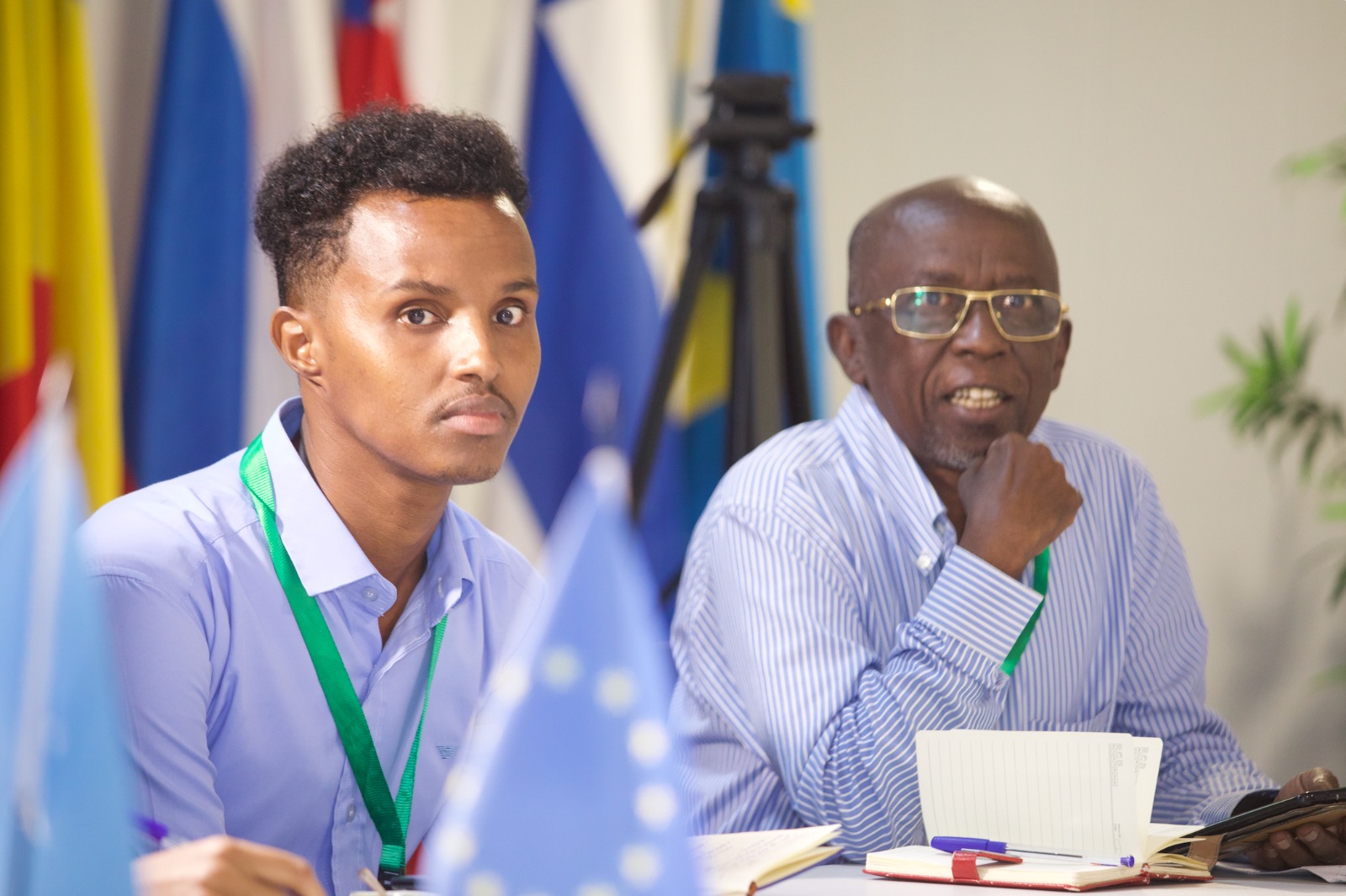
Officials from the Ministry of Information, whose leaders have openly targeted journalists, were also in attendance. | PHOTO/SJS.

State security forces and police—many of whom are former Al-Shabaab defectors—were behind most of the raids, arrests, and intimidation incidents. NISA continued its practice of unlawful detentions and harassment, particularly in Mogadishu. Of the 46 arrests so far, 41 occurred in Mogadishu alone, underscoring how Mogadishu remains a dangerous place for journalists.

Reflecting today’s engagement, the SJS Secretary General, Abdalle Mumin, thanked the diplomatic community for their efforts and reiterated a strong call for media freedom as a cornerstone of democracy, peacebuilding, and efforts to counter violent extremism.

“I take this opportunity to remind Somalia’s international partners that there can be no democratic Somalia unless we have a strong and independent media, and the international community must act to defend free media. Accountability is key to ending this cycle of violence subjected to the journalist community in Somalia including SJS members. Let us make no mistake: those who target journalists must be held accountable, no matter how powerful they are or whether they command armed groups,” said SJS Secretary General, Abdalle Mumin.
Climate, Conflict, and the Disappearing World: SJS participates in Medico Foundation symposium

0
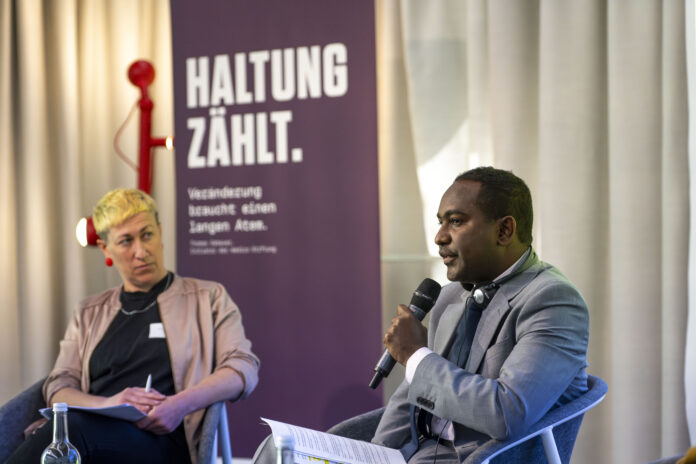
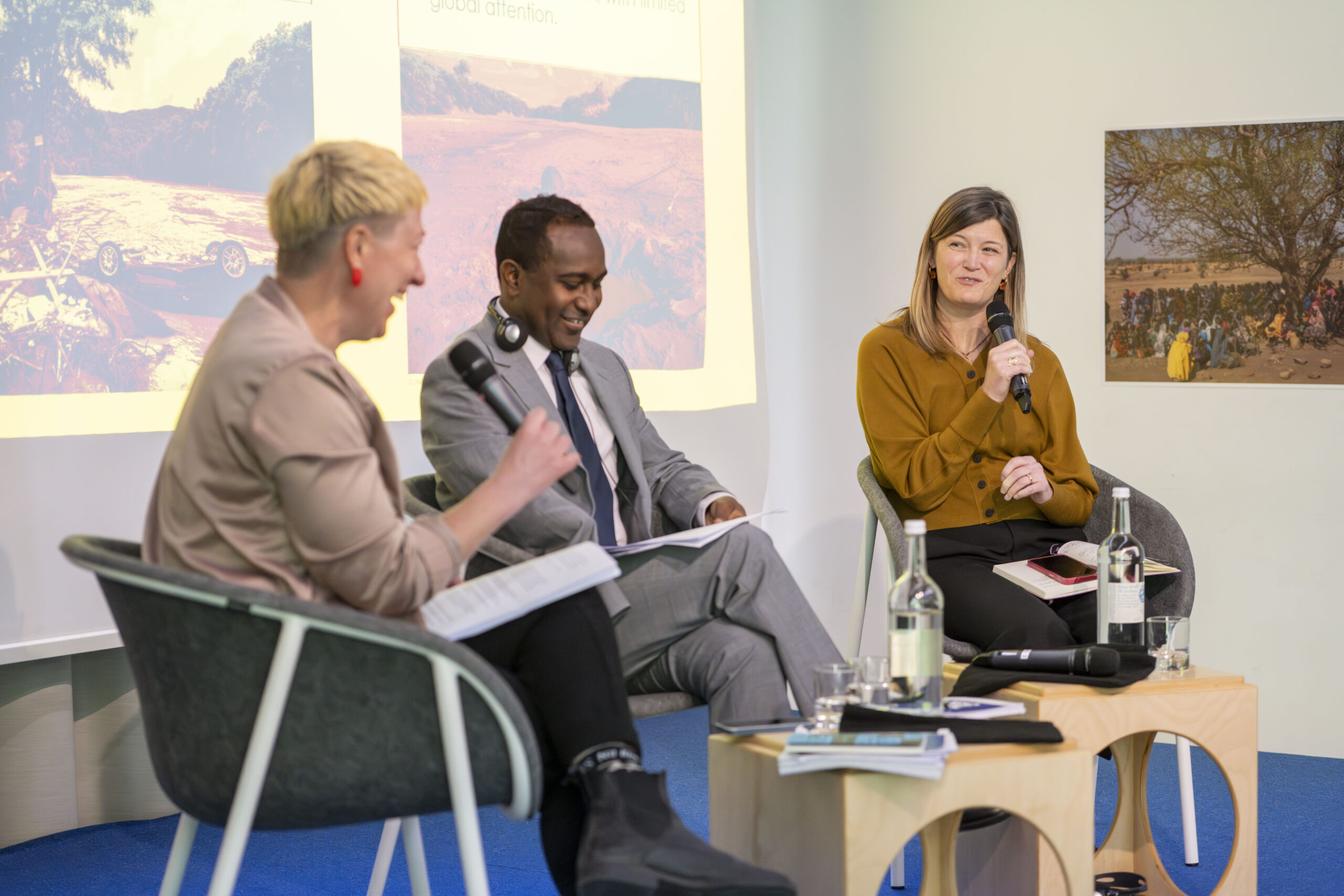
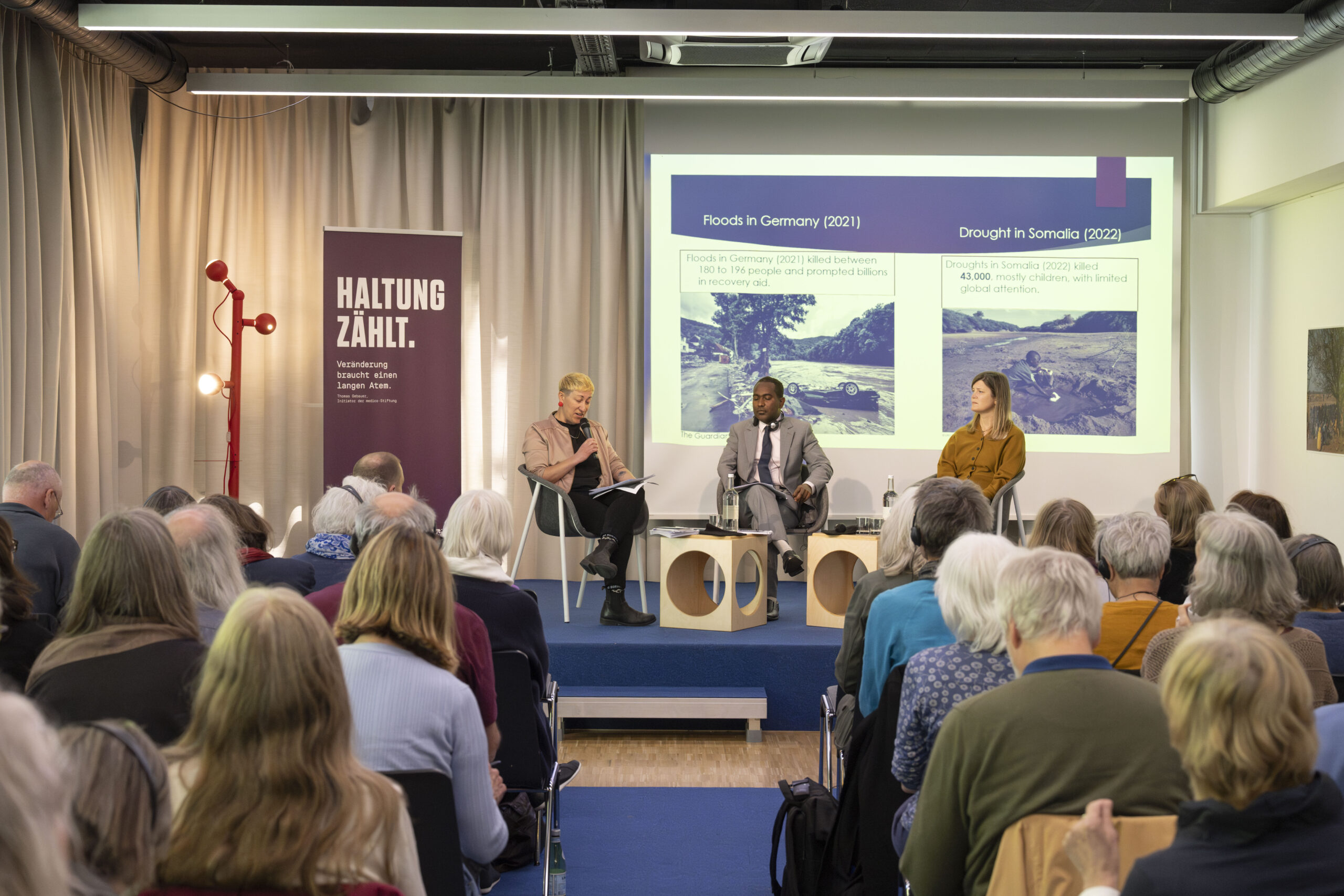
SJS Secretary General, Abdalle Mumin (right) speaks during a panel discussion as part of the the 2025 Symposium organized by Medico International Foundation in Frankfurt, Germany. | PHOTO/ Medico International team.

MOGADISHU, Somalia  14 May 2025 – The Somali Journalists Syndicate (SJS) congratulates the successful completion of the 2025 Symposium organized by Medico International Foundation. We are honored to have participated in the symposium’s interactive panel discussion held in Frankfurt, Germany, from 8–9 May 2025.

The symposium, titled “About the Disappearance of a World“, focused on the critical responsibilities of aid and human rights organizations in addressing war, disasters, migration, the climate crisis, and the role of today’s media and journalists as frontline defenders and witnesses.

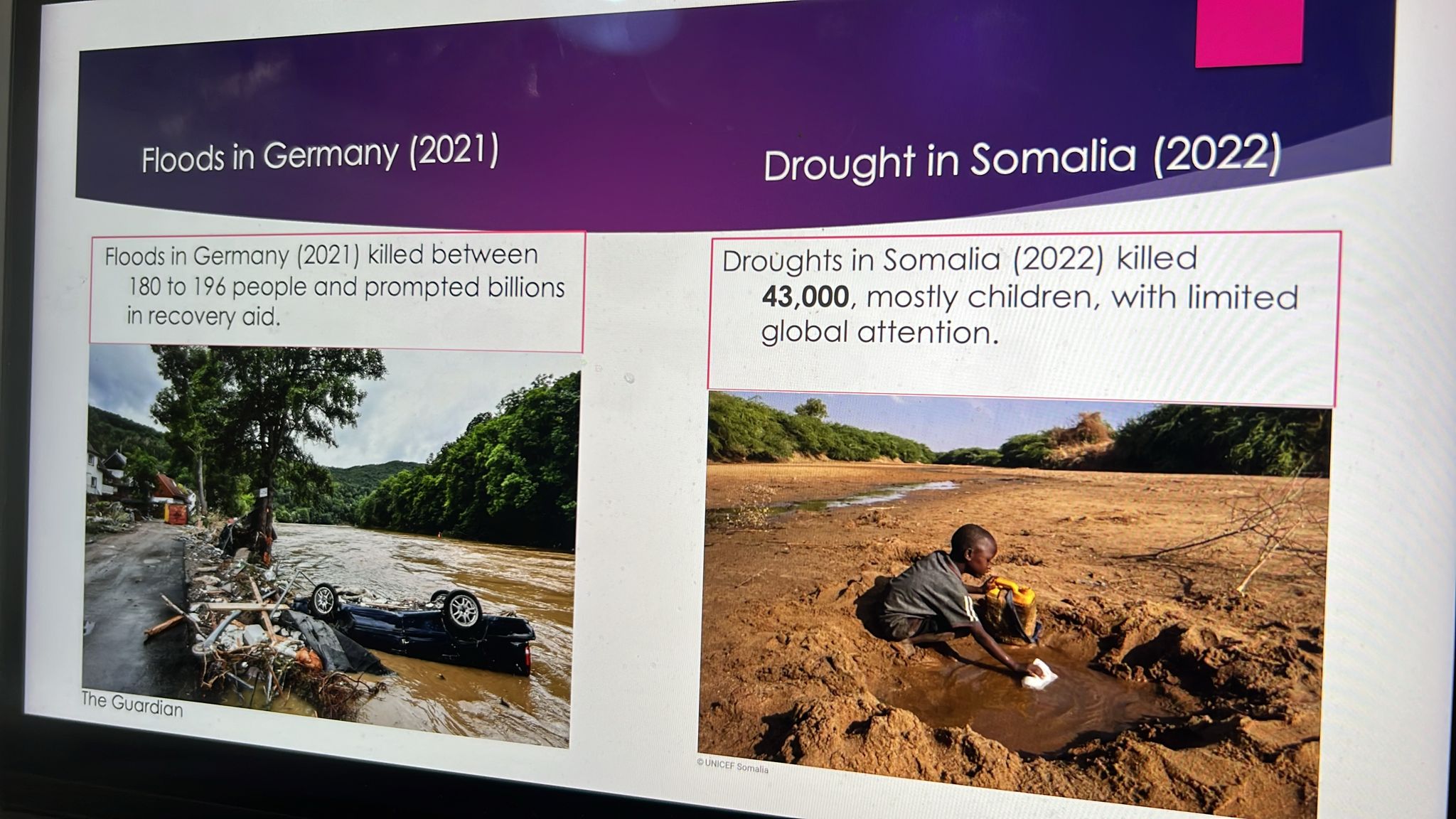
SJS Secretary-General Abdalle Mumin participated as a panelist, emphasizing that the climate crisis is not just an environmental concern, but also a manifestation of historical and ongoing global power imbalances. He illustrated this with the example of the 2021 floods in Germany that claimed over 180 lives and triggered billions in recovery aid, compared to the 2022 drought in Somalia which killed 43,000 people—mostly children—with far less international attention.

“Yet climate-linked migration is often framed as a security threat in Europe and beyond, justifying walls, detention, and militarization, rather than addressing the root causes,” said Mr. Mumin.

Somalia remains one of the countries most severely affected by the climate crisis, with millions forced into displacement after losing their livelihoods. Floods and recurrent droughts continue to claim lives—mostly among vulnerable groups such as women and children.

Abdalle Mumin presentation slide illustrating the example of the 2021 floods in Germany compared to the 2022 drought in Somalia. | PHOTO/SJS.
Abdalle Mumin presentation slide illustrating the example of the 2021 floods in Germany compared to the 2022 drought in Somalia.

Since 2022, SJS has partnered with Medico International to train more than 60 local journalists—including those from communities directly affected by floods in southern and central Somalia—to report on climate change and raise awareness around climate justice.

Journalists, including those within the SJS network, have also been victimized by recurrent droughts and floods, often compounded by ongoing conflicts.

This SJS-Medico International initiative not only engaged journalists and media professionals but also brought together local authorities, community leaders, and human rights defenders to seek solutions to this persistent crisis.

“Journalists play a critical role in shaping climate policy, raising awareness among local communities—including displaced persons—and assisting them in developing mitigation and adaptation strategies,” added Mr. Mumin. “When empowered, the media’s influence on public opinion is substantial, and how climate issues are reported and understood directly impacts the discourse and the solutions provided to affected communities.”

The symposium, titled "About the Disappearance of a World", focused on the critical responsibilities of aid and human rights organizations in addressing war, disasters, migration, the climate crisis, and the role of today’s media and journalists as frontline defenders and witnesses. | PHOTO/ Medico International team.
The symposium, titled “About the Disappearance of a World”, focused on the critical responsibilities of aid and human rights organizations in addressing war, disasters, migration, the climate crisis, and the role of today’s media and journalists as frontline defenders and witnesses. | PHOTO/ Medico International team.

At the Frankfurt symposium, discussions also highlighted the massive budget cuts in climate action and the increasing securitization of climate-induced migration.

However, one powerful outcome was a renewed call for global solidarity and a reminder that hope must not be lost. Journalists were recognized for their role in ensuring that the world does not silently disappear.

“I believe our greatest task is to ask ourselves how we can be better humans—to each other, to our communities, to those forced to flee, and to our disappearing world,” Mr. Mumin added “In a time where rising seas erase coastlines, where families are displaced by conflict and climate, and where walls are built faster than bridges—it’s easy to feel hopeless. But journalists can, and must, carry this responsibility effectively.”

The final message concluded with Mr. Mumin reciting a verse from a song by the renowned Somali singer, the late Luul Jeylani, who more than three decades ago poignantly connected themes of love, sustenance, and human appreciation. She sang:

‘A man who plants sorghum in a pit, will reap it when the rains fall, he will not lose it.

It is only right to appreciate each other. The favor you showed me, I’ve cherished with.

Is it fair for me to cut ties with you?’

The symposium, titled "About the Disappearance of a World", focused on the critical responsibilities of aid and human rights organizations in addressing war, disasters, migration, the climate crisis, and the role of today’s media and journalists as frontline defenders and witnesses. | PHOTO/ Medico International team.
The symposium, titled “About the Disappearance of a World”, focused on the critical responsibilities of aid and human rights organizations in addressing war, disasters, migration, the climate crisis, and the role of today’s media and journalists as frontline defenders and witnesses. | PHOTO/ Medico International team.

SJS extends its sincere gratitude to Medico International for organizing this impactful symposium. We also deeply appreciate the warm welcome and rich exchanges with fellow journalists, academics, NGO leaders, and solidarity groups during the event in Frankfurt.

Mogadishu journalists’ residence raided, one arrested after district official calls for attacks with machetes and sticks

0
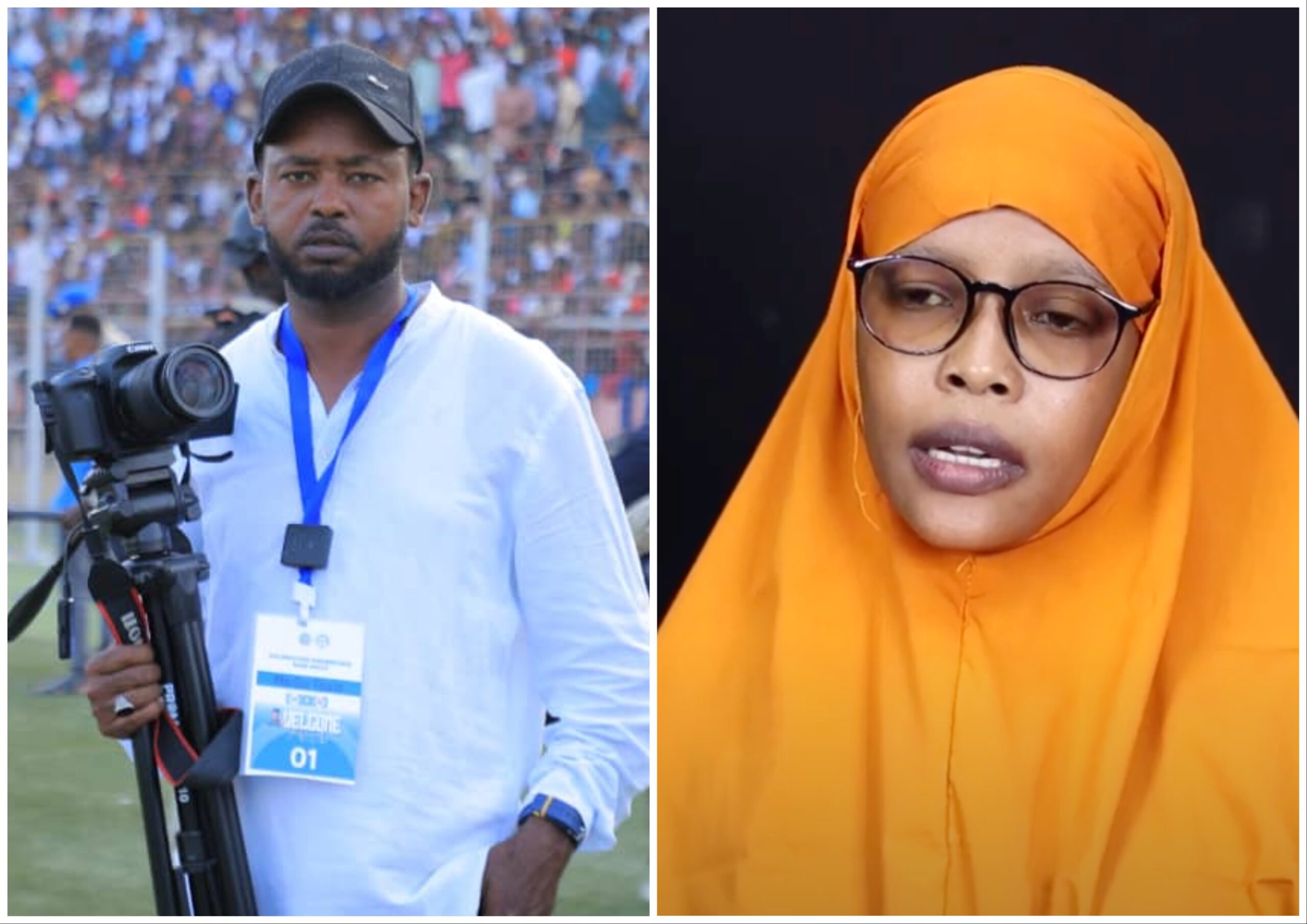
On 5 May 2025, armed agents from the Somali National Intelligence and Security Agency (NISA) raided a residential house and media studio belonging to journalists Bashir Ali Shire (left) and Mohamed Omar Baakaay (right) in the Shibis district of Mogadishu.| PHOTO/ SJS /courtesy.
Journalist Bashir Ali Shire (left) and journalist Mohamed Omar Baakaay (right).

MOGADISHU, Somalia 6 May, 2025 – The Somali Journalists Syndicate (SJS) strongly condemns the incitement to violence made this week by the Karaan District Commissioner, who called for attacks with “machetes and sticks” against a critical journalist.  This dangerous rhetoric comes amid a rising wave of threats and violence targeting journalists in Mogadishu.

Early Monday morning, around 1:30 a.m. on 5 May 2025, armed agents from the Somali National Intelligence and Security Agency (NISA) raided a residential house and media studio belonging to journalists Bashir Ali Shire and Mohamed Omar Baakaay in the Shibis district of Mogadishu.

The armed men, blindfolded and arrested journalist Bashir Ali Shire, who reports for MM Somali TV, and confiscated an external hard drive, CCTV storage equipment, and his phone from the residence.

Journalist Mohamed Omar Baakaay was not present during the raid, but the agents also arrested his brother, Anas Omar Mohamud. According to Bashir, the armed men threatened and intimidated him with pistols and took them to a secluded street corner in Shibis district, where they began beating Anas with the pistols and kicking him while interrogating him about his brother Mohamed’s whereabouts.

At dawn, the two were taken to the Shibis Police Station. They were later released around midday but were told to leave behind contact details in case they are needed again. Journalist Mohamed Omar Baakaay, who continues to publish on his Facebook page, has stated that he cannot return home due to fear of further violence. His passport, ID card, and mobile phone were among the items seized during the raid.

This incident occurred just a day after the Kaaraan District Commissioner, Farah Adani — an official appointed by the Mogadishu Mayor — publicly called for violence against journalist Baakaay.

On 4 May statement broadcast on multiple platforms, Commissioner Adani urged government supporters to “take machetes and sticks,” declaring they were authorized to “break the journalist’s bones and enter his house.” He went further to label the journalist a “drug addict and worse than the terrorists” and challenged his supporters to “bring him in handcuffs.”

On 3 May, journalist Baakaay published a video report on Facebook and YouTube claiming that “vulnerable women were being exploited for media publicity” during voter registration campaigns in Mogadishu, and that Mogadishu district commissioners “were under pressure to forcibly register people for disputed electoral purposes” in Mogadishu.

Baakaay has 260,000 followers across his Facebook page and 62,000 on YouTube which he uses for daily reporting.

Following this inciteful speech, threatening messages and images of critical journalists began circulating on social media, with some explicitly mentioning potential violence. SJS received a report from one journalist who was verbally threatened on the street with a warning of a ‘machete attack’ if he continued to publish criticism of President Hassan Sheikh Mohamud.

While attacks on critical journalists have escalated in the past four months, SJS is particularly alarmed by the dangerous rhetoric of Karaan District Commissioner Farah Adani — a known political ally of President Hassan Sheikh Mohamud— who reportedly commanded a defected police unit in Yaaqshiid during the Mogadishu violence in April 2021.

SJS expresses its deep concern on this new call to violence against journalists and we urgently call on President Hassan Sheikh Mohamud and the Mayor of Mogadishu, Mohamed Ahmed Amiir, to immediately suspend Commissioner Farah Adani, and to launch an independent investigation into his threats and the raid of journalist Mohamed Omar Baakaay’s residence.  Such inflammatory actions not only endanger journalist journalist Baakaay but have also escalated the risk to other journalists in Mogadishu who report critically on the government.

“We condemn the raid on the journalists’ residence in Mogadishu on Monday, as we strongly denounce the dangerous call for violence made by the Kaaraan District Commissioner Farah Adani against journalist Mohamed Omar Baakaay. We particularly call for a full and independent investigation into the armed officers and individuals in civilian clothes who were involved in the raid,” said SJS Secretary General, Abdalle Mumin.
“While SJS has documented a disturbing rise in threats, intimidation, and physical attacks against journalists in Mogadishu in recent months, this specific call to violence by a government official in Mogadishu is already having a chilling effect on the work of independent journalists and poses a serious threat to freedom of expression in Somalia. The safety of journalists must be guaranteed, and officials inciting violence against the press, including Farah Adani must be held accountable to prevent further deterioration of press freedom and democratic discourse,” Mr. Mumin adds.

World Press Freedom Day 2025: Alarming Escalation: Attacks on Journalists and Media in Somalia and Somaliland

0
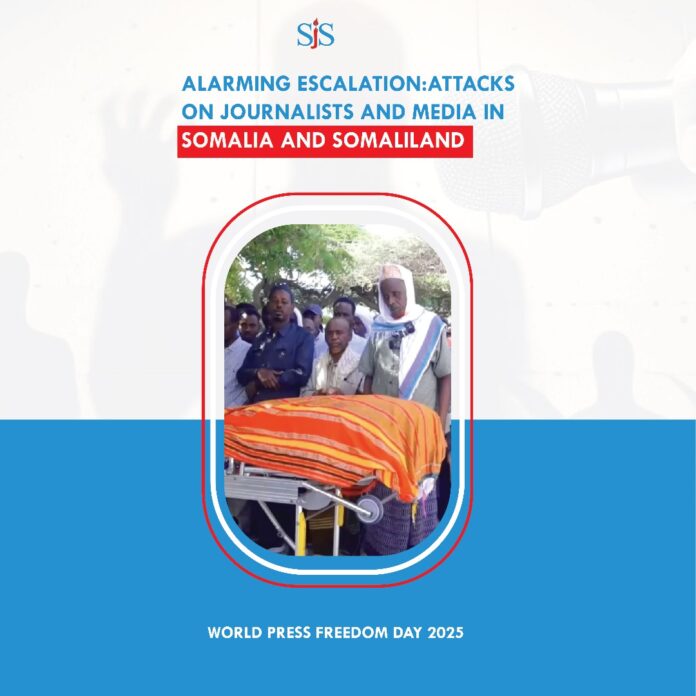
COVER PAGE: SJS Report on World Press Freedom Day 2025.

MOGADISHU, Sonalia 3 May, 2025 –  From January to April 2025, Somalia and Somaliland saw a sharp rise in attacks against journalists and media outlets. The safety of journalists remains a significant concern, especially in Mogadishu, which has become one of the most dangerous areas in the country.

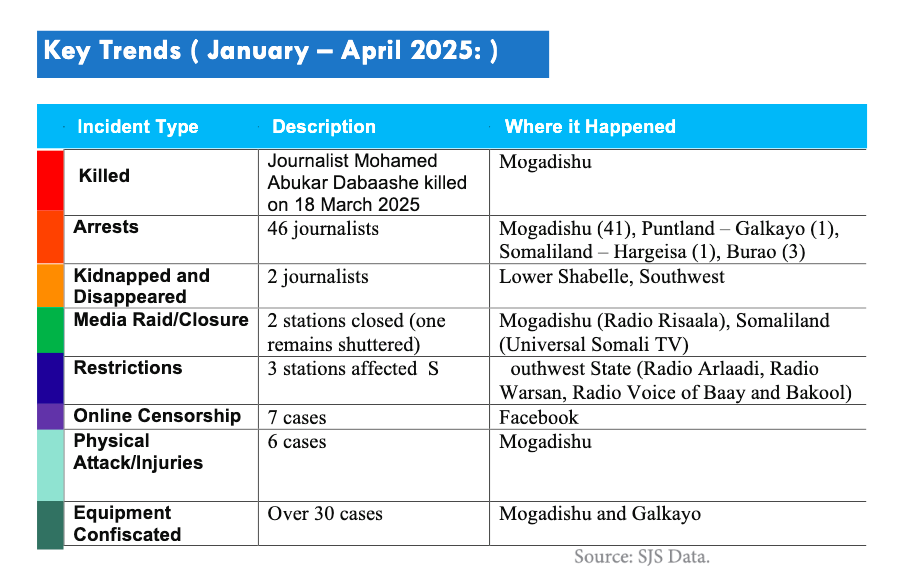
Key Trends ( January – April 2025: )

On 18 March 2025, journalist Mohamed Abukar Dabaashe was killed in an Al-Shabaab bombing targeting the Somali president’s convoy near the presidential palace—one of the supposedly safest zones in Mogadishu. Impunity continues as the Somali government fails to investigate such attacks and bring those responsible to justice, including for the killings of civilians and journalists.

Chart: Violations Against Media Freedom in Somalia and Somaliland (Jan - Apr 2025).
Chart: Violations Against Media Freedom in Somalia and Somaliland (Jan – Apr 2025).

Between 1 January to 30 April, In total, 46 journalists were arrested or detained during this period, and two journalists were kidnapped and disappeared in Lower Shabelle, Southwest State. Southwest State also imposed restrictions on three local radio stations during Ramadan, while Somaliland closed Universal TV, and Mogadishu police raided Radio Risaala. More than 30 journalists had their equipment confiscated, and 10 others faced physical violence and intimidation.

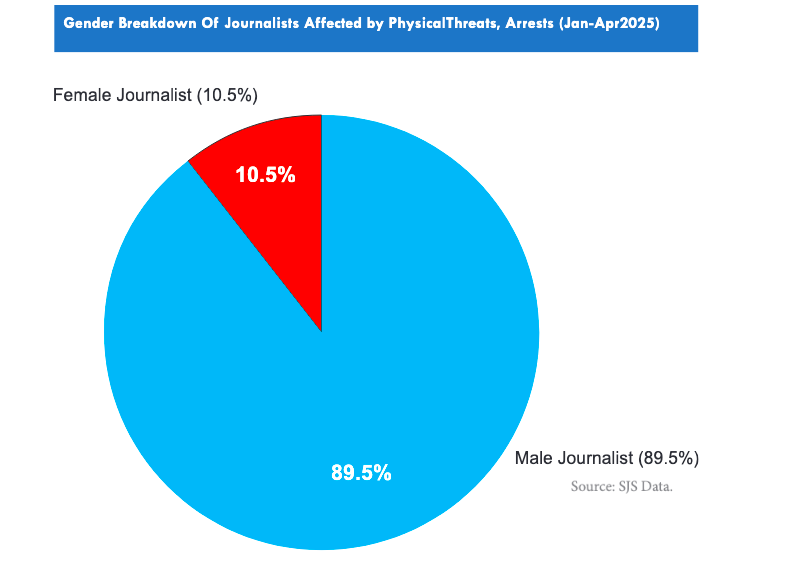
Female journalists represented 10.5% of those affected, while 89.5% were male.

Both government forces and Al-Shabaab contributed to an increasingly hostile environment for media workers, with offline attacks, including arbitrary arrests and killings, complemented by online censorship.

Somalia’s State Security Forces and Police, many of whom are former Al-Shabaab defectors, were behind most raids, arrests, and intimidations of journalists. The National Intelligence and Security Agency (NISA) continued unlawful detentions and harassment, particularly in Mogadishu. A surge in arrests—41 in Mogadishu alone—signals a growing threat to media freedom in the capital.

Government officials, including those from the Ministry of Information and Ministry of Internal Security, openly targeted journalists critical of the government or reporting on Al-Shabaab attacks or military withdrawals. This crackdown prompted many journalists to self-censor or flee the country.

Gender Breakdown Of Journalists Affected by Physical Threats, Arrests (Jan-Apr2025)

Facebook has become a key platform for journalists in Somalia, yet Meta increasingly
removed content or restricted pages, often in response to reports critical of the government or sensitive security issues. At least seven journalists and media outlets were affected by these actions during the period of this report.

Female journalists faced both physical at- tacks and online censorship, with six
incidents specifically targeted with women reporters.

The Somali Journalists Syndicate (SJS) urges immediate action at both national and
international levels to protect journalists, hold perpetrators accountable, and safeguard media freedom against the ongoing repression.


READ THE FULL REPORT HERE

SJS and RFK Human Rights condemn the ban on reporting and attacks on journalists in Somalia

0
A group of Somali journalists were brought to Hamar Jajab police station after they were arrested on the aftermath of Mogadishu bombing on 18 March 2025. | PHOTO:Courtesy: SJS.

MOGADISHU/WASHINGTON DC, 25 April, 2025 – The Somali Journalists Syndicate (SJS) and RFK Human Rights strongly denounce the trend of attacks on journalists amidst the worsening security environment in Somalia. Somali authorities must uphold their legal obligations to guarantee freedom of expression for journalists and all Somali citizens.

In recent months, freedom of the press in Somalia has  significantly deteriorated, while security challenges continue to rise. The Al-Shabaab militant group has recently escalated its campaign on Mogadishu and surrounding areas, launching raids and planting bombs in key civilian areas. In response, the authorities announced a ban on any reporting concerning the security situation in Mogadishu, which has left a large information gap for Somali citizens.

This illegal ban on reportage on the security situation has been used as a pretext to suppress press freedom in Somalia. Earlier this month, Somali Police arrested Feisal Omar (Reuters) for reporting on a protest by the Somali Bantu minority community, and the directors of a local outlet, Shabelle Media, Abukar Sheik Mohamud and Mahmud Abdinasir Soofeeysane, for hosting an interview on insecurity in Mogadishu.

This recent trend began in February 2025 after journalists reported on the United States embassy’s security alert regarding imminent attacks in Mogadishu. The local police commissioner in Mogadishu threatened to detain “anyone who reports on security issues in a hot and dark cell with no lights.” On March 18, after an Al-Shabaab bombing targeting the Somali President’s convoy outside the presidential palace, which sadly claimed the life of journalist Mohamed Abukar Dabaashe, Somali police arrested nineteen journalists from both local and international outlets who were on the scene to report the news. In addition, the police raided and shut down the offices of Risaala Media Corporation without a warrant after Risaala Media’s reporting on the bombing. Five other journalists were arrested and taken to the local police station for interrogation before being released with a warning not to report on security issues.

On March 25, journalist Ibrahim Mohamed Mayow was forcibly disappeared by armed officers linked to the regional police commissioner after reporting on an Al-Shabaab attack in the town of Afgooye, outside of Mogadishu. Mr. Mayow was summoned by the police commissioner after he published a video showing the aftermath of the mortar attack. Although local journalists went to the Afgooye police station to inquire about his whereabouts, the station informed them that they did not have him in custody. SJS confirms that Mr. Mayow was held in an undisclosed location until March 28, when he was driven to Mogadishu and thrown out of the car. The Somali police, who were responsible for his abduction, never issued any statement regarding his kidnapping or release.

Even journalists who were reporting on issues unrelated to the security situation have been caught up in the net of repression. On March 15, after journalist Bahjo Abdullahi Salad reported on leftover food and waste being dumped in a neighborhood in Mogadishu, agents from the National Intelligence and Security Agency raided her home, arrested her, and interrogated her for four hours. Her report was seen as a criticism of the Prime Minister, who had attended an event nearby that contributed to the dumping, and she was only freed after other journalists protested her detention.

“We are deeply alarmed by the escalating attacks on journalists across Somalia and the worsening security situation facing the media. The recent attacks on journalists in Mogadishu by Somalia’s police and national intelligence (NISA) and the death of journalist Mohamed Abukar Dabaashe in an Al-Shabaab bombing in Mogadishu, which also claimed the lives of innocent civilians, is a tragic reminder of the dangers journalists face while informing the public,” said SJS Secretary General, Abdalle Mumin. “Somali authorities must end this culture of silencing critical voices and ensure journalists can work without fear of violence, arrest, or intimidation.”
“The ban on reportage around security issues is not a permissible limitation to the right to freedom of speech under human rights law,” said Ikechukwu Uzoma, senior staff attorney at RFK Human Rights. “Somali authorities must begin to see a free press as a critical part of the advancement of peace and security in the country—journalism is not a crime,” he added.

Global Recognition: SJS SG Abdalle Mumin among finalists for 2025 Allard Prize for International Integrity

0
SJS Secretary General, Abdalle Ahmed Mumin, has been named among this year’s distinguished 2025 finalists. | FILE PHOTO/ SJS.

MOGADISHU, Somalia, 17 April 2025 – The Somali Journalists Syndicate (SJS) proudly welcomes the announcement of the finalists for the 2025 Allard Prize for International Integrity—one of the world’s most prestigious honors recognizing exceptional courage in the fight against corruption and the defense of human rights.

SJS is deeply honored that our Secretary General, Abdalle Ahmed Mumin, has been named among this year’s distinguished 2025 finalists. [Read finalists here]

Beyond his role at SJS, Abdalle Ahmed Mumin has relentlessly dedicated his life to defending press freedom, promoting transparency, and standing up for human rights in Somalia—often at grave personal risk. He has faced imprisonment, torture, threats, and endless persecution simply for speaking truth to power.

“Abdalle Mumin was imprisoned because of his unwavering commitment to defending human rights and press freedom in Somalia. His selection as one of this year’s finalists for the Allard Prize is more than a personal achievement—it is a powerful symbol of hope for the thousands of Somali journalists and human rights defenders who continue to endure threats, harassment, and oppression,” said Mohamed Ibrahim, President of the Somali Journalists Syndicate (SJS). “Abdalle’s courage fuels a new generation of truth-tellers and justice seekers. His recognition not only honors his sacrifice but also reinforces SJS’s commitment to our critical mission—pursuing press freedom, defending journalists, and promoting human rights with even greater determination and resilience.”

His selection as one of this year’s finalists for the Allard Prize is more than a personal achievement—it is a powerful symbol of hope for the thousands of Somali journalists and human rights defenders who continue to endure threats, harassment, and oppression,” – Mohamed Ibrahim, SJS President.

“Let us be absolutely clear: If Abdalle Mumin wins this award, it will be a resounding recognition of his bravery, unwavering dedication, and personal sacrifice in defense of human rights, government accountability, and media freedom. It will undoubtedly inspire thousands of journalists and human rights defenders across Somalia and beyond,” adds Mr. Ibrahim. “Moreover, it will send an unmistakable message to those who seek to silence truth and oppress freedom—that the world is watching, and it stands firmly with those who dare to speak out.”

The entire SJS network of journalists and community of defenders stand proudly beside our Secretary General, Abdalle Mumin, and reaffirms our unwavering commitment to advancing press freedom, protecting journalists, and promoting human rights.  We also extend our heartfelt congratulations and best wishes to Abdalle on this remarkable recognition.

The Allard Prize, named after Peter A. Allard, a Canadian lawyer and renowned human rights champion, recognizes individuals who demonstrate exceptional leadership and courage in combating corruption and defending human rights.

The Allard Prize Award Ceremony will be held on June 17, 2025, at Tribeca Rooftop in New York City, U.S, where the winner will receive a $100,000 CAD prize.