
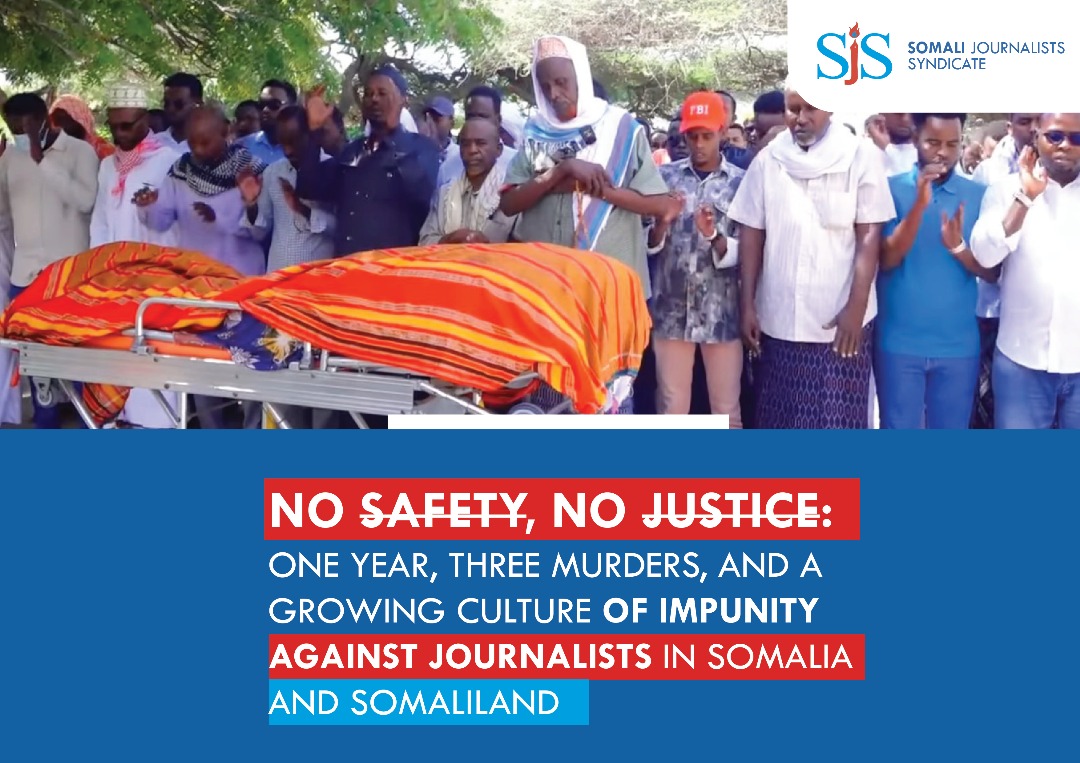
MOGADISHU, Somalia 3 November, 2025 – Between October 2024 and November 2025, Somalia and Somaliland witnessed a disturbing escalation in violations against journalists and media outlets. Despite ongoing national and international advocacy for press freedom, the environment for independent journalism remained perilous.
Three journalists were killed, dozens were detained, and numerous others faced intimidation, physical assault, censorship, and restrictions on their work. Security agencies, particularly the National Intelligence and Security Agency (NISA) and local police forces, continued to act with impunity, while online platforms also contributed to silencing journalists through content removal and account deletion.
Civil and criminal proceedings are repeatedly used to target journalists, often with judiciary officials and police in Somalia’s Mogadishu, Puntland, and Somaliland invoking penal code provisions to criminalize independent and critical reporting. SJS documented eight cases where journalists were prosecuted with penal code articles during the period of this reporting.
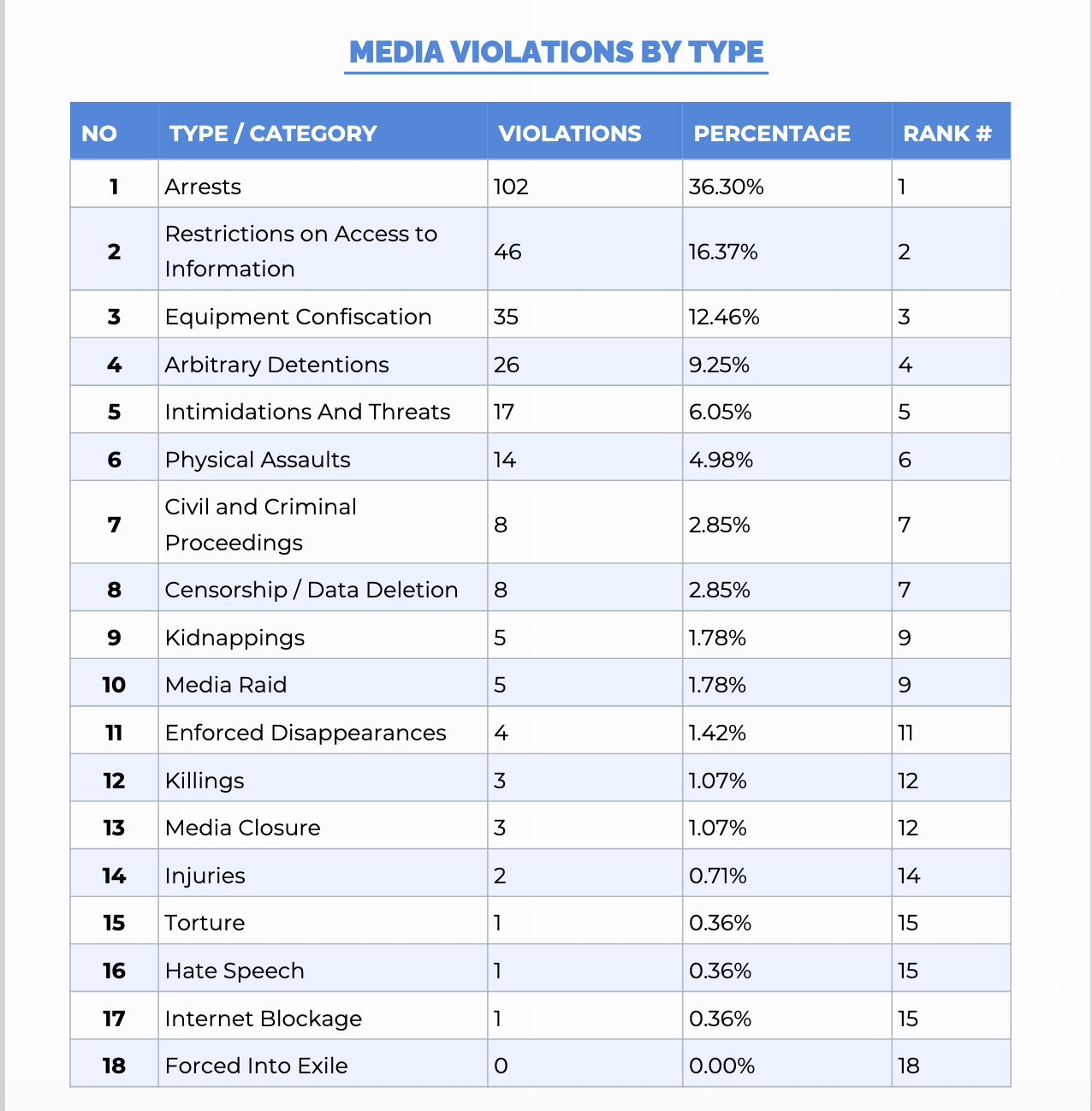
The Somali Journalists Syndicate (SJS) documented 171 cases of media rights violations during this period, reflecting a sustained and systematic assault on press freedom across the country.
Journalists Killed and Media Violations in Somalia and Somaliland (October 2024 – November 2025)
The murder of Somali-Swedish journalist Amun Abdullahi Mohamed, 49-year-old, who was shot dead by Al-Shabaab militants near Afgooye town in Somalia’s Lower Shabelle region—about 30 km from the capital Mogadishu—on 18 October 2024 remains uninvestigated. A year later, no perpetrators have been arrested. In its investigation, SJS learned that local police expressed fear and admitted their unwillingness to visit the site of the killing, as the area remains heavily controlled by Al-Shabaab.

Amun was not the only journalist killed by Al-Shabaab in recent times. On 18 March 2025, Al-Shabaab carried out a bombing attack in Mogadishu, killing several civilians, including journalist Mohamed Abukar Mohamed (known as Dabaashe), aged 31.
Sadly, Abdifatah Abdi Osman, 38, also known as Arab, a television technician for Astaan TV, a privately-owned cable network in Mogadishu, was shot dead by a gunman on the morning of 25 May 2025. SJS learned that police arrested a middle-aged suspect believed to be the gunman and that an investigation was ongoing. However, more than five months later, no update has been provided. Media reports indicated that clan elders from both sides had begun negotiations over possible blood money compensation (diya), though the authorities have not commented on these developments.
Two journalists sustained injuries, and 14 others faced physical assaults at the hands of security forces in Mogadishu and Somaliland.
Unending Arrests
Over the past year, SJS recorded 102 arrests, including the detention of six reporters in Mogadishu on the International Day to End Impunity for Crimes Against Journalists (November 2, 2025). These arrests account for 36.3% of all media rights violations documented in Somalia and Somaliland.
Restrictions on access to information and equipment confiscation have become widespread tactics used by security forces to prevent journalists from reporting.
The Somali National Intelligence and Security Agency (NISA) and the Mogadishu police remain the leading perpetrators of these violations. Since the return of NISA Director Mahad Mohamed Salad to the agency in June 2025, SJS has recorded a notable increase in cases where NISA officers have targeted, physically assaulted, and arbitrarily detained journalists, with some being held in undisclosed locations.
Civil and criminal proceedings are repeatedly used to target journalists, often with judiciary officials and police in Somalia’s Mogadishu, Puntland, and Somaliland invoking penal code provisions to criminalize independent and critical reporting. SJS documented eight cases where journalists were prosecuted with penal code articles during the period of this reporting. This misuse of the penal code against journalists remains a major obstacle to media freedom in Somalia and Somaliland.
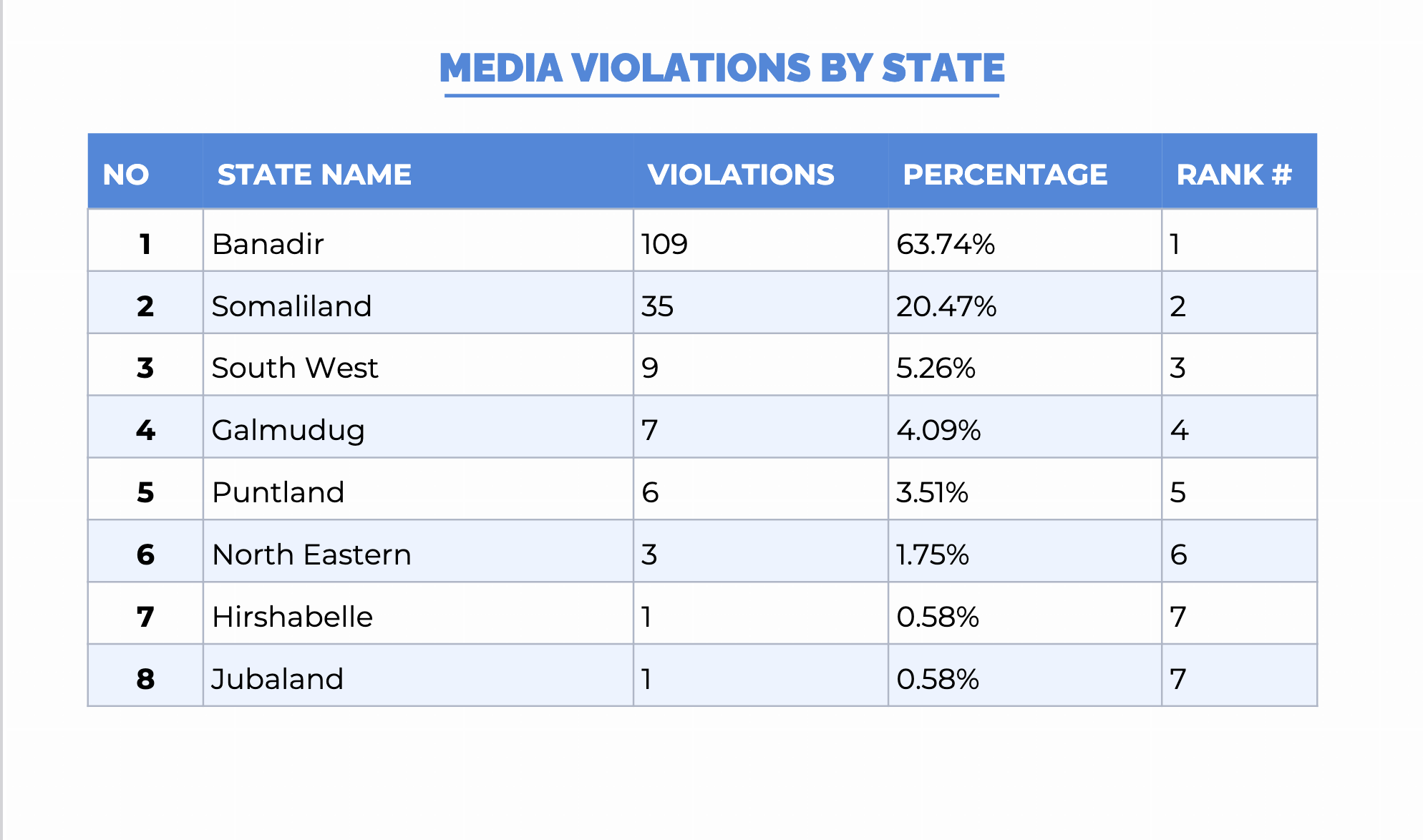
Three media outlets were shut down during this period. Somaliland authorities continue to enforce the closure of Universal Somali TV due to its reporting on President Abdirahman Abdillahi Irro’s visit to the UAE in February 2025. In Mogadishu, police raided and briefly closed Radio Risaala , while in Southwest State, police temporarily closed Radio Wanlaweyn in Lower Shabelle for reporting on security matters.
SJS welcomes the decision issued last Thursday, just days before the International Day to End Impunity for Crimes Against Journalists 2025, by Meta’s Oversight Board. The Board found that Meta’s systems failed to protect independent journalism and public interest reporting in Somaliland. After reviewing four cases initially investigated by SJS, the Board confirmed SJS’s findings—that Meta wrongfully deleted journalists’ pages and removed content unlawfully. The Oversight Board has directed Meta to improve its mistake-prevention systems and appeals processes to ensure journalists’ pages and their content are not unjustly removed.
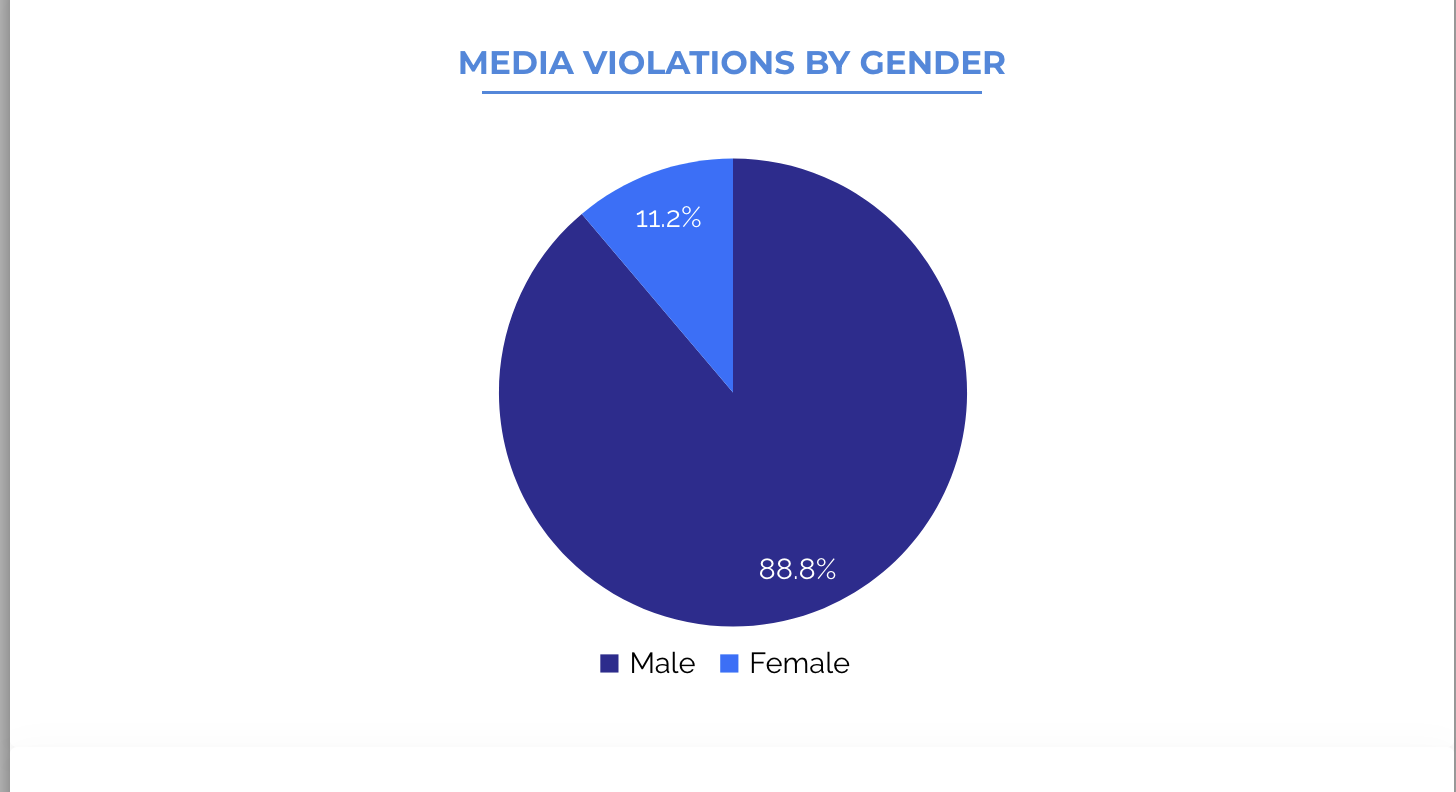
Of all violations documented by SJS, 143 male journalists (88.8%) and 18 female journalists (11.2%) were victims of press freedom violations across Somalia and Somaliland.
Conclusion and SJS Recommendations
The Somali Journalists Syndicate (SJS) remains gravely concerned about the persistent culture of impunity that continues to endanger journalists and undermine press freedom in Somalia and Somaliland. The lack of accountability for the killings of Amun Abdullahi Mohamed, Mohamed Abukar Mohamed (Dabaashe), and Abdifatah Abdi Osman (Arab) reflects a deep failure by the authorities to protect journalists and uphold justice. This failure, coupled with the unending arrests, physical assaults, arbitrary detentions, and restrictions on access to information, has entrenched fear and self-censorship within the media community.
SJS strongly condemns all forms of violence, intimidation, and censorship targeting journalists and media houses.
SJS calls on the Federal Government of Somalia and the authorities in Somaliland to:
- Ensure impartial and transparent investigations into all cases of murdered, assaulted, or detained journalists, and hold perpetrators accountable regardless of their position or affiliation.
- End the use of security forces to silence the media, including arbitrary arrests, raids, and intimidation.
- Review and amend penal code provisions that are being misused in Somalia and Somaliland against journalists and ensure that laws protect, rather than punish, independent and critical reporting.
- Guarantee access to information and uphold freedom of expression as enshrined in Somalia’s Provisional Constitution of the Somali Federal Government and the Somaliland Constitution as well as the international human rights standards.
- Allow the closed media outlets to resume operations -particularly the Universal TV in Hargeisa, and allow their journalists to operate freely without fear of reprisal.
- Adopt concrete measures to address online harassment and digital attacks targeting journalists, particularly women, and strengthen digital safety mechanisms across media institutions in Somalia and Somaliland.
As the world observes the International Day to End Impunity for Crimes Against Journalists in 2025, SJS reiterates its unwavering commitment to defend press freedom, demand justice for slain and persecuted colleagues in Somalia, and advocate for a safe and enabling environment for all media professionals in Somalia and Somaliland.
Impunity must end — justice for journalists in Somalia and Somaliland cannot wait.