
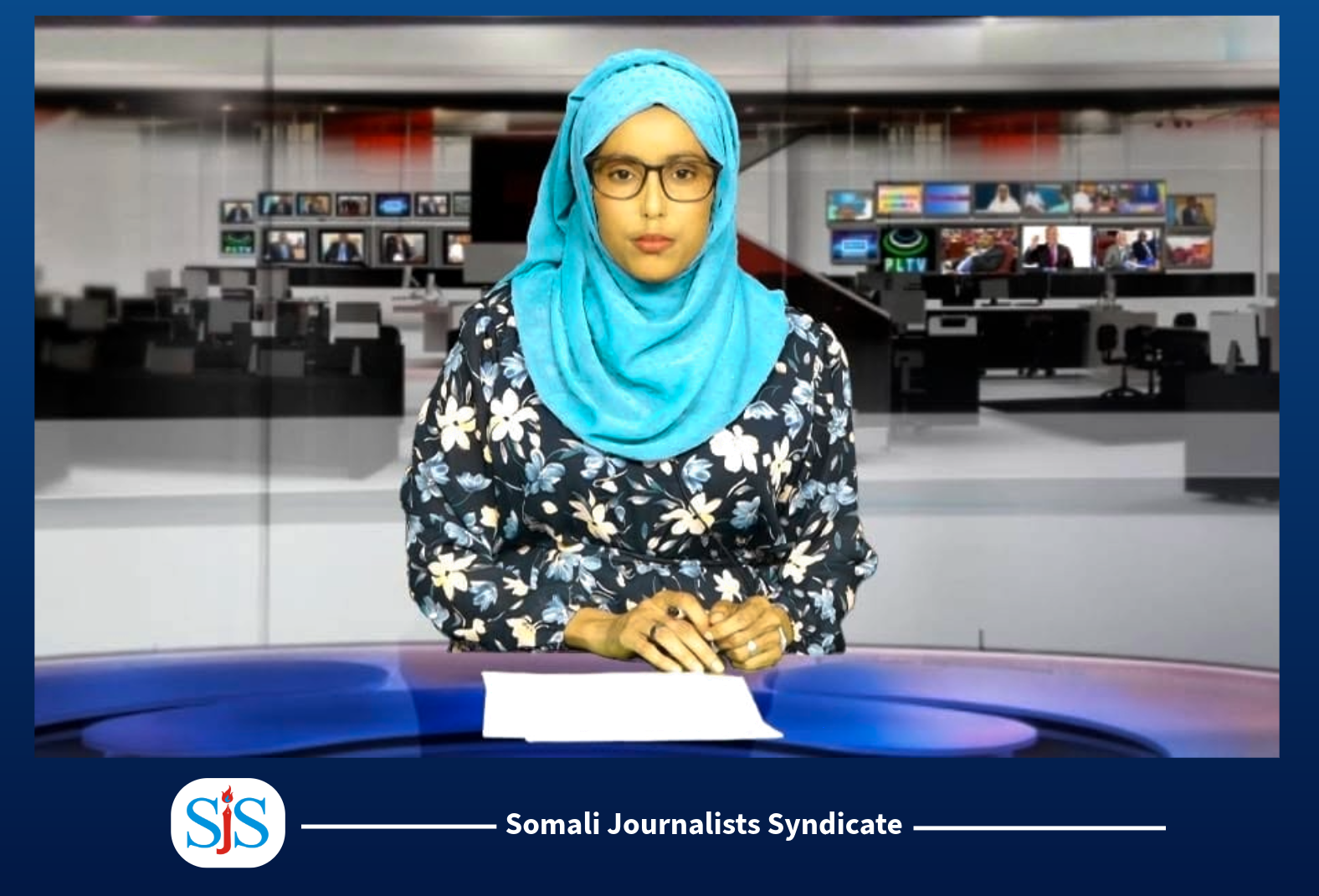
MOGADISHU/GAROWE, Somalia 5 July 2026 – The Somali Journalists Syndicate (SJS) calls for the immediate release of journalist Suways Jama Mohamud, who is currently being held in Garowe, Puntland, following her arrest by police on Thursday, 2 July 2026, over her critical street-question reporting on her online media platform, and urges the Puntland police to end the prolonged pressure and intimidation against her.
On Thursday, 2 July, Puntland police officers arrested Garowe-based journalist Suways Jama Mohamud, widely known as Suways Gacayte, in Garowe, the capital of Somalia’s Puntland State. She was transferred later that day to Garowe Central Prison, according to her family and colleagues.
Colleagues told SJS that police officers had waited outside Suways’ home before arresting her as she left her residence on Thursday.
Sources told SJS that local officials ordered her arrest over her critical social media posts “after complaints were made” against her. The officials responsible for ordering the arrest have not yet been identified, as sources said the case may be brought before a court.
Suways is the founder and journalist of Suways Media, an online media platform popular on Facebook and YouTube, known for its street interviews that often feature public criticism of local officials in Puntland. On 29 June, Suways Media published a video clip titled that residents in Garowe were “concerned about the presence of a militia group” led by an officer allegedly linked to Somalia’s Federal Government. In another post published the same day, Suways Media stated that the neighbourhood where concerns had been raised “remained calm and that no families had fled the area”.
On Saturday, 4 July, a group of journalists who visited Suways in prison confirmed to SJS that she remained in detention.
Suways, who has also worked for the state-owned Puntland TV, has faced years of harassment, intimidation, and pressure, primarily from Puntland police. On 5 March 2024, she was briefly detained, physically assaulted by a police officer, and her vehicle was damaged after officers stopped her while she was driving home from work. She subsequently filed a complaint against the officers involved. However, the Puntland Military Court, which has jurisdiction over offences committed by security personnel, declined to investigate the case, claiming that doing so would damage the reputation of the police.
In September 2025, Suways and fellow journalist Hassan Abdi Ali (Hassan Heykal) were summoned by the Puntland Attorney General’s Office over their reporting on politically sensitive issues, including governance, human rights, and political criticism. The case was later dropped without either journalist being charged. Following the summons, Suways told SJS that the Puntland Ministry of Information dismissed her from her position at Puntland TV in retaliation for her independent reporting. Members of the Puntland Parliament subsequently raised the matter before the relevant parliamentary subcommittee, after which she was reinstated to her position at the state broadcaster.
SJS strongly condemns the arbitrary arrest and continued detention of Suways and calls for her immediate and unconditional release. Since 2021, Suways has been among dozens of women journalists trained and mentored by SJS through its initiatives aimed at strengthening women’s leadership in the media. Throughout her career, she has demonstrated professionalism, independence, and commitment to public-interest journalism despite repeated intimidation and reprisals.
“We condemn the arrest of Suways Jama Mohamud in Garowe on Thursday as she is still in detention without court order,” said SJS Secretary General, Abdalle Mumin.
“We call on the Puntland authorities to immediately release Suways, respect her right to freedom of expression, and end the persistent pattern of harassment, intimidation, and arbitrary detention of journalists. The authorities must ensure that journalists are able to carry out their work freely and safely—even when their reporting involves criticism of state authorities or security officials—without fear of retaliation for reporting on matters of public interest,” Mr. Mumin added.