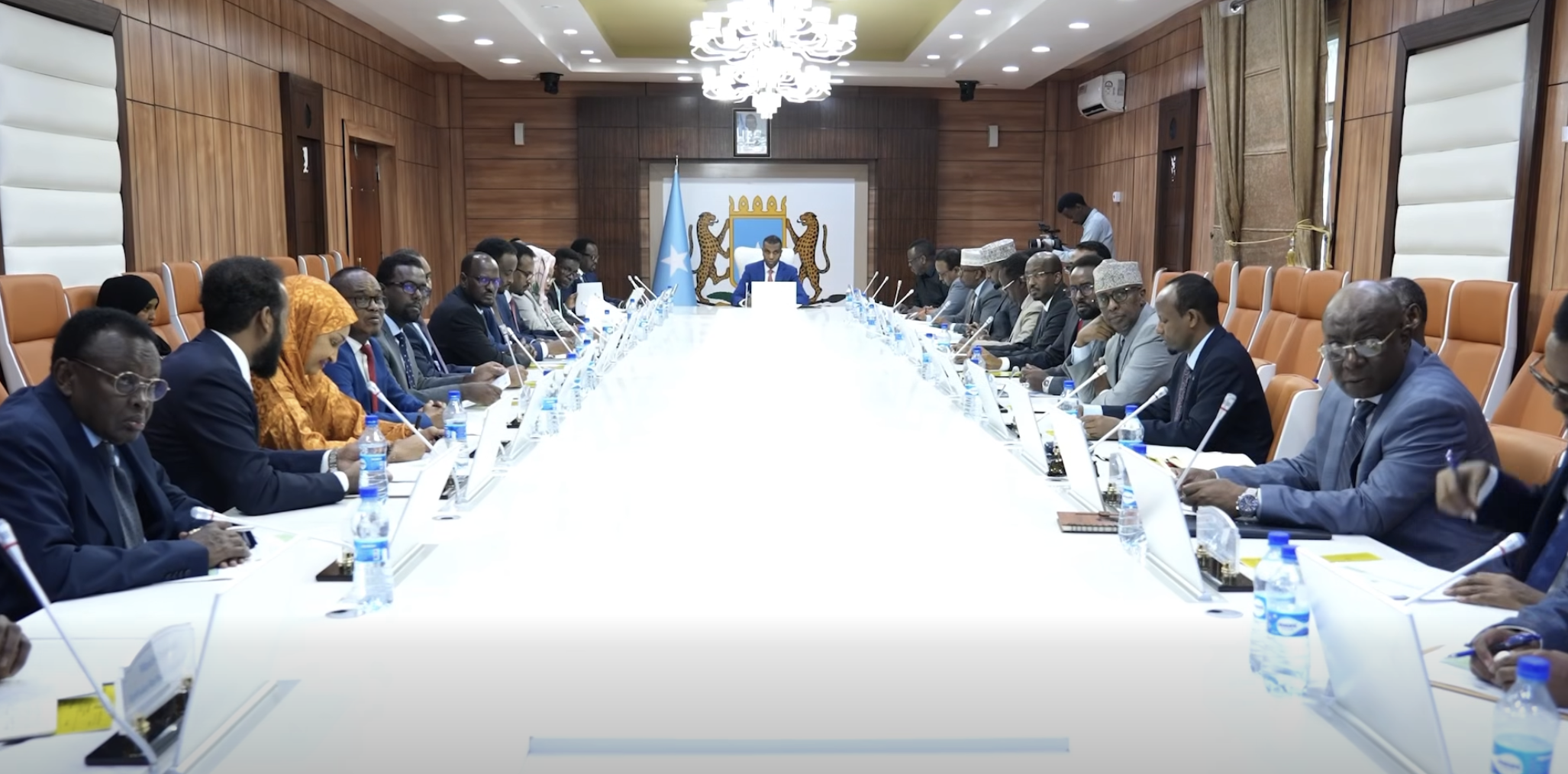
MOGADISHU, Somalia 11 April 2026 – The Somali Journalists Syndicate (SJS) expresses grave concern at reports that the Somali Cabinet of Ministers discussed plans targeting critical media outlets and journalists in Mogadishu during their weekly meeting on 2 April 2026 — ahead of 15 May 2026, when the terms of federal government institutions are due to expire.
According to government officials and media executives briefed on the matter, the cabinet meeting discussed specific measures against several media stations and journalists deemed critical of the government — all of them based in Mogadishu. As a result, several media houses whose names were raised during that meeting have contacted SJS to report threats now emanating from senior officials.
The day after the cabinet meeting, on Friday, 3 April, the Deputy Minister of Information, Abdirahman Yusuf Omar — known as Al Adaala — published a threatening post on his Facebook page. The post titled “Warning and clarification” labelled unnamed journalists and media institutions “of being opposition politicians using the media as a cover” and warning the public to be vigilant. This public threat by a sitting deputy minister, who has a history of orchestrating attacks on independent media and individual journalists, constitutes a direct assault on press freedom. It is incompatible with Article 19 of the Universal Declaration of Human Rights (UDHR), which guarantees the right to freedom of opinion and expression, as well as Article 18 of the Federal Constitution of Somalia, which enshrines freedom of expression and of the press.
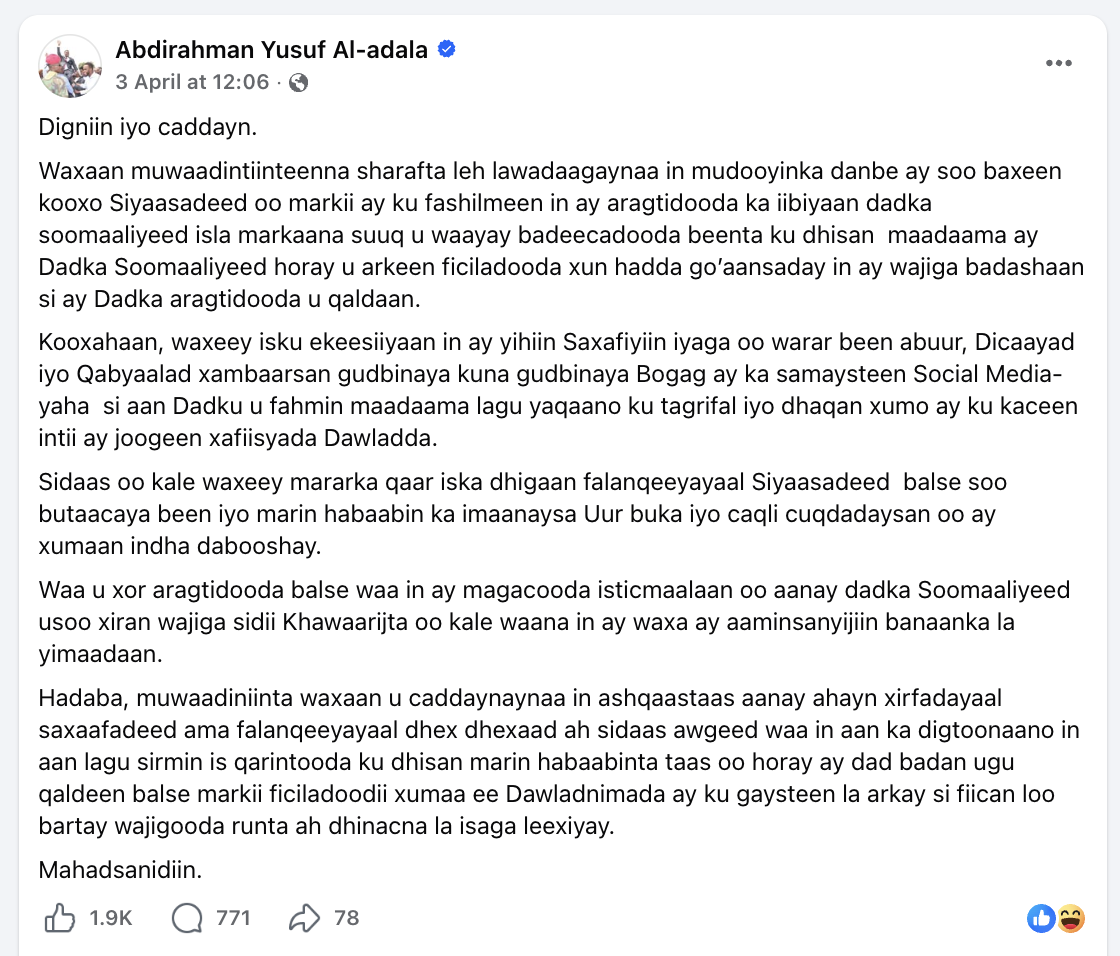
The threat sent shockwaves through newsrooms and journalist communities in Mogadishu. A local television director informed SJS that the post — published the day after the reported cabinet meeting — caused his staff to fear for their personal safety.
On 2 April, journalist Abdihafid Nor Barre — who reports for Somali Cable TV — was kidnapped by officers from the Somali Police Force and the National Intelligence and Security Agency (NISA) and held in detention for seven days. His detention arose from a Facebook post in which he quoted South West State authorities stating: that “militias who had attacked the city of Baidoa had been defeated”. He was released on Wednesday, 8 April without charge. Colleagues told SJS that Abdihafid was forced to sign “an apology letter” before his release and was later made to post an apology on his Facebook page under the orders of Al Adaala.
Following the reported cabinet meeting, Somalia’s Minister of Justice, Hassan Sheikh Ali — who holds dual Somali-British nationality — summoned a group of journalists in Mogadishu for a meeting that was ostensibly convened to discuss the arrest of journalist Abdihafid Nor Barre. Three journalists present at the meeting told SJS that Minister Hassan Sheikh Ali warned journalists and members of the public — including tuk-tuk (bajaj) drivers — that they would be “crushed” if they continued to report criticism of the government.
In preceding weeks, Mogadishu had witnessed tuk-tuk drivers — the city’s primary taxi service providers — protesting against rising fuel prices, with several, including one woman, subsequently arrested by police. The Minister specifically warned journalists against conducting vox pop street interviews that present criticism of the government, the journalists who attended the meeting confirmed to SJS.
Such threats by a senior government minister against journalists and ordinary citizens exercising their right to peaceful protest violate the right to freedom of peaceful assembly and association guaranteed under the Somali constitution and the UDHR.
An editor working with an online platform whose name was mentioned during the cabinet meeting told SJS that, since the threats were issued, his outlet had begun reducing the number of staff present in their offices at any given time — a direct consequence of the climate of fear created by government officials.
SJS has also learned that, on the night of 2 April — hours after the cabinet meeting concluded — photographs of two prominent journalists in Mogadishu were shared in a Mogadishu Police WhatsApp group, accompanied by instructions to arrest them. Furthermore, two members of the Somali National Intelligence Service made a death threat against one of the two journalists.
On 9 April 2026, police officers from the Hawlwadag District in Mogadishu fired live ammunition at four journalists who were covering an anti-forced evictions protest by a group of women and children at the Ceel Hindi neighbourhood in Hawlwadag District. None of the journalists were physically harmed, as they fled the scene.
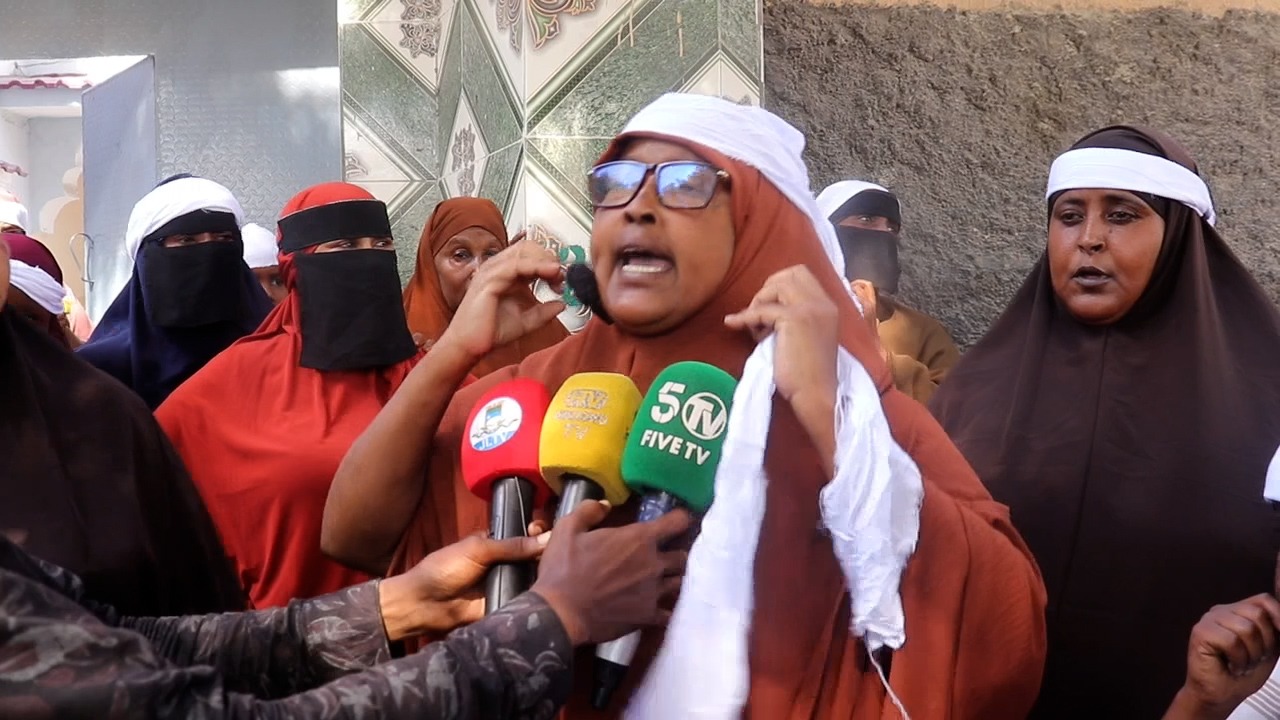
SJS considers any threat against the journalist community — including death threats — to be gravely serious. We have advised journalists, editors, and media managers to remain vigilant, exercise caution, and be mindful of their security and safety. We wish to remind the Somali Prime Minister and his Cabinet that critical journalism is a constitutional right, and that journalists who give voice to communities whose rights have been violated are not enemies — they are heroes of this country.
Mogadishu has witnessed a number of street protests in recent weeks, primarily by community members demonstrating against forced evictions, land grabbing, and rising fuel prices. These are legitimate causes for public protest under Article 20 of the UDHR and Article 20 of the Federal Constitution of Somalia. The government must cease targeting journalists and community members who amplify these voices. Instead, it must listen and provide solutions to end forced evictions and reduce fuel prices.
“The Somali Cabinet of Ministers must understand that threatening journalists with arrest, kidnapping, and death is a criminal act. They must stop now. These are legitimate protests by community members standing against forced evictions, land grabbing, and unjust fuel prices. The government must stop targeting journalists and community members who are giving voice to their communities, and instead listen and find solutions,” said Abdalle Ahmed Mumin, Secretary General of the Somali Journalists Syndicate (SJS).
“We praise the brave Somali journalists who, despite these threats, continue to stand firm in defence of basic human rights. I wish to reiterate once more: SJS stands with you, as we have always done,” Mr. Mumin added.
SJS urges the international community to closely monitor the situation facing Somali journalists and human rights defenders, including women activists who are subjected to ongoing and relentless threats. Silence in the face of these violations is complicity. The protection of journalists and press freedom is not only a domestic obligation under the Federal Constitution of Somalia, but an international obligation under the Universal Declaration of Human Rights.