
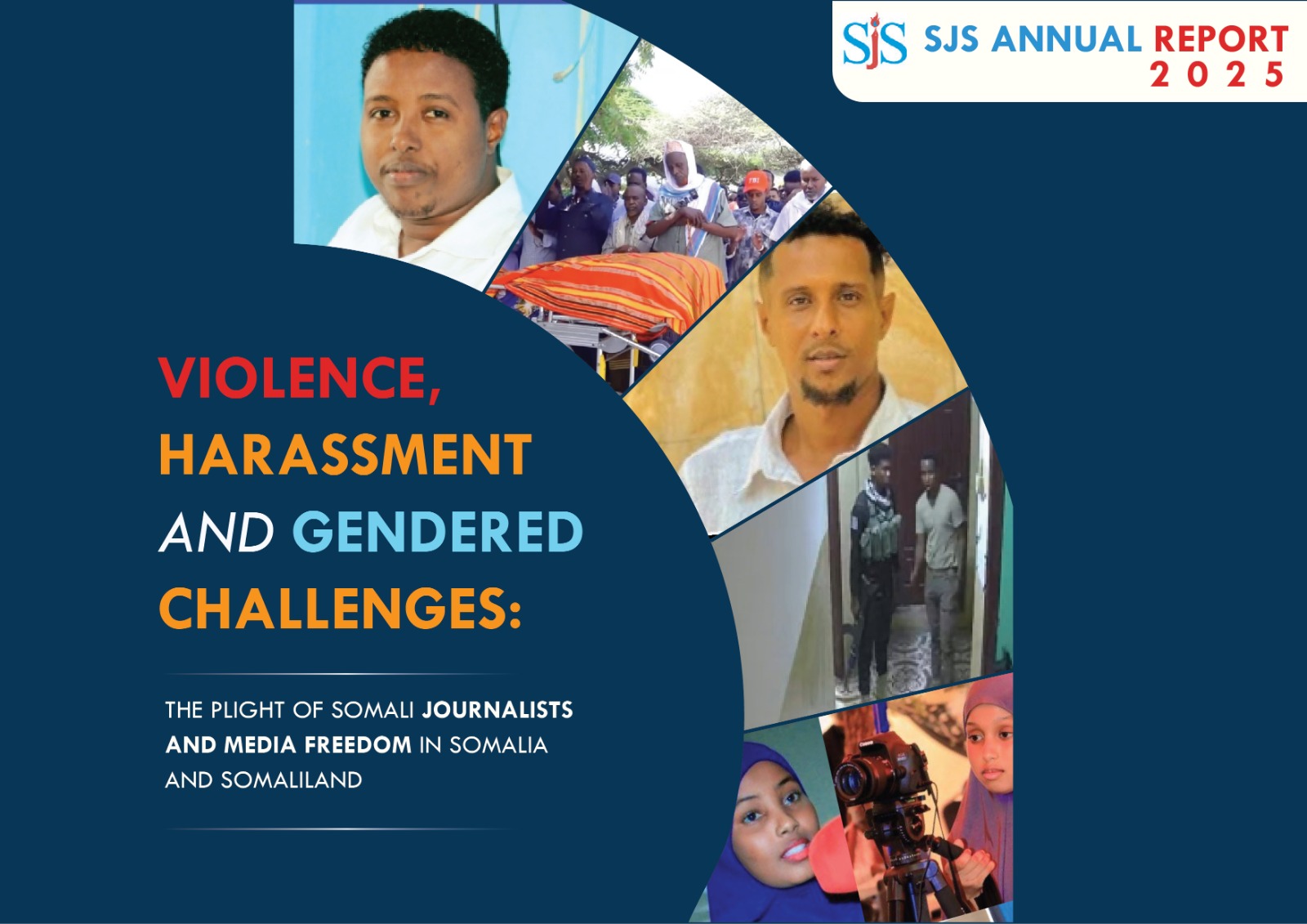
MOGADISHU, Somalia 10 March 2026 – The year 2025 was marked by a continued deterioration of media freedom and the safety of journalists in Somalia, with reporters and media workers operating in an increasingly precarious and chilling environment. Documentation by the Somali Journalists Syndicate (SJS) shows that attacks against journalists and media outlets intensified throughout the year, illustrating a pattern of systematic repression and growing hostility toward independent reporting.
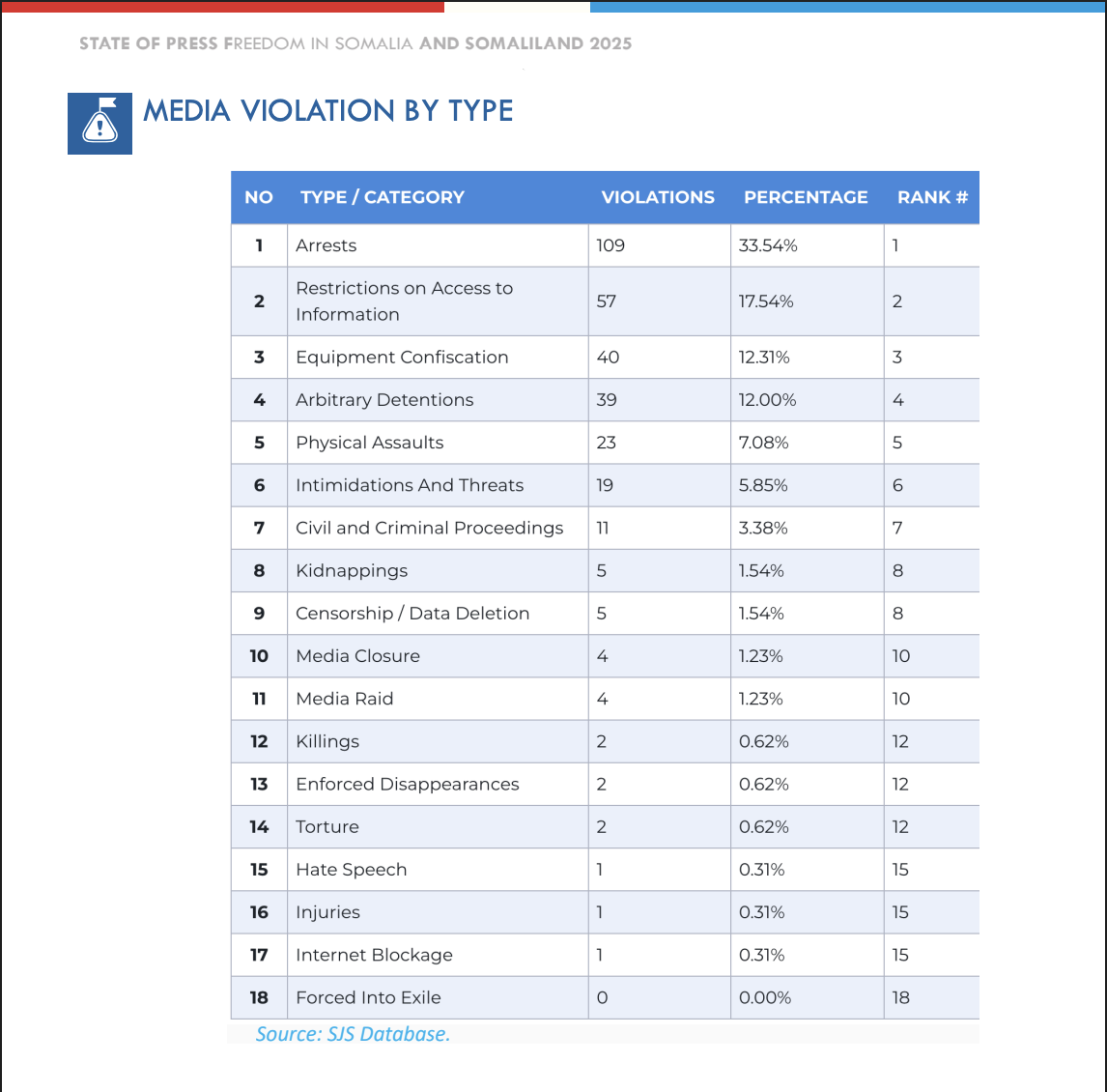
Tragically, two journalists were killed in Mogadishu. Local independent journalist Mohamed Abukar Dabaashe died in an Al-Shabaab terrorist bombing targeting a residential area in March, while Abdifatah Abdi Osman, known as Arab, a television technician, was shot dead by a lone gunman in May while on his way to work.
During the year, 22 journalists sustained beatings and physical assaults by state security forces while on duty. Fourteen of the victims were reporters attacked in Mogadishu, including two women. In Somaliland, security forces attacked five journalists, including one who was shot with live ammunition and subsequently beaten.
Throughout 2025, 148 journalists were arrested or arbitrarily detained. In Somaliland, 36 journalists were detained or arrested in regions such as Erigabo, Sanaag, and Awdal, which experienced heightened inter-clan conflicts. Mogadishu led with 118 cases of media violations including arbitrary detentions, primarily carried out by NISA and the police. Five of these incidents were kidnappings.
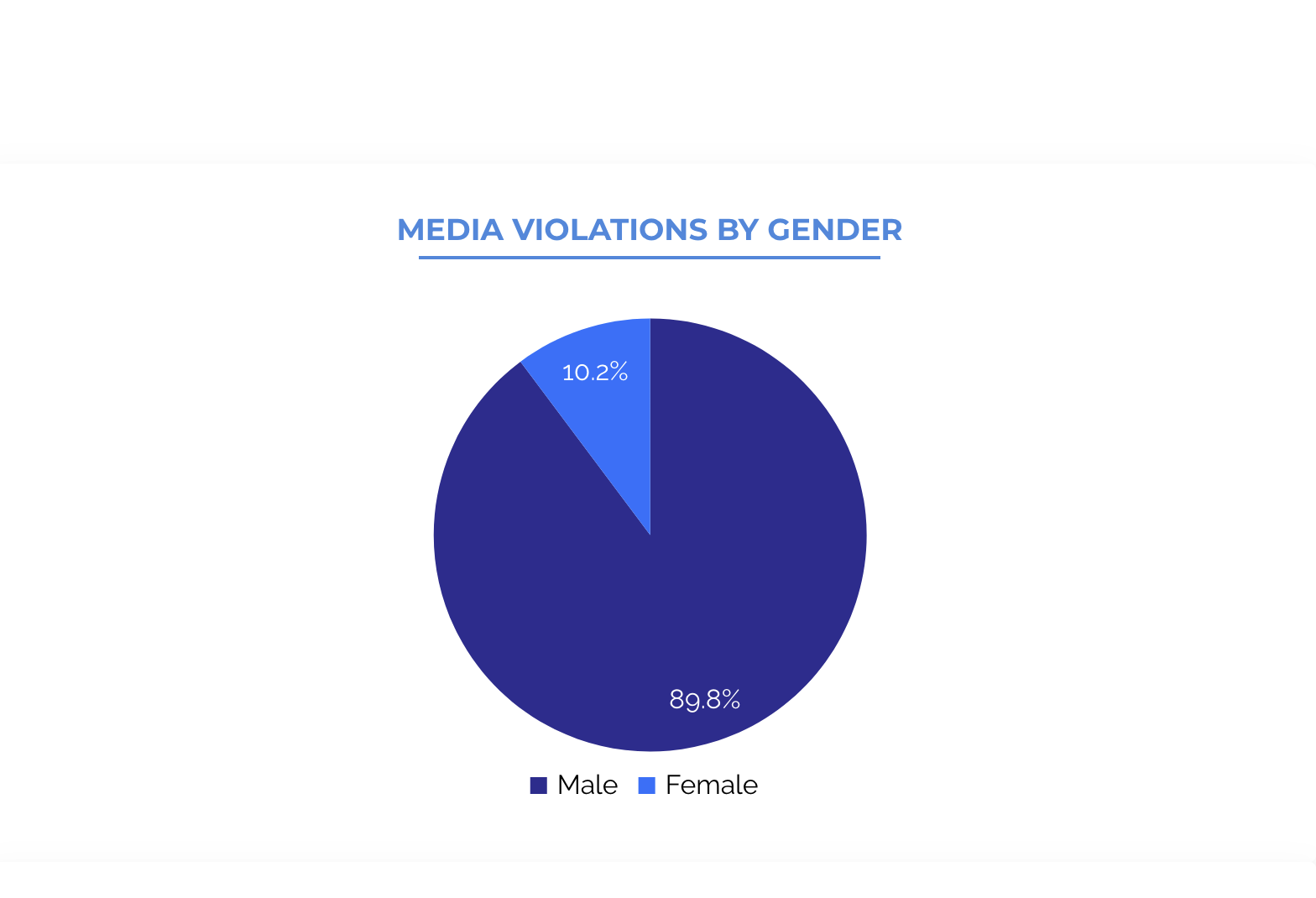
Nearly 90 percent of journalists arrested or arbitrarily detained were not brought to court and were released without charge, often after one or several days in detention. Over 10% of the media violations recorded in 2025 affected women journalists.
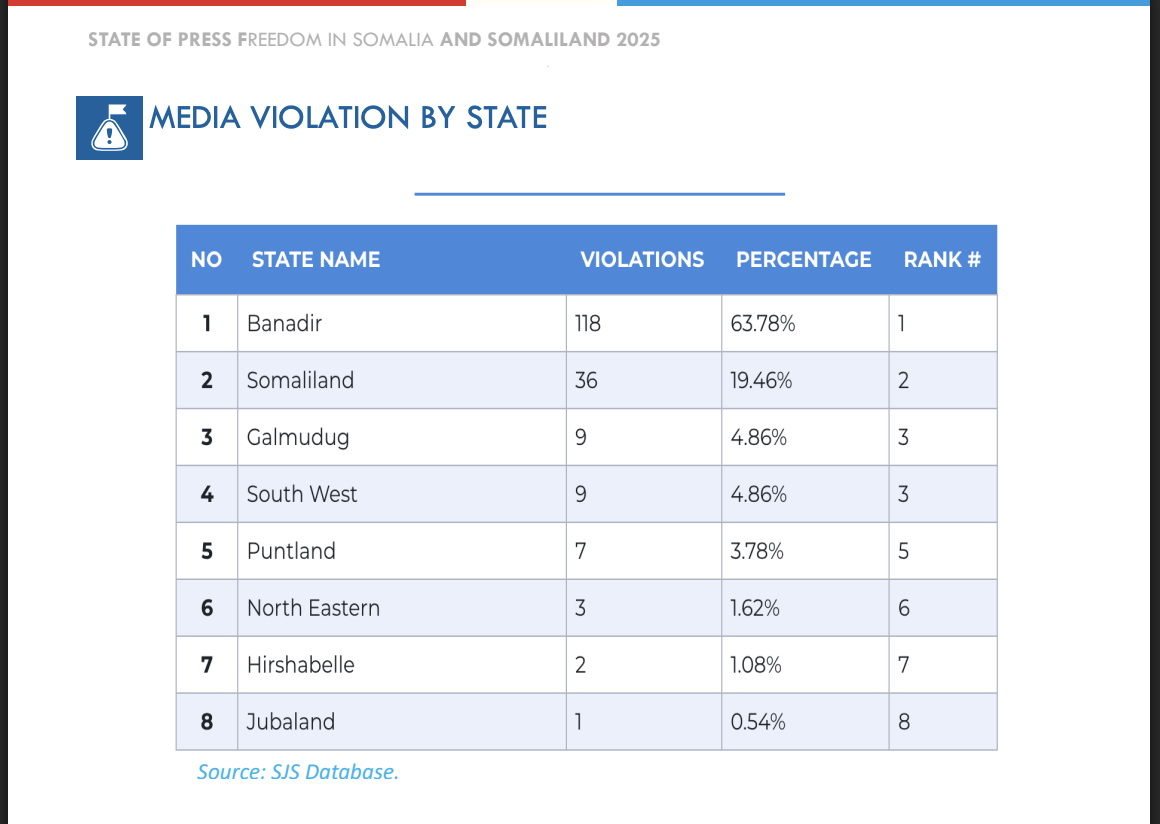
Nine cases of media violations were recorded in each of Southwest and Galmudug, while Puntland commited seven violations; Northeastern (formerly SSC-Khaatumo) detained three reporters; Hirshabelle arrested two and Jubaland detained one journalist. The past year also showed a pattern of repression through prosecution and legal harassment. SJS documented nine incidents of legal harassment and Strategic Litigation Against Public Participation (SLAPP) lawsuit aimed at silencing journalists – including SJS itself – and intimidating them from performing their work. One of these legal harassment cases specifically targeted a woman journalist in Puntland State.
In 2025, a total of nine media stations were banned or denied access, including five in Southwest State of Somalia. Two of the affected outlets in Mogadishu were targeted by Somali security forces. In Somaliland, a local television station was closed over its reporting of the tension between Somalia and Somaliland, and the Hadwanaag news website was suspended again after an earlier lift of a long-standing ban.
Women journalists in Somalia are frequently targeted with online harassment, intimidation, and disinformation campaigns. Throughout the year, SJS documented repeated incidents of both online and offline attacks against women in media. Women journalists in Mogadishu were particularly vulnerable, as the political environment worsened amid heated debates surrounding the 2026 elections. At the same time, forced evictions of vulnerable families increased, causing large-scale displacement in the city. Several women journalists covering these developments were arrested, leading many to avoid posting opinions on social media or engaging in reporting assignments that might provoke retaliation from local authorities.
In Puntland, a woman journalist faced legal threats after conducting street interviews that reportedly angered local authorities in Garowe. Such incidents have contributed to growing fear and self-censorship among women in the media.
Somali women journalists and media producers also report a rise in AI-facilitated abuse, including voice cloning, manipulated images, and fake online content used to shame or discredit women journalists. These digital attacks are becoming increasingly common tools to silence female voices in the media.
Women journalists also face structural barriers to leadership and decision-making positions within Somali media organizations. Women currently make up only about 20 percent of professional journalists in Somalia, and many receive lower pay than male colleagues performing similar work. Key challenges include exclusion from editorial decision-making roles, male-dominated newsroom management, gender pay gaps, and sexual harassment linked to job security or career advancement. These conditions create hostile workplace environments and prevent many women journalists from advancing to leadership positions within media institutions.
To address these challenges, SJS has been actively working to empower women journalists through training, advocacy, and protection initiatives, aiming to create a safer, more inclusive, and equitable media environment in Somalia.