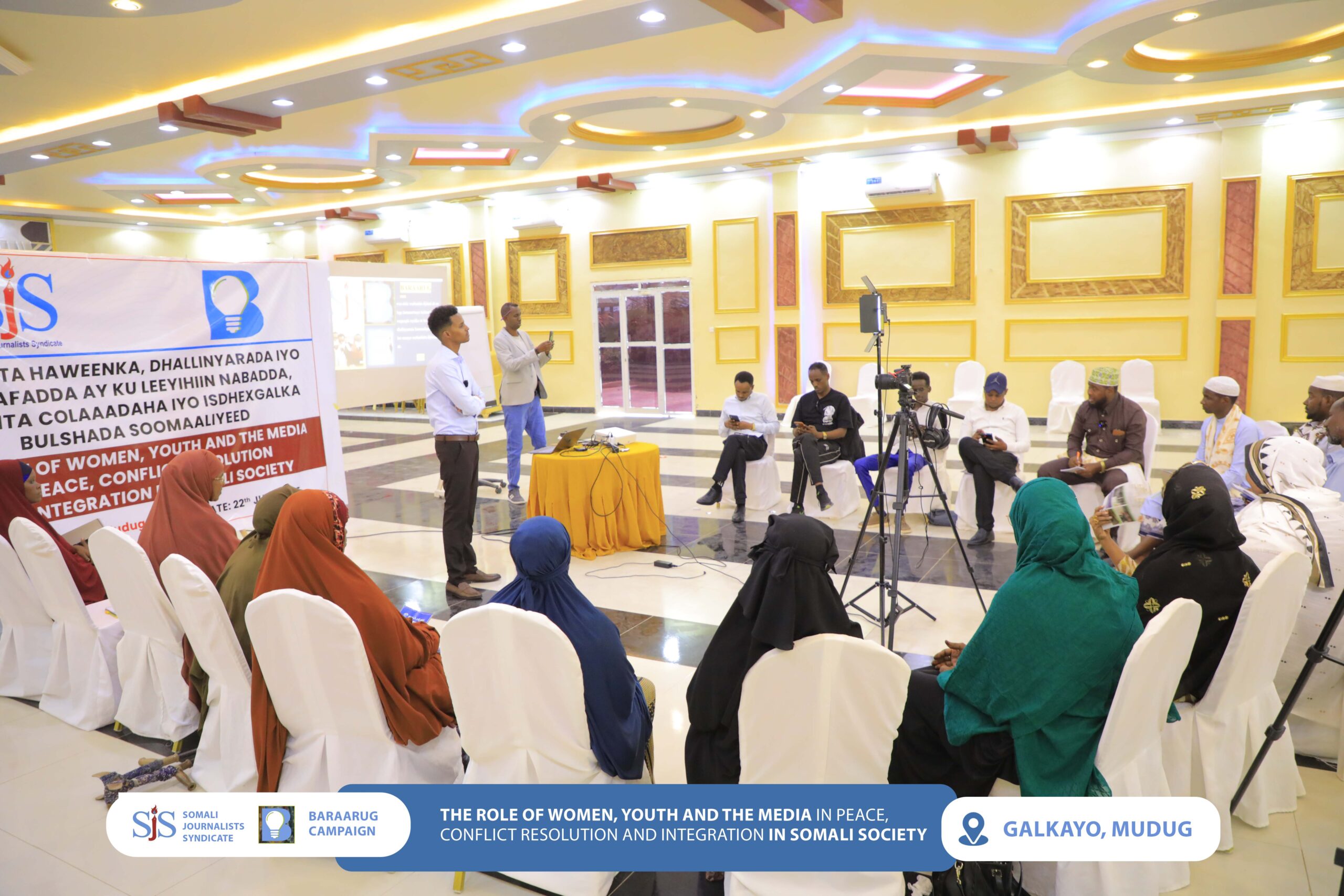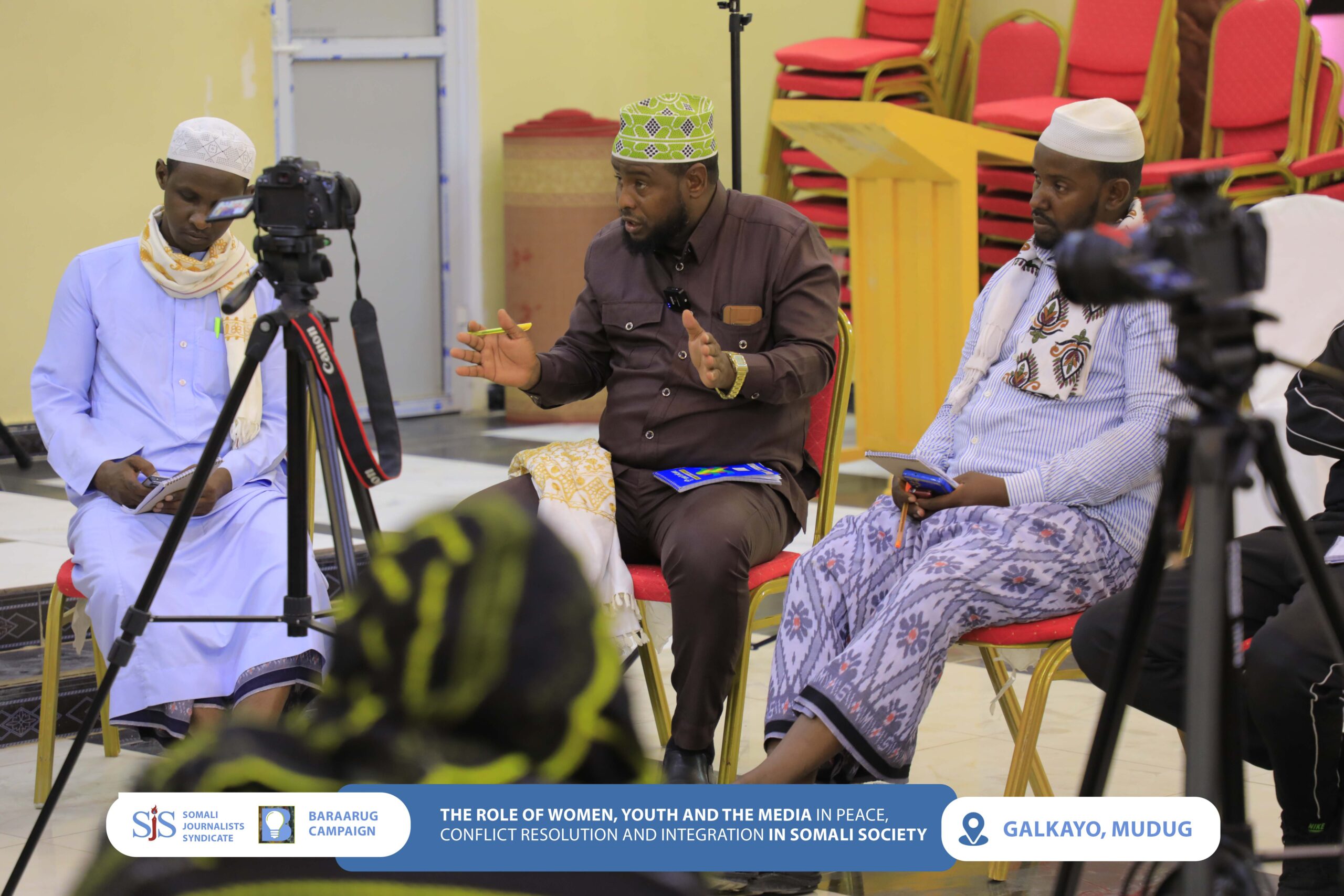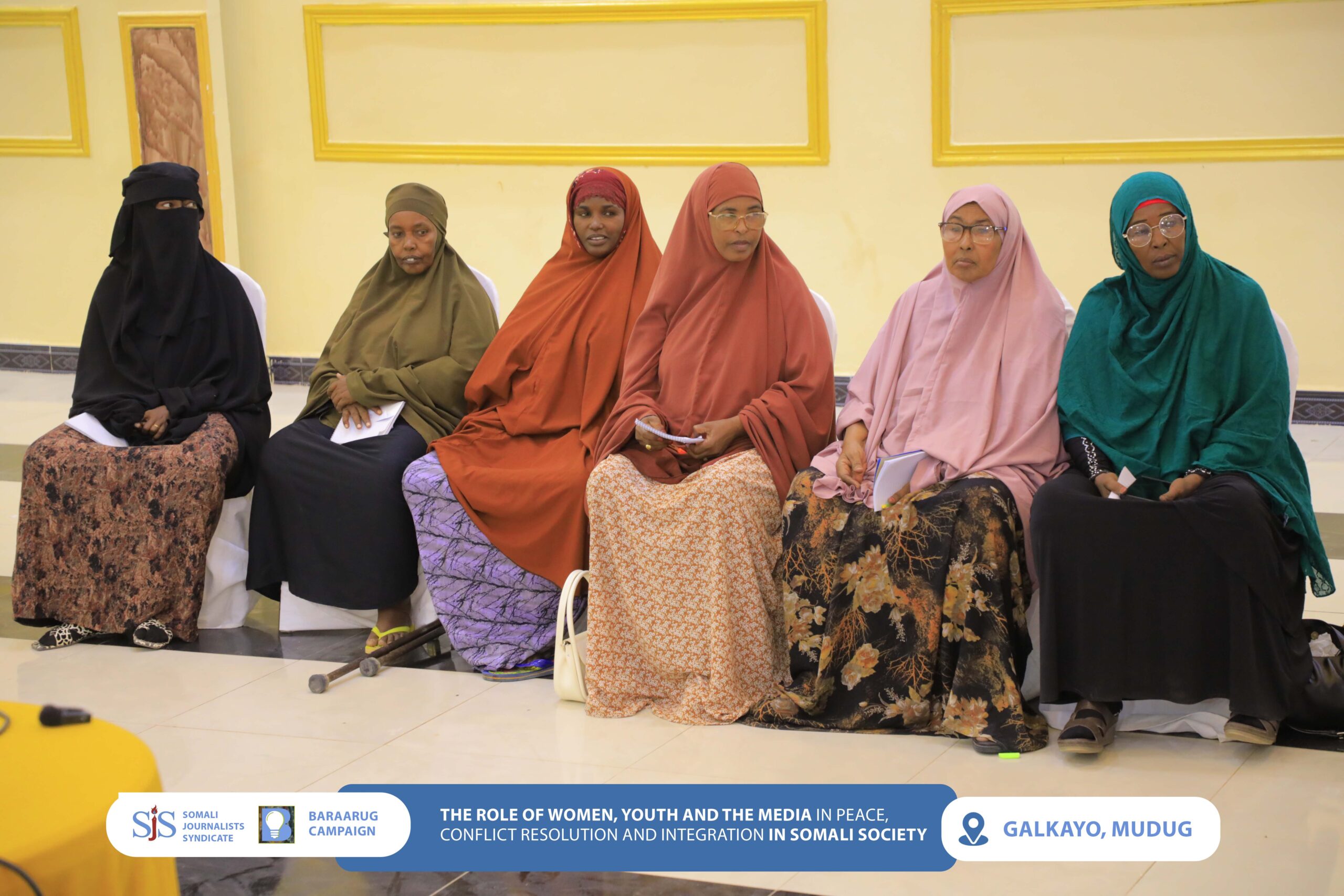
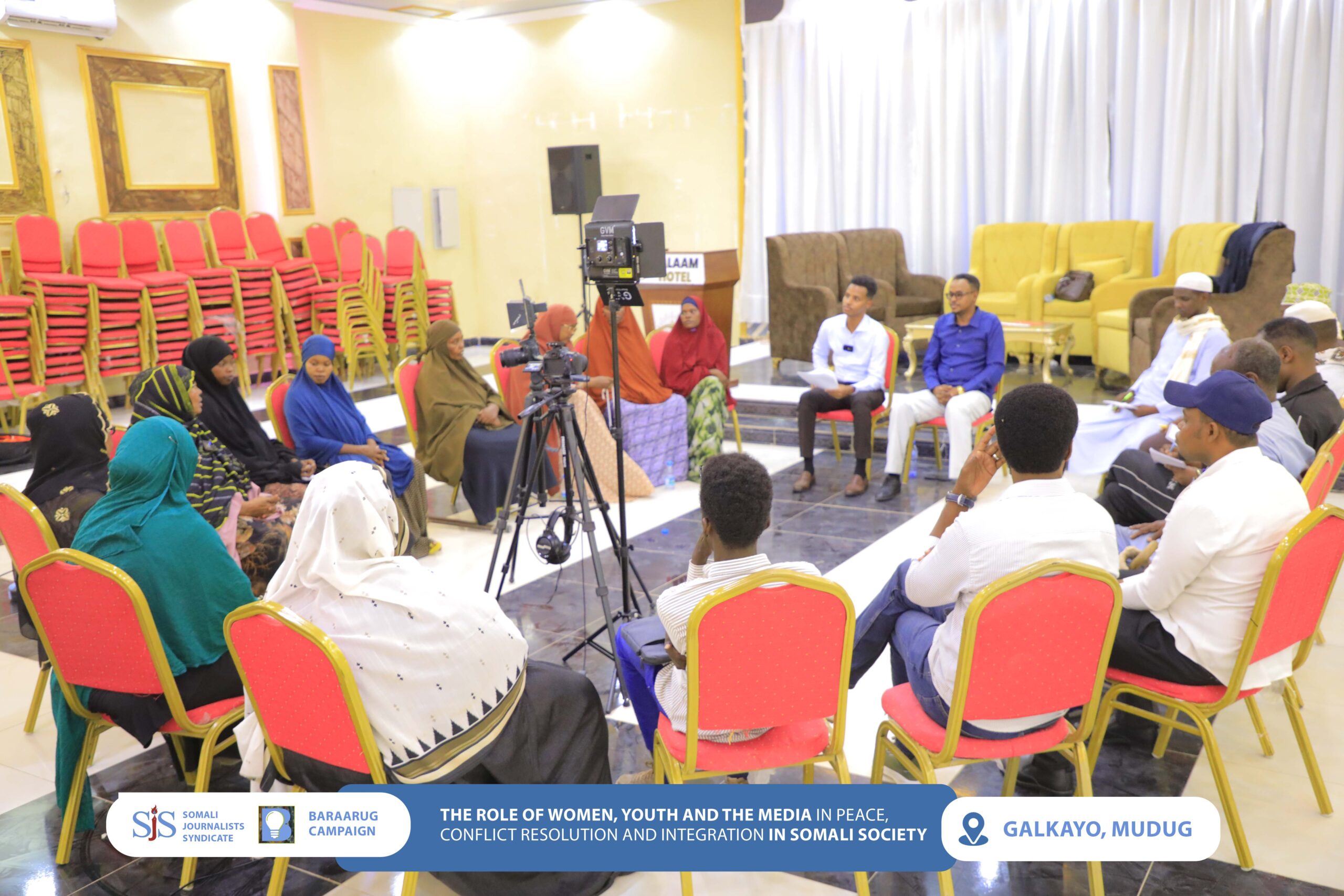
GALKAYO, Somalia, 24 June 2025 – The Somali Journalists Syndicate (SJS) / Baraarug Campaign, conducted a one-day civic engagement and training workshop in Galkayo, Mudug region. The workshop focused on promoting civic rights, conflict resolution, gender equality, and freedom of expression and inclusive peacebuilding through responsible journalism and community participation.
Held in the divided city of Galkayo—a hotspot of inter-clan tensions and climate-driven displacement—the workshop brought together a diverse group of participants, including journalists, social media influencers, clan elders, women leaders, youth activists, religious scholars, IDP representatives, persons with disabilities, and officials from both Puntland and Galmudug regional states.
Mudug, located in central Somalia, remains one of the most conflict-prone regions in the country. Divided between Puntland (north) and Galmudug (south), with Galkayo also split between the two, the region suffers from overlapping jurisdictions, governance disputes, and cyclical violence.
The worsening climate crisis—especially recurrent droughts—continues to deepen the region’s vulnerability. Water and pasture scarcity have triggered deadly clashes between communities, displaced thousands, and pushed many young people into irregular migration. Women and youth are disproportionately affected, with more than 75% of gender-based violence (GBV) cases reported in IDP settlements where psychosocial services are minimal or nonexistent.
SJS documentation shows Galkayo has been the second deadliest city for journalists in Somalia over the past decade, after Mogadishu. Crimes against journalists are rarely prosecuted, and impunity remains a serious concern.
The SJS/Baraarug workshop aimed to explore how local media and civic voices can support peace rather than perpetuate division.
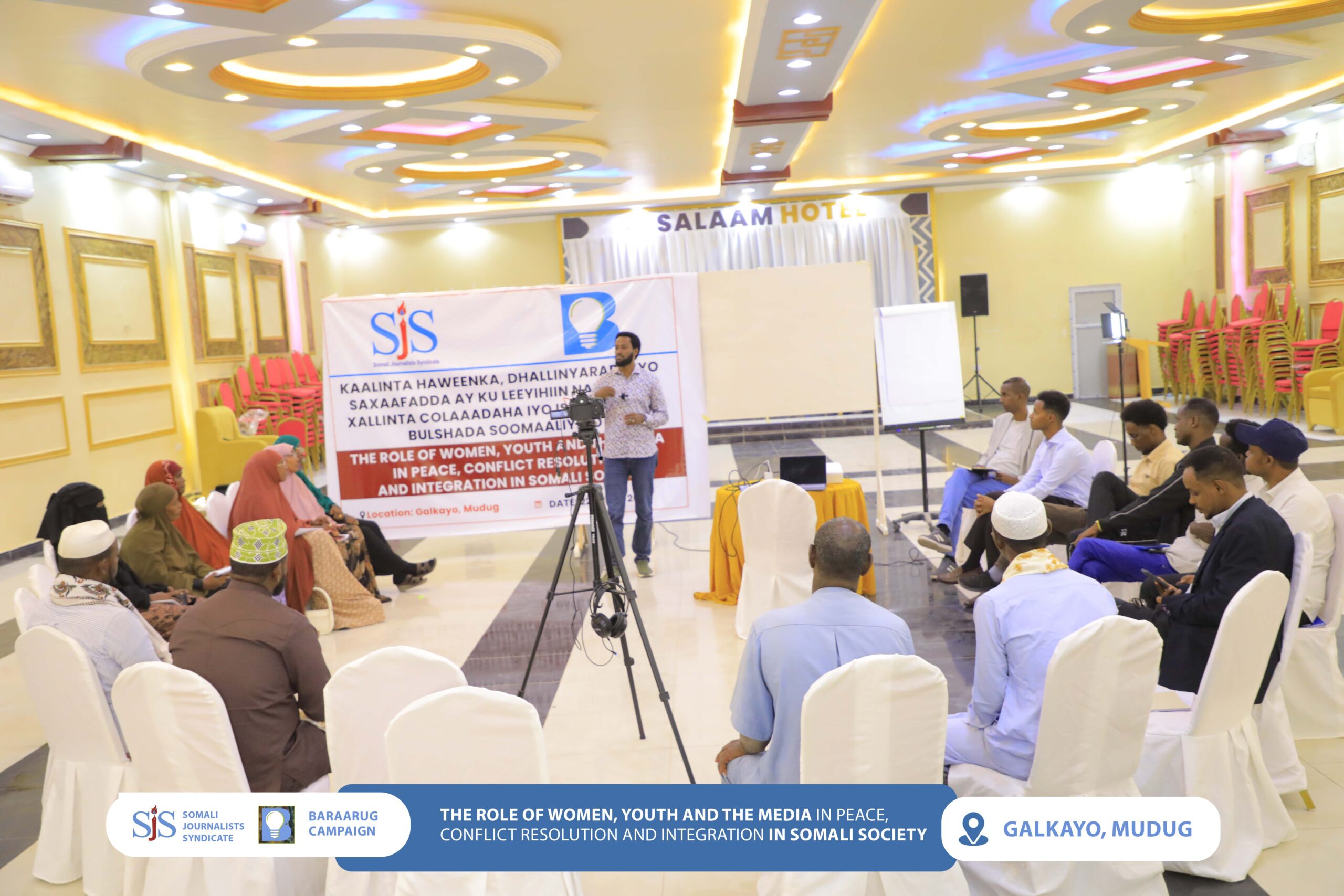
Hassan Abdirahman Aden, Director of Media at Galmudug’s Ministry of Information and Culture, reflected on how local media in the past contributed to conflict by aligning with clan interests:
“At the beginning of the conflict in this region, media platforms were used to fuel tensions because they operated along clan lines. But today, we are witnessing a shift—local journalists are giving space to peace initiatives. The media no longer incites violence here. Instead, social media has become the new source of division,” he said.
Participants also raised concerns over the rise of unregulated social media content and influencers whose behavior risks inciting division.
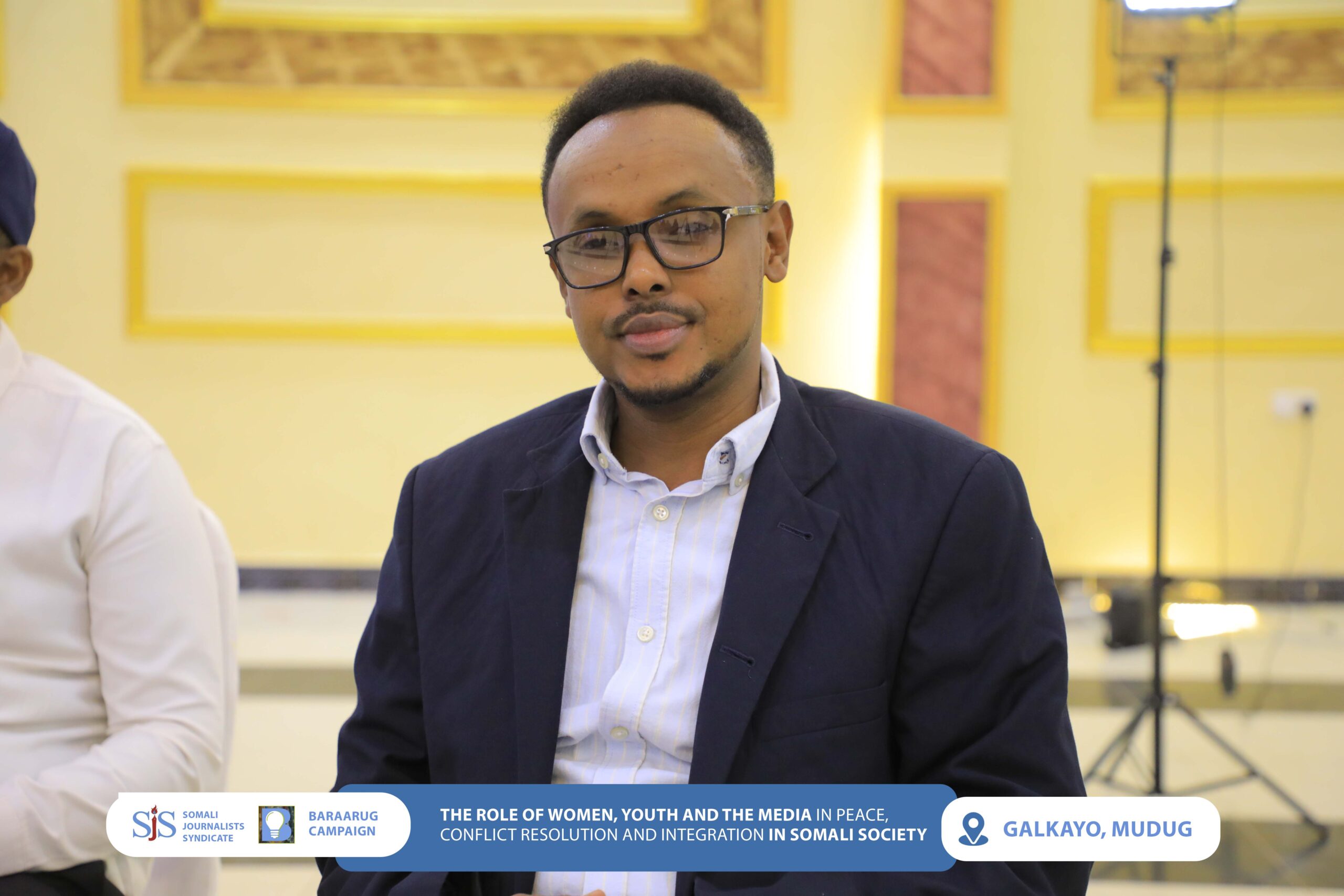
Voices of Women, Youth, and Elders
Women participants shared powerful testimonies about their evolving role in peacebuilding.
Habiibo Mohamud Abdi, Chair of the Galkayo Women’s Peace Committee, said:
“Initially, women were excluded from peace talks. Clan elders didn’t see us as relevant negotiators. But later, when 13 women from each side—Galmudug and Puntland—were included at the table, real peace began. Women were the key to achieving Galkayo’s current stability.”
Clan elder Abdukadir Ali Igal emphasized that most inter-clan fighting stems from disputes over land and resources:
“When we the clan elders say ‘go to war,’ youth follow. When we say ‘stop,’ they stop. The root causes are known to us, and the responsibility lies with us to decide between peace and war. That’s just the reality.”
But beyond clan dynamics, participants pointed to weak state institutions and widespread corruption as deeper structural causes of conflict.
Mohamed Sa’id Mohamud, a youth leader and co-founder of the Mudug Peace and Development Forum, highlighted the absence of state leadership:
“State collapse is why conflict keeps returning. Youth and women were excluded from the 2015 and 2016 peace agreements in Galkayo. However, in 2017, we youth forced our way in and joined hands across clan elders. That’s what led to the peace we enjoy today.”
Call to Action: Women’s Rights & Civic Media
MP Ibaado Yusuf Ahmed, one of the few women sitting in the Galmudug State Assembly, urged the media to do more in promoting civic education and gender equality:
“Women are still denied equal participation. Even in parliament, it’s a struggle. I call on the media to amplify women’s voices and support civic advocacy.”
The Secretary General of SJS, Abdalle Mumin stated:
“In a region marked by division and hardship, the role of independent, responsible journalism has never been more critical. Through our Baraarug Campaign, we are empowering journalists, women, and youth to become catalysts for peace, inclusion, and the defense of civic rights. Only by working together can we build a stable and just for all Somalis.”
The Baraarug Campaign, led by SJS in collaboration with Somali civil society groups, aims to amplify youth and women’s voices in civic life using digital platforms and creative storytelling. It aligns with the Dutch Human Rights Policy, promoting civic awareness, gender equality, and freedom of expression—core values for democratic accountability.
Launched in December 2024, Baraarug empowers young Somalis to express themselves, advocate for inclusion, and mobilize both local and international solidarity for positive change.
More information about Baraarug visit our dedicated webpage: www.sjsyndicate.org/baraarug